The gap most people hit is this: a kit promises weeks, and a nail lifts off on day three. The real answer to how long do press on nails last is governed less by the brand on the box and more by what is holding the nail down. Glue, pre-applied adhesive, and thin tabs are three different attachment systems with three different wear windows, and any honest figure has to name which one you used. Everything after that – water exposure, skin oils, nail length, how long you pressed – moves the result inside those windows rather than inventing a new one.
How long do press on nails last depends almost entirely on the adhesive. A proper nail glue typically holds for about 1 week, with 1 to 2 weeks as a general expectation and up to 3 weeks reported under careful conditions. Pre-applied or peel-and-stick versions run about 3 to 5 days. Thin adhesive tabs give the shortest hold, roughly 1 to 2 days, though they come off cleanest. Brand glue can stretch further – some kits are rated near 14 days. Prep, water, and nail length then shift your own result up or down inside those bands, which is why two people wearing the same set report different lifespans.
How Long Do Press On Nails Last by Adhesive Type
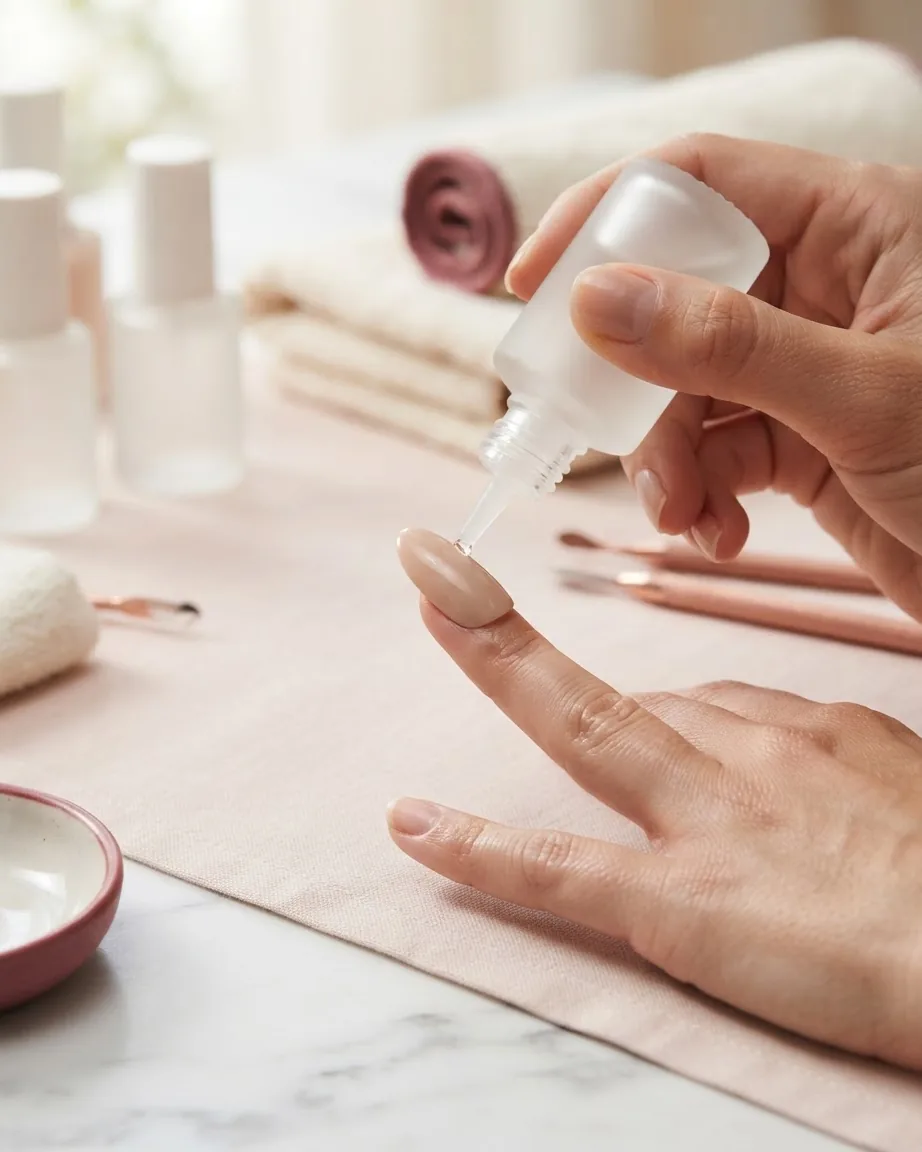
Three attachment methods, three ranges. Mixing them into one blurred figure is why the “week” number so rarely matches what you actually got. Here is the adhesive-to-wear map, each band tied to the method that produces it:
- Nail glue: the longest-wearing option, covered by Yahoo Lifestyle, with L’Oréal Paris USA and Lilac St. both treating meticulous care as the way to stretch the wear further.
- Pre-applied / peel-and-stick: roughly 3 to 5 days. Both Yahoo Lifestyle and Lilac St. land here for no-glue, stick-on sets.
- Adhesive tabs: the briefest wear window of the three. Lilac St. reports tabs as the shortest-lived option – gentle on the nail, but not built for a long stretch.
The upper bounds also differ because they describe different things. The 1-to-2-week figure is a typical expectation. The up-to-3-weeks figure is a best case under careful conditions. They are not the same claim dressed differently, and a reader planning around the high end of one is planning around the exception, not the norm.
Why They Pop Off Before the Week Is Out
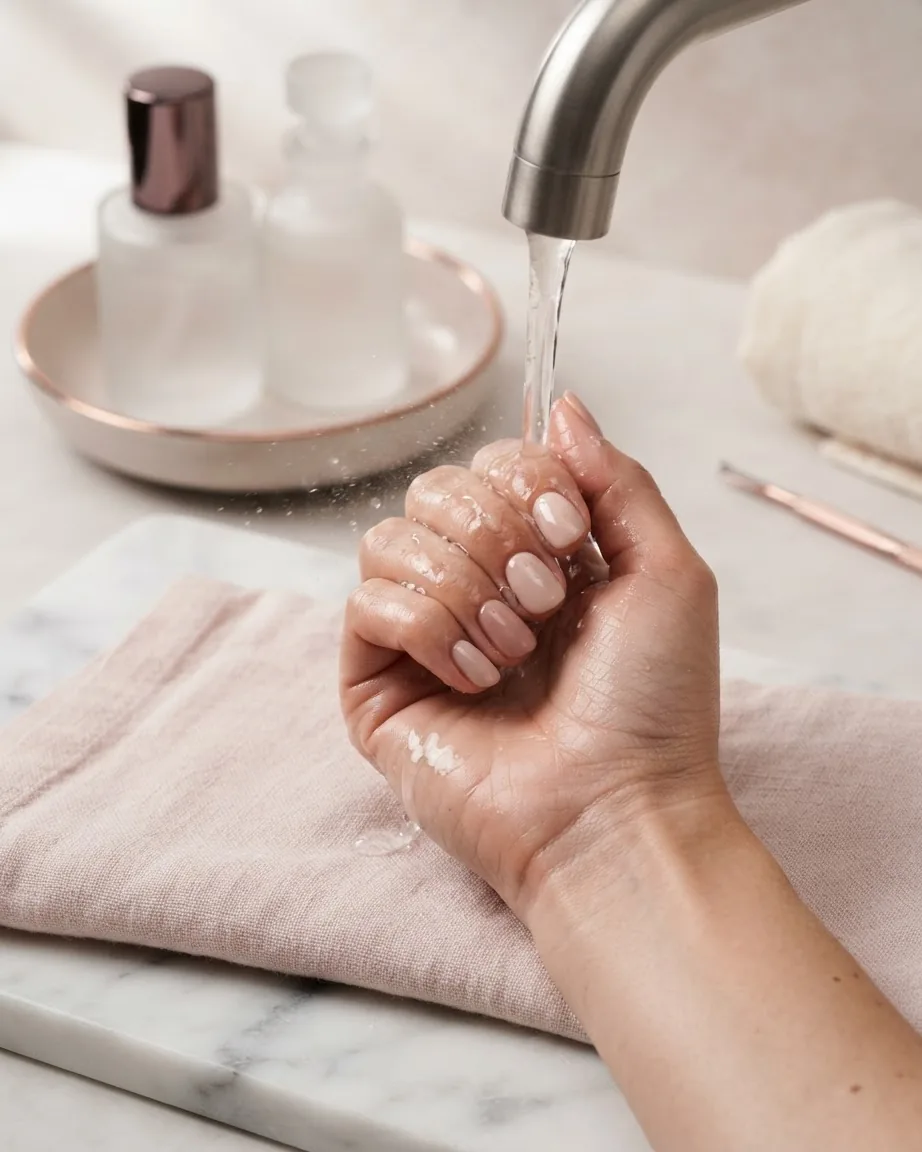
Early failure is usually mechanical, not bad luck. Water is the main culprit: the natural nail absorbs moisture and swells, then contracts as it dries. That expand-and-shrink cycle works the bond loose at the edges, and once an edge lifts, the seal is gone. Long, hot showers, dishwashing, and swimming all accelerate it. Pool chlorine and salt water are harder still on the adhesive, and harsh household cleaners strip it faster than plain water does.
The second failure point is a greasy surface. Hand creams, cuticle oils, and the natural oils on the nail plate leave a film the glue cannot grip. If the nail was not degreased before application, the bond is compromised from the first minute – it may hold for a day, then slide. This is why a set can fail early even with good glue: the chemistry never got a clean surface to work on.
The One Prep Step That Changes Your Number
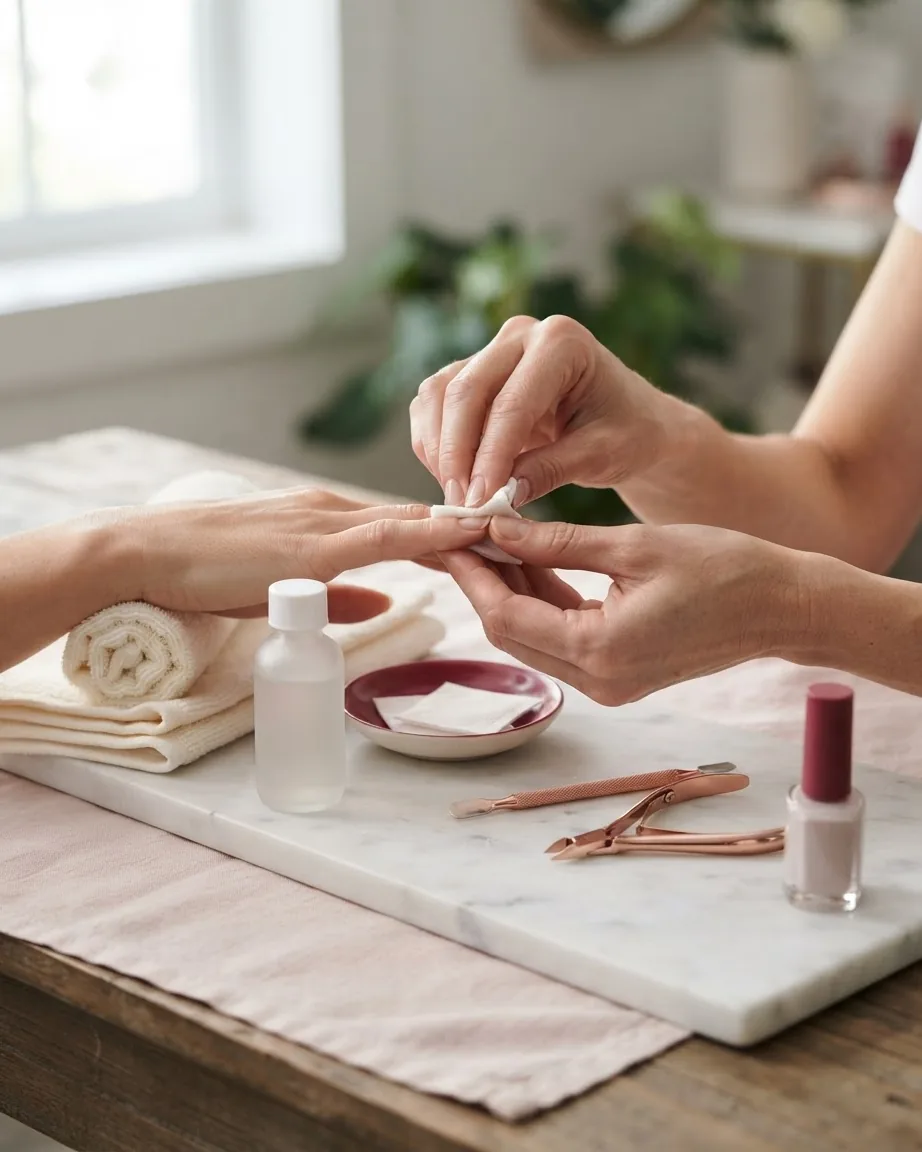
If a single step moves wear time more than any other, it is cleaning and degreasing the nail plate before anything touches it. Push back the cuticles, wipe the surface free of oil, and keep lotions off your hands beforehand. A dry, oil-free nail gives the adhesive something to bond to; a conditioned, moisturized one does not.
Application pressure matters almost as much. After seating a glued press-on, makeup.com by L’Oréal advises pressing and holding each nail for about 20 seconds so the bond sets before you move on. Rushing this – placing ten nails in 10 minutes without holding any of them – is a common reason an otherwise well-glued set lifts within days. Size the nail to the bed too: a tip that overhangs the sidewalls gives water and snags a head start.
Does Nail Length Change the Wear Time?

Yes, and predictably. Length is its own lifespan variable because a longer nail is a longer lever. More surface area means more chances to catch on fabric, hair, and door handles, and every snag transfers force to the glued seam. The same adhesive on a short, rounded tip will outlast it on a long coffin or stiletto shape simply because the long shape gets caught more and stressed harder.
If you want the high end of your adhesive’s range, short wins. If you want the drama of length, plan for the trade: shorter wear, more careful hands, and a higher chance of a mid-week pop-off on the index and thumb, which take the most abuse.
Can a UV Lamp Make Press-Ons Last Longer?
This is the question with the least to stand on. UV curing belongs to gel systems, where a lamp hardens a gel layer. Standard press-on glue and adhesive tabs are not gel and are not cured under a lamp – none of the sourced wear figures above depend on one. There is no reliable number showing that running a conventional press-on set under UV extends its life, so treating a lamp as a staying-power upgrade is not supported here.
The levers that do move your number are the ones already named: adhesive type, a degreased nail, water discipline, and length. Spend effort there before you spend it on a lamp.
What the Brands Actually Report
Brand figures bind to the brand – they do not transfer across the category. Doonails support states its press-ons “usually last around 5-7 days” with the included adhesive stickers, and around 14 days with their nail glue – a clean illustration of how much the attachment method alone changes the answer within one product line.
The Sally Hansen informational page (hosted at elk.modxcloud.com) sets its expectation at about 3 to 7 days. At the far end, makeup.com by L’Oréal relays a nail expert’s note that some Glamnetic customers have reported wear lasting up to 5 weeks – roughly the span of an acrylic manicure. That figure is a reported customer maximum for one brand, not an average, and should not be read as what a typical set delivers. For the acrylic comparison itself, see our acrylic nail tips guide.
The takeaway across brands: ask what adhesive the number assumes before you trust it. A 14-day figure on glue and a 5-to-7-day figure on stickers are both from the same company and are both correct – for their own method.
Taking Them Off Without Tearing the Nail
Removal is where the natural nail gets damaged, and the damage comes from forcing a set that has not been dissolved. Never work a stuck nail off dry. The method below, drawn from L’Oréal Paris USA, dissolves the bond first, then lets the press-on release on its own.
A timing sequence to follow, not rush:
- Warm soak: soak nails in warm water with soap for 10 to 15 minutes to soften the edges.
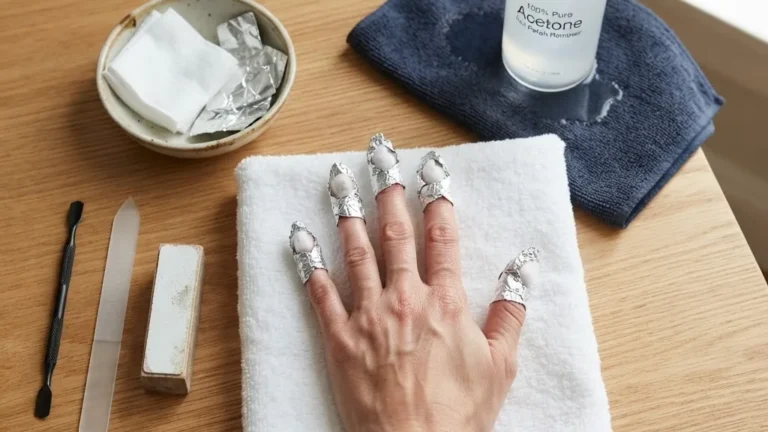
- Acetone soak: using 100 percent acetone in a small glass bowl, enough to cover the nails, let them sit for 15 to 20 minutes.
- Release: once the adhesive has dissolved, gently ease the press-on away. If it resists, it is not done – return it to the acetone rather than pulling.
Acetone is a strong solvent and drying to skin and nails; work in a ventilated space, keep contact brief, and wash your hands once you are finished. If a nail looks damaged or a reaction appears, stop and see a nail professional. For the same solvent logic applied to a cured enhancement, see our remove dip nails at home guide.
Wear time also feeds back into removal difficulty. L’Oréal Paris USA notes press-ons generally run a week to 12 days depending on application; a set left on past that point has not formed a stronger chemical bond, but a lifted, caught edge can tear the nail plate if forced. The safeguard is the same every time – dissolve fully, release gently.
The Same Brand, Two Adhesives: A 2x to 2.8x Lifespan Gap
The clearest way to see that adhesive runs the show is to hold the brand constant. Doonails quotes both of its own numbers: around 14 days on their nail glue, and around 5 to 7 days on the adhesive stickers that come in the same box. Do the division and the “which adhesive” question answers itself:
- Glue lasts 2x to 2.8x longer than the stickers – 14 ÷ 7 = 2 at the generous end of the sticker range, 14 ÷ 5 = 2.8 at the short end. Same product line, same hands, same chemistry; only the attachment method changed.
- Switching to glue buys about 7 extra days – 14 − 7 = 7, more than doubling the wear of a sticker application you already own.
- A proper hold costs 200 seconds, not your whole evening – 20 seconds per nail × 10 nails = 200 seconds, about 3 minutes 20 seconds of actual pressing. That is the difference between a bond that sets and one that lifts by day three.
- Budget up to 35 minutes to take them off cleanly – a 15-minute warm soak plus a 20-minute acetone soak at their upper ends = 35 minutes. Forcing a set before that time is up is where natural-nail damage happens.
The lesson from the arithmetic: before you trust any “lasts X days” claim, ask what it was glued (or stuck) down with. A number pulled from the sticker column and a number pulled from the glue column can differ by nearly threefold inside a single brand.
Frequently Asked Questions
Which adhesive should I choose for one night versus two weeks of wear?
For a single event, tabs make sense: they lift off without solvent, sparing your natural nail. For a stretch of wear, reach for nail glue – Doonails rates its glue near 14 days against roughly 5 to 7 days on stickers. Match the method to the calendar, not to the brand’s highest advertised figure.
Does leaving press-ons on longer make removal harder on the nail?
The adhesive does not grow stronger over time, so a well-applied set does not get chemically tougher to remove at day 12 than at day 5. The risk from extended wear is physical: a partially lifted nail that keeps catching can peel the top layer of the nail plate if yanked. Soaking it off in acetone for 15 to 20 minutes removes that risk.
My set lasted far less than the box claimed. What went wrong?
Almost always surface prep or water. An oily or lotioned nail never gives the glue a clean grip, and frequent soaking swells the nail enough to break the seal at the edges. Check which adhesive the box figure assumed, too – a sticker rating of 3 to 5 days was never a glue-level promise in the first place.