A maintained acrylic set can stay on for up to eight weeks, yet most wearers are back in the chair every two or three weeks. Those two figures answer different questions, and treating them as one is why how long do acrylic nail tips last has no single number. One marks when the gap at the cuticle needs topping up. The other marks when the whole set is retired and rebuilt.
How long acrylic nail tips last depends on which clock you read. A single maintained set can stay on up to an 8-week maximum before full replacement. The fill cycle runs shorter: every two to three weeks you refill the gap that opens at the cuticle as the natural nail grows underneath. Neither figure is a hard expiry date. A set keeps wearing only while it stays bonded to the nail plate; once the acrylic separates, it comes off early no matter what the calendar says. And redness or pain at the nail bed signals a reaction, not an old set reaching the end of its run.
How Long Do Acrylic Nail Tips Last: Fill Interval vs. Set Lifespan
The shorter number is the maintenance interval. The American Academy of Dermatology Association puts touch-ups at every two to three weeks to fill the gaps that appear as the nails grow out. That is a top-up, not a tear-down.
The longer number is the lifespan of the set itself. Cleveland Clinic states that an acrylic set can last up to eight weeks, with a fill every two to three weeks in between. So the 3-week mark is a fill date; the 8-week mark is a replacement date. These are not two guesses at the same answer – they are two endpoints of the same set.
| Milestone | Typical timing | What it means |
|---|---|---|
| First visible gap at the cuticle | around 3 weeks | natural nail has grown out |
| Fill / touch-up | every 2 to 3 weeks | refill the gap, rebalance the set |
| Full replacement | up to 8 weeks | remove and rebuild the whole set |
The practical decision: book the 2-to-3-week fill as routine upkeep, and plan the full removal-and-rebuild on the longer horizon. Showing up at week three does not mean the acrylic is finished – it means the regrowth gap is due for attention.
What the Nail-Growth Rate Says About the 3-Week Gap
The fill cycle tracks one thing: how fast the natural nail pushes the acrylic outward. A peer-reviewed measurement indexed in the U.S. National Library of Medicine’s PubMed followed 22 healthy American young adults and found fingernails grew 3.47 mm per month against 1.62 mm for toenails, a gap reported as statistically significant (P < 0.01).
That 3.47 mm figure is why a ridge of bare nail shows at the cuticle inside roughly three weeks. It is also why the fill schedule is a cycle rather than a one-time event. Two cautions follow from the sample. It covered young adults, so it is not an invariant speed for every wearer – growth slows with age and varies by person. And it measured the nail, not the acrylic, so your own regrowth, not a fixed date, is the real cue. Watch the cuticle line. If the gap shows at two weeks, your fill is due at two weeks.
When Lifting and Separation Beat the Calendar
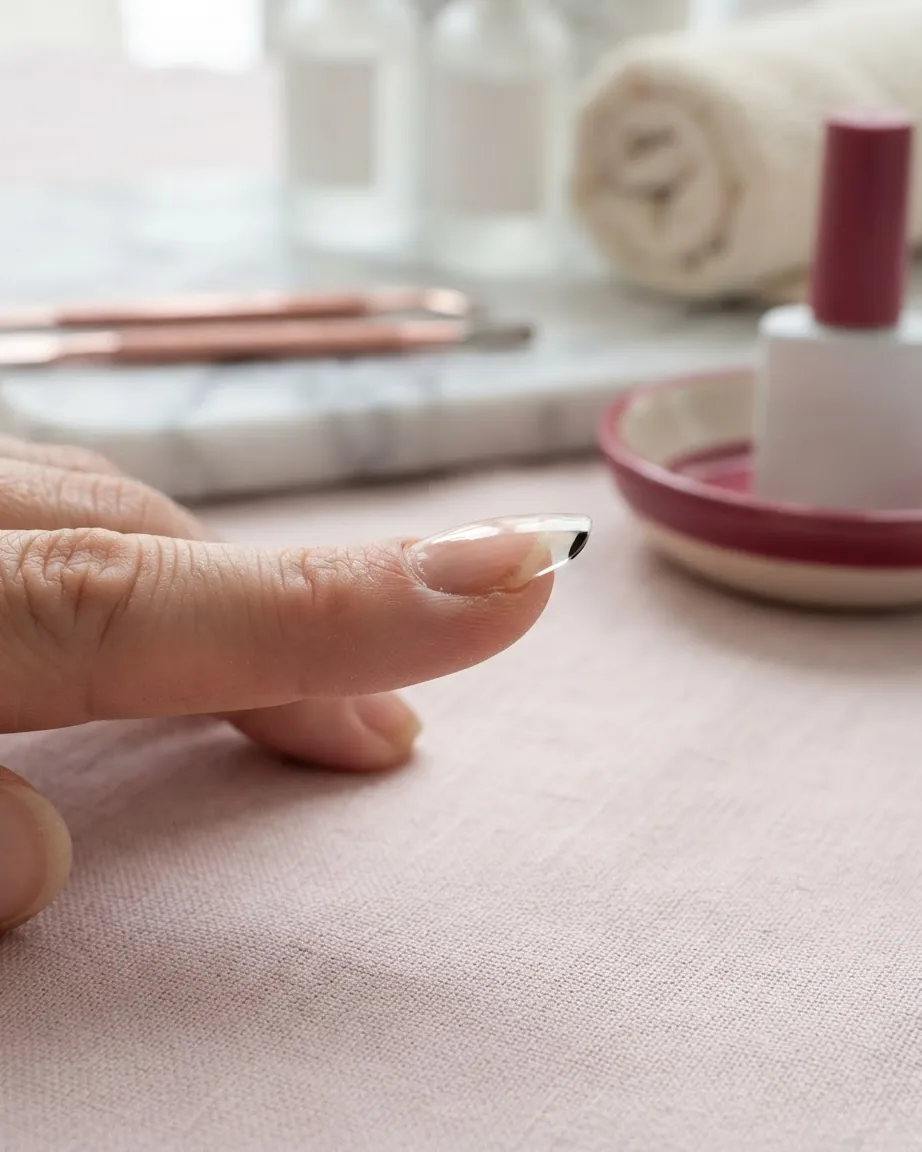
A fill date assumes the set is still intact. The moment acrylic lifts away from the nail plate, that assumption breaks. Cleveland Clinic ties this separation to onycholysis – the nail detaching from its bed – and warns that the space underneath can trap moisture and set up fungal or bacterial infection.
Here is the approach that fails: leaving a lifted tip on until the scheduled fill because the date has not arrived yet. A pocket of separated acrylic is not a cosmetic flaw to wait out; it is a sealed gap where water and microbes collect. The calendar does not override the bond. If a tip lifts, catches, or sounds hollow when tapped, it needs attention before the next booking, not after it.
Name the causes so you can head them off: trauma or a knock that pops the seal, water working in at the edges, product applied over oily or poorly prepped nails, and ordinary regrowth stretching the bond past its hold. Any nail pain, persistent separation, or discoloration is a matter for a dermatologist or a licensed professional, not a home fix.
Taking Acrylic Tips Off Without Wrecking the Nail Plate
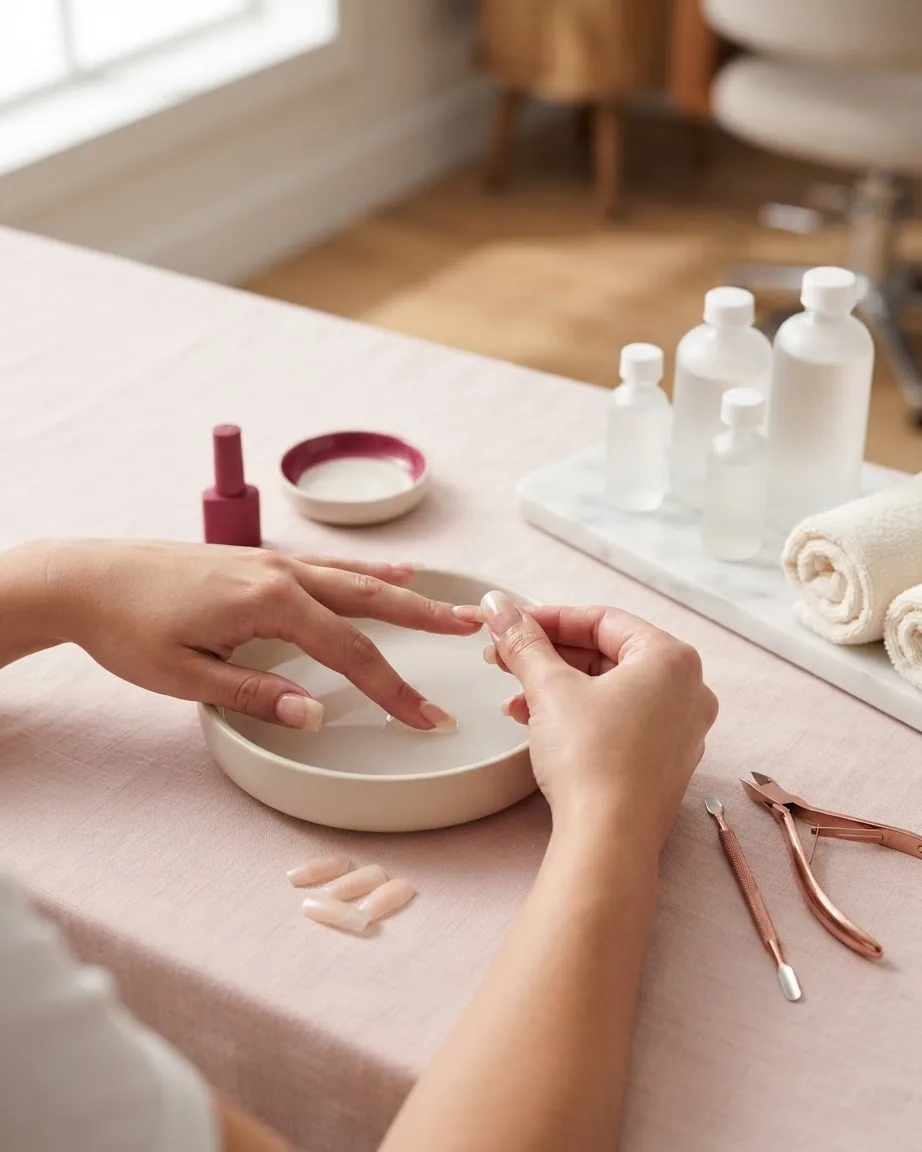
Removal is where the longevity question quietly turns into a nail-health question. Cleveland Clinic is blunt that the application, the repeated fills, and the removal all stress the natural nail, and that forcing product off thins and weakens the plate underneath.
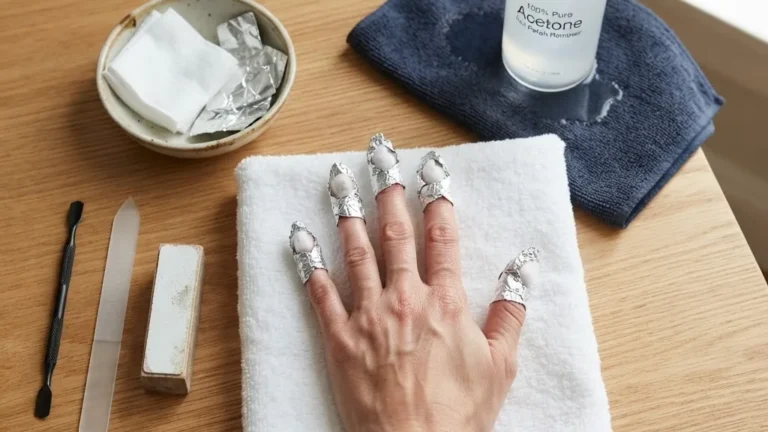
The sound method is to dissolve the acrylic, not to force or peel it. Acetone soak-off softens the product so it releases on its own; the tip should come away with gentle pressure once it has loosened, never be snapped or scraped off a resistant bond. Soak times vary with the thickness of the set and the product used, which is why a technician, not a stopwatch, decides when it is ready. For a stubborn set, or one that will not release cleanly, that is a job for the salon rather than the kitchen table. For the solvent side of at-home removal on polish and gel, see our gel nail polish remover guide.
Redness, Swelling, and Nail-Bed Pain: Allergy vs. Ordinary Wear
Allergen warning
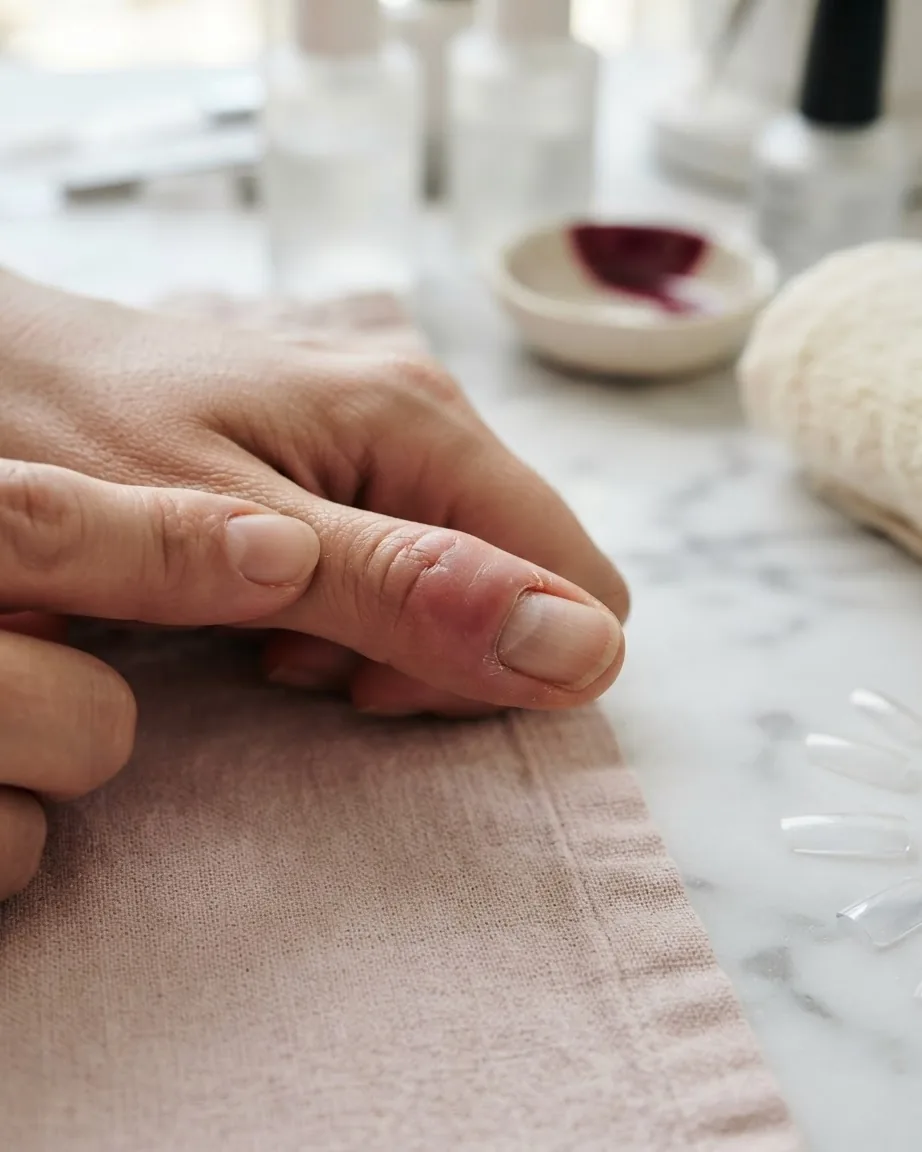
Not every problem is an old set. The U.S. Food and Drug Administration flags that the methacrylate chemistry in artificial nails can trigger sensitization – an allergic response that shows as redness, swelling, or pain at and around the nail. That reaction is about the body’s response to the ingredients, not about how many weeks the acrylic has been on.
The distinction changes what you do. Normal end-of-set wear looks like lifting, regrowth, and dullness, and it points to a fill or a removal. A reaction looks like inflammation or persistent pain, and it points to stopping and seeking care. The FDA’s guidance also notes an industry safety panel reviewed toluene back in 1987 and considered it acceptable in nail products at concentrations up to 50 percent, the highest level then observed in such products. The same agency has acted to pull liquid products that were 100 percent methyl methacrylate monomer. None of that changes a healthy set’s lifespan – but if your skin reacts, the product chemistry, not the clock, is the thing to address, with a professional.
Acrylic Nails on the Clock: the Healthcare-Worker Rule
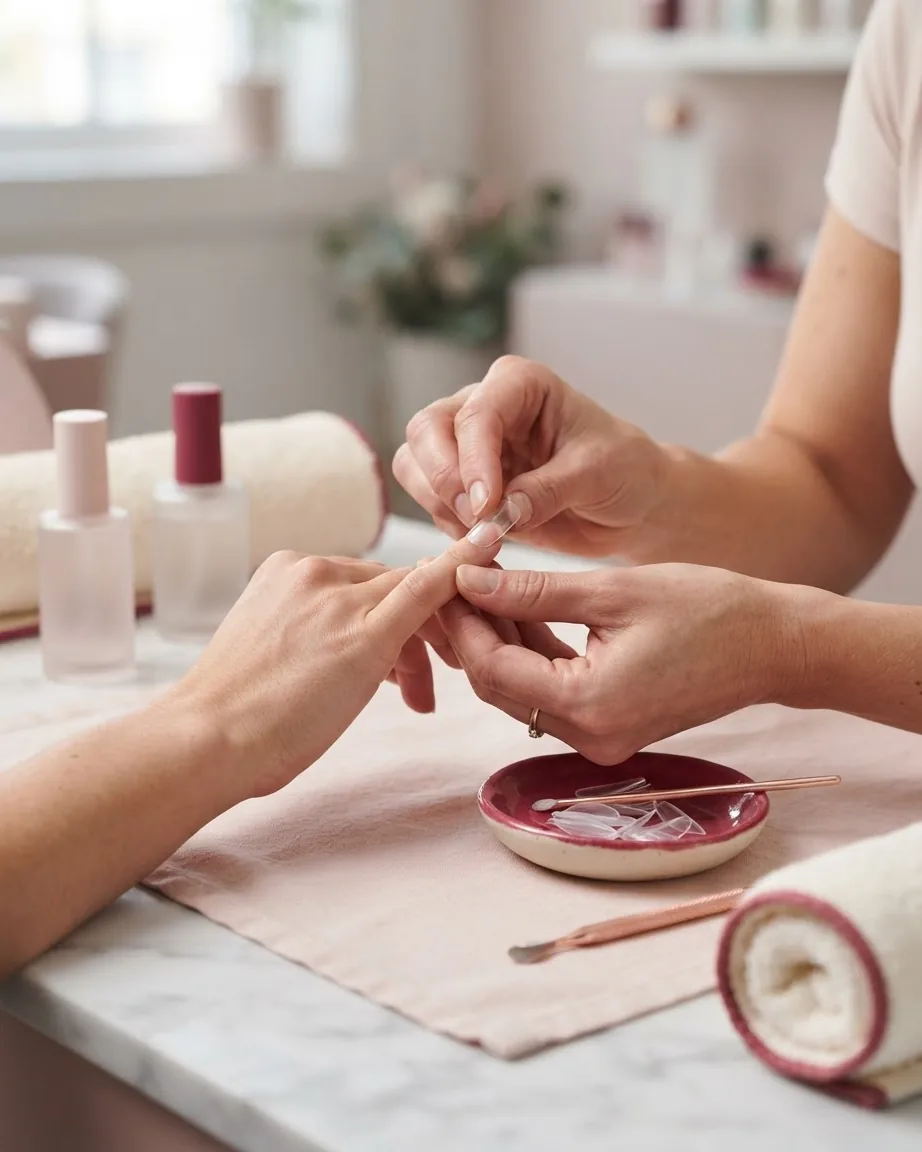
For one group, longevity is beside the point – the nails come off for reasons unrelated to wear. In 2002, the Centers for Disease Control and Prevention, through its healthcare advisory committee, issued a Category IA recommendation that healthcare personnel who have contact with high-risk patients not wear artificial fingernails or extenders.
Read the scope before applying it. This is an infection-control measure aimed at staff in direct contact with vulnerable patients, not a general-population ban. If you work bedside in that setting, the rule decides the question for you regardless of how long an acrylic set could otherwise hold. If you do not, it is context rather than constraint.
Reading Your Set Week by Week: the Three-Signal Check
Put the pieces into one routine the Nailhandbook Editorial Desk calls the three-signal check – growth, bond, reaction – each tied to a different action.
- Growth. A gap widening at the cuticle, due around the three-week mark but sooner for fast growers, calls for a fill. This is upkeep, and it is what keeps a set moving toward the 8-week horizon.
- Bond. Any lifting, hollow spot, or separation calls for earlier removal, ahead of the scheduled fill. A broken seal is a moisture-and-microbe risk, not a cosmetic one to postpone.
- Reaction. Redness, swelling, or nail-bed pain calls for stopping and seeing a professional. That is a sensitivity signal, separate from the set’s age.
Run the three in order and the longevity question answers itself: fill on growth, remove on a broken bond, stop on a reaction. The calendar sets your default; the nail overrides it. For the related timing question on finished color, our nail polish take to dry guide sits alongside this one.
How Many Fills Fit Inside One Acrylic Set
The two numbers in this article aren’t rivals – they stack. Divide the 8-week maximum lifespan by the fill interval and you get the number of maintenance visits that sit between application and rebuild. That’s the figure to budget time and money against, and no source hands it to you directly – you have to do the division.
- Slow-growth end: 8 weeks ÷ 3-week fills = 2.7, so about 2 fills land before the set is replaced (roughly week 3 and week 6, then rebuild at week 8).
- Fast-growth end: 8 weeks ÷ 2-week fills = 4, so up to 4 maintenance points span the set – the last one effectively merging into the replacement, leaving about 3 true fills beforehand.
- Plan on 2 to 3 fills per 8-week set. If you’re booking more than that, your regrowth is running fast, not your acrylic failing early.
Why fingers drive this and toes don’t: at 3.47 mm versus 1.62 mm per month, fingernails grow about 2.1× faster (3.47 ÷ 1.62). The cuticle gap that triggers each fill opens on your fingers first – which is why the fill clock is set by hand-nail growth, not toe-nail growth.
FAQ
Can an acrylic set go past eight weeks if I keep getting fills?
Eight weeks is the published upper end for a maintained set before full replacement, with fills every two to three weeks along the way. There is no verified figure supporting indefinite refilling beyond that window. Past it, the standard move is to remove and rebuild rather than keep adding to an aging base.
Do shorter acrylic tips outlast longer ones?
No reliable measurement establishes that shorter extensions wear longer than longer ones. It is a common assumption, but there is no verified figure quantifying length against wear time. What is documented is that a set holds only while it stays bonded, so prep, regrowth, and daily knocks matter more than any number you can attach to tip length.
Does frequent handwashing or swimming cut the wear time?
Water working into a lifted edge is a known cause of separation, but no verified figure quantifies how much a given activity shortens wear. Rather than chasing an exact day count, watch the bond itself: if an edge lifts or a tip sounds hollow, treat that as the signal to act, whatever your routine around water looks like.
Is a fill the same as a full replacement?
No. A fill tops up the regrowth gap on an existing set and keeps it in service; a replacement takes everything off and rebuilds. There is no fixed count of fills before a rebuild is required – it is driven by the condition of the set, so a sound set reaches the longer horizon while a compromised one is retired sooner.