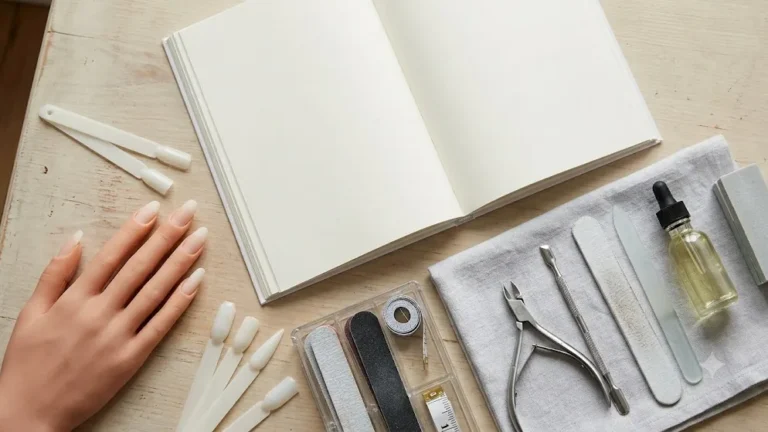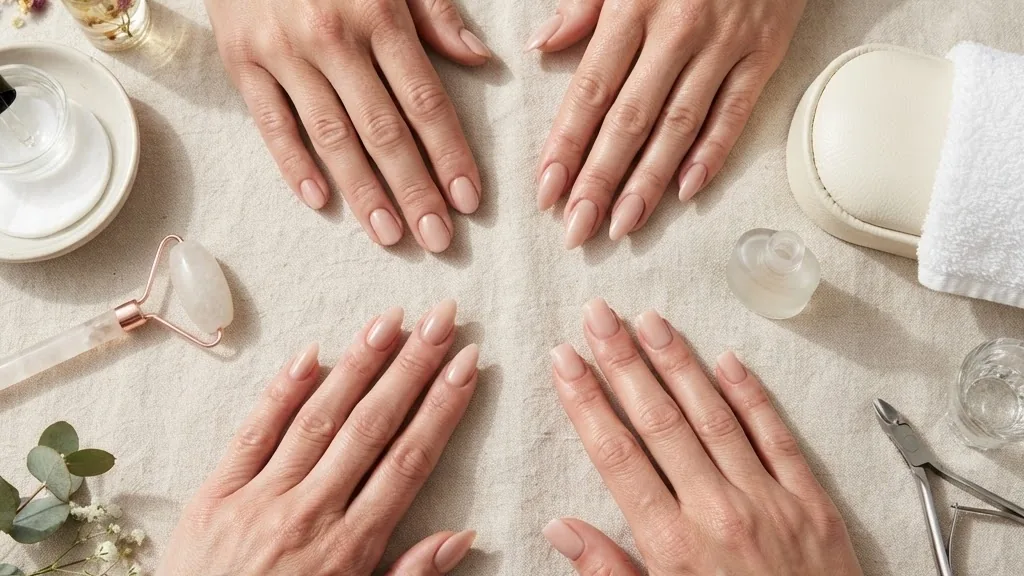
Different nail shapes are not interchangeable styling choices. Each one redistributes mechanical stress across the free edge in a measurably different way, which is why a pointed stiletto snaps where a squoval barely chips. Most guides show you a photo gallery and stop there.
That leaves out the part that actually decides whether a shape survives your week: the geometry of your own nail bed, the keratin structure under it, and the way you use your hands every day. A shape that flatters wide plates can look wrong on narrow ones, and a shape that grows out gracefully on a typist becomes a liability on a line cook.
The catalog below treats each profile as a structural decision first and an aesthetic one second, with health guidance drawn from dermatology and clinical sources rather than trend copy. Along the way it also settles the naming confusion that trips up most salon conversations, since terms like squoval, coffin, and ballerina are used inconsistently from one technician to the next.
Fingernails grow at an average rate of approximately 3.47 millimeters (3.47 mm) per month, according to a study indexed on PubMed measuring fingernail and toenail growth, so committing to a dramatic length is a multi-month project, not a same-day one. Read the mechanics before you file, and you will stop fighting your own nails instead of working with them.
Quick answer: Different nail shapes fall into two families. Rounded profiles (round, oval, soft square, squoval) spread force across a wide free edge and resist breakage, which makes them the safest picks for weak, short, or heavily used nails. Pointed and tapered profiles (almond, stiletto, coffin) concentrate stress at a single apex and usually need acrylic, hard gel, or polygel support to hold. The best shape for you is the one that mirrors your natural cuticle line, fits your nail bed width, and matches how hard your hands work each day.
Nail anatomy in plain language: the parts that decide your options
Nail plate anatomy sets the ceiling on shape choice before any file touches the edge. The plate is the visible hard surface. Underneath sits the nail bed, whose length and width control how much canvas you actually have to work with, and behind the bed the matrix produces the new keratin that becomes tomorrow’s growth. The lunula, that pale half-moon at the base, is the visible tip of the matrix showing through the plate, and the nail folds on either side hold the plate in its track as it grows forward.
Two more landmarks matter for shaping specifically: the hyponychium, a thin skin seal under the free edge that keeps bacteria and moisture out from below, and the “smile line,” the natural curve where the pink nail bed meets the white free edge. A short nail bed cannot carry a long almond convincingly on natural keratin, and a strongly curved plate resists a flat square no matter how carefully it is filed. The nail plate is composed primarily of hardened keratin, the same fibrous structural protein found in hair and the outer layer of skin, as described in the Wikipedia overview of nail anatomy. That single fact explains why filing grit and direction change strength across every shape, not just the dramatic ones.
- Nail bed length decides how much natural elongation you can achieve without an extension.
- Plate curvature (flat versus tightly domed) determines whether square edges read crisp or pinched.
- Cuticle and smile-line shape is the template you should mirror at the tip for the most natural-looking result.
- Hyponychium integrity is the seal you protect whenever you file or push cuticle; damage it and you open a path for infection.
Work with these constraints and shapes hold for weeks. Fight them, and you get lifting, tears, and constant repairs regardless of how good the initial polish job looked. If you plan to layer color over a base later, our guide on layering regular lacquer over a gel manicure covers how shape and finish interact once the structural groundwork is settled.
The core natural-nail catalog: round, oval, squoval, soft square, and almond
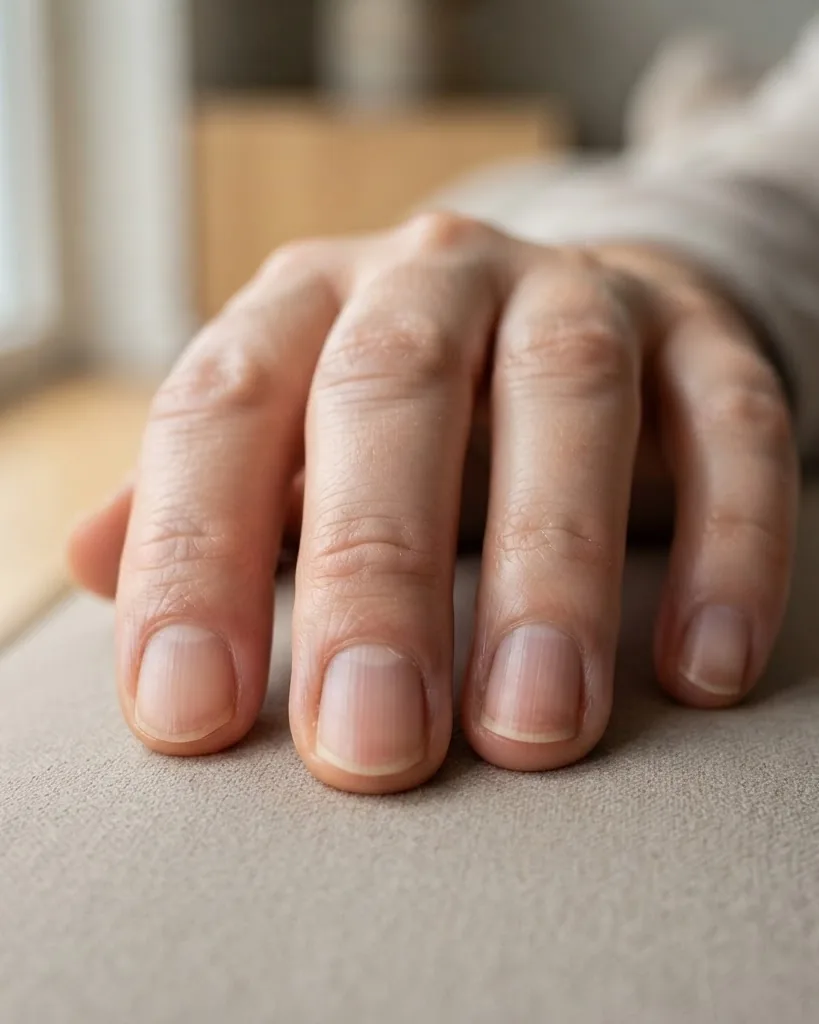
The core natural-nail catalog covers the five profiles most people can achieve on their own keratin without extensions, and knowing them by geometry rather than by name saves you from salon miscommunication. Round follows the natural fingertip curve with no sidewall taper and is the shortest, sturdiest option. Oval elongates that curve into a gentle egg shape. Square keeps straight sidewalls and a flat, sharp top edge, which shows off length but demands strong nails to hold the corners.
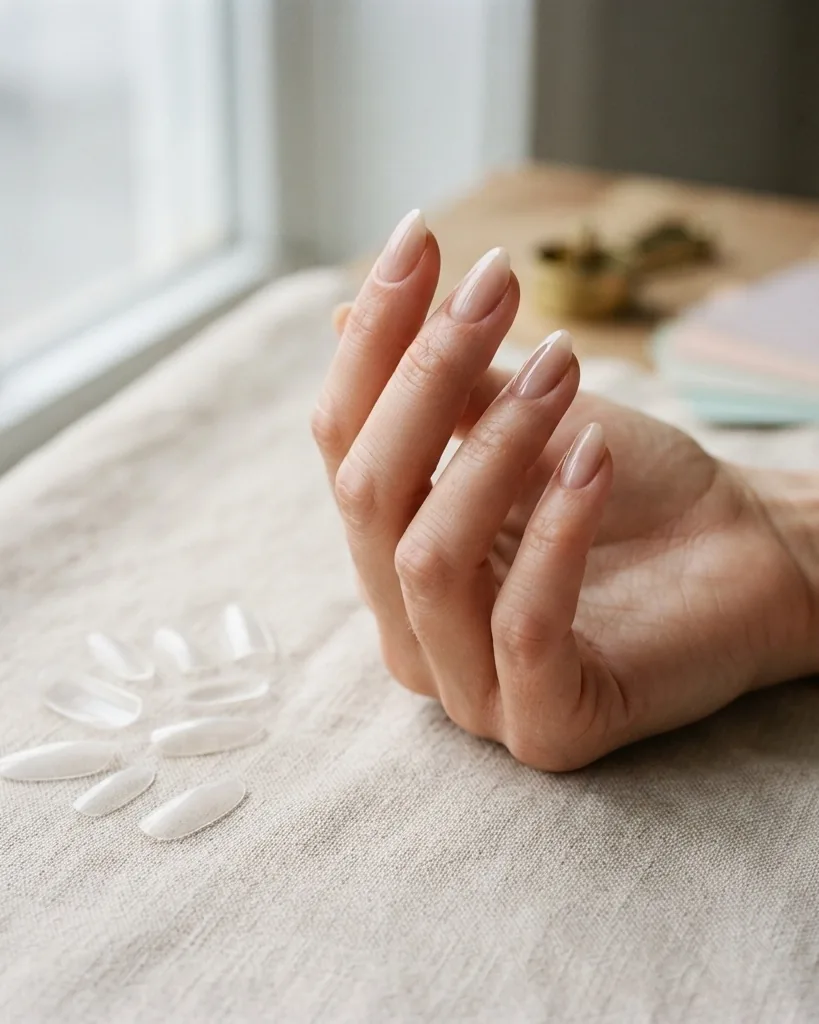
Squoval softens only the two top corners of a square while keeping the flat edge, which is why it is often described as the practical compromise between square’s boldness and round’s safety. Almond tapers both sidewalls toward a rounded peak, borrowing visual length the nail bed may not physically have. Each of the five differs from the others by apex geometry, sidewall angle, and free-edge profile, and those three variables are really all a shape is.
- Round: lowest breakage risk, best for very short or bitten nails, and the fastest to file since it needs almost no corner work.
- Oval: lengthens short beds, flatters wide fingers, and grows out with minimal reshaping.
- Square: maximum tip surface for polish or nail art, needs strong sidewalls to avoid chipping at the corners.
- Soft square: a square edge with gently rounded corners, slightly less durable than squoval but a touch bolder.
- Almond: gradual two-sided taper toward the tip, with higher stress concentrated right at the peak.
The American Academy of Dermatology recommends cutting nails straight across and then rounding the tips slightly at the corners, rather than tapering deep into the sidewalls, guidance you can read in full on the AAD healthy nail tips page. That single instruction points you straight toward squoval or soft square as the low-risk defaults, and away from deep almond tapers on nails that are already weak, thin, or growing back from breakage.
Extended shapes that need acrylic, hard gel, or polygel to survive
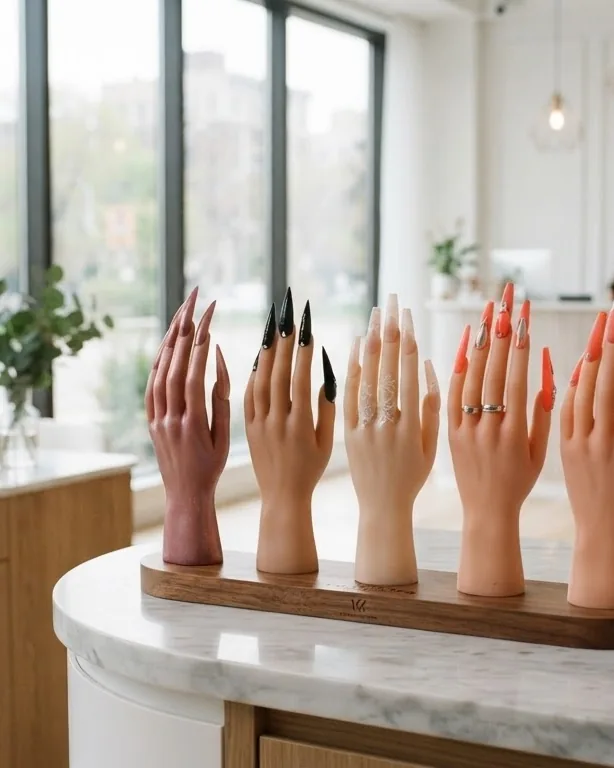
Extended shapes trade durability for drama and almost always require a hard enhancement to hold their form on top of the natural plate. Coffin, also sold under the name ballerina, tapers the sidewalls and then squares off the tip flat, like the outline of the namesake. Stiletto tapers all the way to a single sharp point. Lipstick cuts the free edge on a diagonal slant, like an angled lipstick bullet viewed from the side. Edge, sometimes called pipe, builds a raised ridge running down the center of the nail. Flare, also called duck, widens at the tip instead of tapering it, which is the rarer, more polarizing choice. Mountain peak and arrowhead push the point even higher and more aggressively than a standard stiletto.
Of this entire group, only the mildest coffin or a short, blunted stiletto is realistically wearable on unenhanced natural keratin. Everything more extreme needs acrylic, hard gel, or polygel structure underneath to survive daily use without lifting or snapping.
- Coffin / ballerina: same shape, two industry names; needs a flat, reinforced tip to keep its square edge crisp.
- Stiletto: single-point apex, the highest snap risk of any shape on this list.
- Flare / duck: widened tip, rare and polarizing, essentially always built with enhancement product.
- Mountain peak / arrowhead: extreme point variants, decorative rather than functional, almost never attempted on natural nails.
Because these shapes seal a large surface over the natural plate, hygiene matters more than it does for shorter natural shapes. Fungal nail infection, or onychomycosis, is a common condition affecting both fingernails and toenails and is observed more frequently in adults than in children, per the Wikipedia overview of onychomycosis. Long, occluded, or lifted enhancements give moisture and debris somewhere to hide, which is the practical reason technicians warn against wearing damaged extensions rather than simply removing them and starting over. If you enjoy long-wear systems, our breakdown of semi cured gel nail strips and their safety explains the curing and removal tradeoffs in more detail.
Why pointed shapes break and flat shapes hold: the stress math
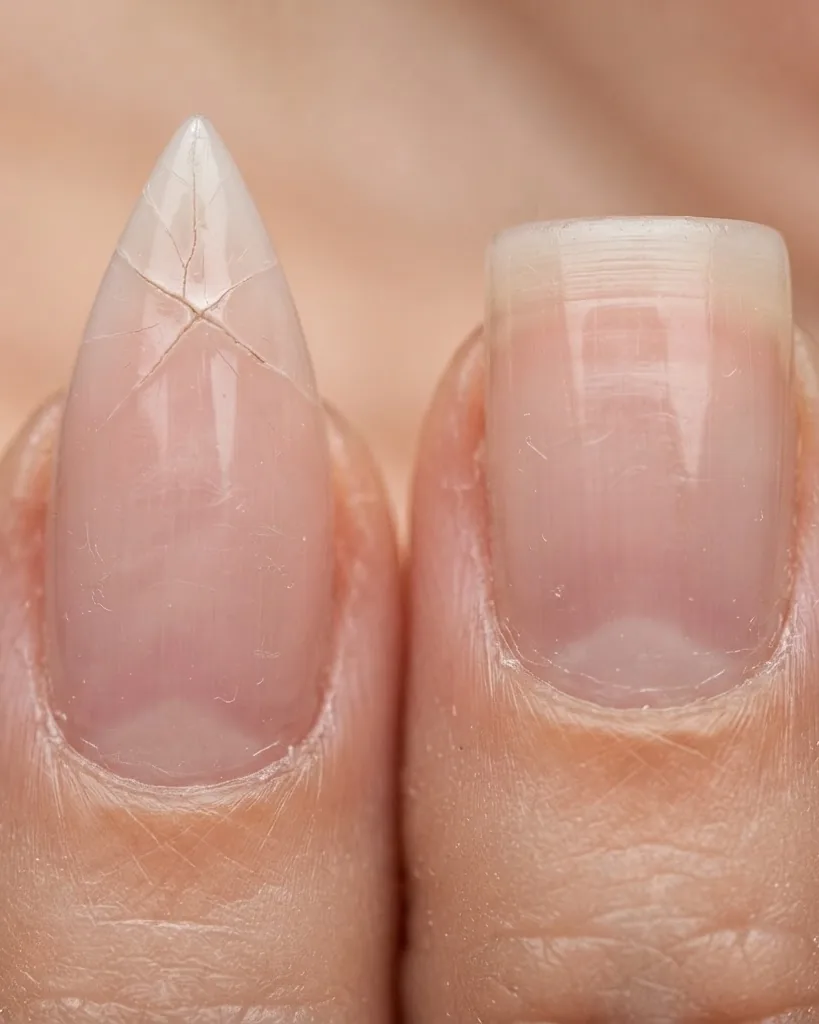
Breakage is a stress-distribution problem, and shape is the variable you actually control day to day. A pointed apex, as on stiletto or a sharp almond, funnels every knock and lever into one narrow spot on the free edge, so force per unit area climbs sharply and the keratin fails right at that single point. A square or squoval edge spreads the exact same impact across a wide, straight margin, so no single region ever carries the full load. This is not a matter of the nail itself being weaker; the same keratin either fails or survives depending purely on where the force lands relative to the shape of the edge.
Picture two identical nails opening a soda can tab. The squoval nail contacts the tab along a flat edge, so the load spreads across several millimeters of keratin. The stiletto nail contacts it at one point, so the same load is concentrated on a fraction of that area, which is exactly why a chef in stilettos loses tips daily while the same person in squoval barely notices the impact at all.
Two structural rules follow directly from this:
- The wider and flatter the free edge, the lower the peak stress at any one point, which is why round, oval, square, and squoval form the durable family of shapes.
- Every additional degree of sidewall taper removes lateral support from the plate, which is exactly why dramatic shapes both look more striking and break more easily than conservative ones.
There is a health cost to over-tapering, not just a cosmetic one. Onychocryptosis, the clinical name for an ingrown nail, is most frequently caused by improper trimming, specifically cutting nails too short or tapering the lateral corners too deeply, according to the NCBI StatPearls chapter on ingrown nails. Aggressive square and stiletto shaping into the sidewalls is exactly that risk factor in practice, so the durable shapes are usually the safer shapes as well, not just the lower-maintenance ones.
Matching a shape to your nail beds, fingers, and hand size
Shape matching is optical illusion applied to your specific hands, and a short framework beats a photo gallery every time you sit down to file. Long, narrow nail beds can carry almost any shape well, so choose by taste rather than necessity. Short beds want elongation, which means oval or a soft almond rather than a wide square that emphasizes stubbiness by cutting the finger off visually at the tip.
Wide nail beds narrow visually under oval or almond and look boxier under square, since the straight edge of a square draws attention to width rather than length. Small hands stay balanced with shorter, rounded shapes, while larger hands can carry length without looking exaggerated. Curved plates resist crisp squares because the flat top edge fights the natural dome of the nail, while flat plates carry squares cleanly. Mirror your natural cuticle line at the tip and the result reads balanced instead of stuck-on, which is the single fastest way to spot a poorly matched shape from across a room.
Use this as a quick decision map when you sit down for a file or a fill:
- Short bed, want length: oval or soft almond to elongate visually without extra product.
- Wide bed: oval or almond to narrow the visual width; avoid full square, which widens further.
- Small hands: round or short squoval to keep the finger and nail in proportion.
- Flat, strong plate: square or squoval read crisp and hold their line well between fills.
- Curved, tightly domed plate: oval or almond follow the natural curve instead of fighting it.
The elongating shapes work because a taper draws the eye down the length of the finger, while widening the tip does the opposite and pulls attention across it. This is the single most useful question a reader actually has, and it is answered by proportion and anatomy, not by whatever is trending that season. Once the shape is set, finish choices like a sheer look can shift the whole visual effect; see our guide to getting a sheer, no-streak milky white finish for how color reads differently across shapes and lengths.
Filing technique, grit, and grow-out timing that keep the shape
Filing technique protects the keratin as much as it defines the shape, and the biggest error most people make is sawing the file back and forth across the edge. That motion shears the layered plate and causes peeling and splitting; instead, file in one consistent direction, moving toward the center of the tip in short, deliberate strokes. Shape the two sidewalls first, then define the free edge, then refine the corners last, since corners are the most fragile part of any square-adjacent shape and are easiest to over-file by accident.
Grit matters as much as direction. Coarser grits remove length quickly but tear natural keratin, so reserve them for shaping acrylic or hard gel enhancements, and use finer grits to finish natural edges smoothly without introducing microscopic fraying that catches on fabric and snags later. Because fingernails grow at roughly 3.47 millimeters per month, a shape only holds its exact geometry for a few weeks before the apex drifts forward and needs a quick reshape to stay intentional-looking rather than accidental.
Grow-out behavior varies sharply by shape, and this is one of the most practical, least discussed factors in choosing one:
- Round and squoval age gracefully; the growing edge still reads intentional even a month out from a file.
- Square shows length unevenly as the corners drift and wants regular tidying to stay crisp.
- Stiletto and coffin lose their point or flat-tip definition fast and need the most frequent upkeep of any group.
Converting the monthly growth figure gives a useful planning number: 3.47 millimeters per month times 12 comes out to about 41.6 millimeters (41.6 mm) per year, roughly 4.2 centimeters, so growing from a short round into a long almond is a genuine multi-month commitment, not a one-appointment fix. Toenails lag far behind at approximately 1.62 millimeters (1.62 mm) per month, or about 19.4 millimeters (19.4 mm) per year, which is why pedicure shapes change so rarely compared with manicures. If your polish thickens between files, a small dose of the right solvent revives it without ruining the color; our page on what nail polish thinner is and how to dose it covers that process without wasting the bottle.
DIY versus professional execution: what you can safely file at home
Not every shape belongs in a home bathroom, and being honest about that saves both your nails and your patience. Round, oval, and basic squoval are entirely reasonable DIY projects with a standard glass or fine-grit file, since the corrections are gentle and forgiving of small mistakes. Square is doable at home but unforgiving; a slightly uneven corner reads immediately, and correcting an over-filed side often means shortening the whole nail to match.
Almond and any coffin, stiletto, lipstick, edge, flare, or mountain peak shape genuinely benefit from professional tools and trained hands. These profiles require precise, symmetrical tapering on both sides at once, and most are built on an enhancement product that needs proper curing equipment and technique to bond safely. Attempting a sharp stiletto with only a home file risks uneven sidewalls, weak points near the apex, and, on natural nails, real damage to the free edge.
- Safe at home: round, oval, squoval, soft square with basic tools and patience.
- Doable at home with practice: square, mild almond, short coffin.
- Better left to a professional: stiletto, lipstick, edge/pipe, flare/duck, mountain peak, arrowhead.
A reasonable rule of thumb: if the shape needs symmetrical tapering on both sidewalls at the same angle, or needs a hard enhancement to hold its form at all, professional execution reduces both breakage risk and the odds of an uneven, lopsided result you will just have to redo.
Troubleshooting: common shaping mistakes and how to fix them
Most shaping problems trace back to a handful of repeated errors, and recognizing them early prevents a small mistake from becoming a broken nail. A file dragged back and forth instead of in one direction is the single most common cause of splitting and peeling, since the sawing motion shears the layered keratin rather than smoothing it. The fix is simple: slow down and file in one direction only, checking progress every few strokes instead of filing continuously.
Over-tapering the sidewalls to chase a dramatic almond or stiletto look is another frequent problem. If the sidewall is filed too deep into the corner, stop, let the nail grow out a little, and reshape to a shallower taper next time rather than cutting the corner even further to compensate.
- Uneven left and right sidewalls: file the shorter side first in small increments, checking symmetry against the opposite hand rather than eyeballing one nail alone.
- Weak, flaking free edge after filing: switch to a finer grit for the final pass, and avoid re-filing the same spot repeatedly.
- Shape drifting out within a week: this is normal growth, not a filing error; a light touch-up every one to two weeks maintains most shapes.
- Corners snagging on fabric: round the very tip of each corner slightly, even on a square shape, without changing the overall silhouette.
Permits, hygiene compliance, and what the rules cost a nail operator
Salon compliance is where nail shaping stops being purely cosmetic and becomes a regulated public-health activity, and several bodies shape what a technician can legally and responsibly do. The Professional Beauty Association, the largest North American trade association for the professional beauty industry, sets industry context and advocacy for nail professionals, while NAILS Magazine documents the technique and sanitation standards technicians are expected to follow day to day. Neither writes law, but both translate the health rules that state boards enforce, from implement sterilization to how filings and dust are handled during aggressive shaping of enhancements.
The medical framing behind those rules comes from national bodies rather than the beauty industry itself. The American Academy of Dermatology publishes the public-facing guidance on trimming and shaping to prevent damage, and the National Center for Biotechnology Information hosts the clinical reference explaining how bad trimming causes ingrown nails. Together they define what “safe shaping” actually means once a client is in the chair.
- Trimming standard: straight across, corners rounded slightly, no deep sidewall taper, per the American Academy of Dermatology.
- Infection risk: broken cuticles and lifted enhancements open the plate to onychomycosis, a condition more frequent in adults than children.
- Ingrown risk: over-tapered corners are the leading structural cause per NCBI StatPearls.
The practical cost to an operator is not one fee but ongoing discipline: single-use or fully sterilized files, dust control at the workstation, and refusing service on nails showing signs of disease rather than reshaping over them. When a client presents thickened, discolored, or separating nails, the correct move is referral to a dermatologist or podiatrist, not a cosmetic reshape that only masks the underlying issue. Patient-education context on what nail changes can signal is available from Mayo Clinic’s in-depth nail health guide, a nonprofit academic medical center resource that is a standard reference for that judgment call.
Occupational and lifestyle shapes: who should not wear a point
Occupation should override fashion when the two conflict, because some jobs make certain shapes a genuine hygiene or safety hazard rather than just an inconvenience. Healthcare and food-service workers face hand-hygiene rules that effectively ban long or pointed nails, since occluded free edges trap pathogens and can shed enhancement fragments into food or onto patients. Typists and musicians lose accuracy and catch on keys or strings past a moderate length, which turns a cosmetic choice into a functional problem within days.
Manual laborers and athletes subject the free edge to constant impact, which punishes any pointed apex far more than a rounded one. For all of these groups, short round or squoval is the durable, low-risk default, and it is worth choosing on functional grounds even before aesthetics enter the conversation.
- Healthcare and food service: short, rounded, no extensions where hygiene rules apply.
- Musicians and typists: short oval or round for control and tactile accuracy.
- Manual and athletic work: square or squoval to spread impact force across the edge.
The hygiene logic is grounded in the fact that fungal infection is observed more often in adults, and long, covered nails give moisture and debris a place to sit undisturbed. This is also why men, older adults, and people with limited hand dexterity are usually steered toward shorter, rounded shapes: they are easier to maintain, safer against tears, and simpler to keep clean without help. Shape inclusivity is not just an aesthetic nicety; it is a practical accommodation that changes daily function, and imagery and advice built for a single “young, femme, office worker” audience misses most of these real-world cases entirely.
Terminology confusion: coffin versus ballerina and other name traps
Naming is the quiet reason so many salon visits go wrong, because the industry never standardized its vocabulary the way medicine or engineering did. Coffin and ballerina are the same shape: tapered sidewalls squared off at a flat tip, and a technician may use either word depending on where they trained or which region they work in. Squoval, edge, pipe, flare, and duck all carry inconsistent definitions between individual professionals and even between salons in the same city.
The fix is to describe geometry instead of relying on names alone. Saying “tapered sidewalls, flat squared tip” communicates the request precisely, and any technician understands it regardless of which label they personally learned. This disambiguation is exactly what most published shape catalogs skip entirely, leaving readers to guess whether their technician’s “coffin” matches the photo they brought in.
- Coffin = ballerina: identical tapered-then-squared profile, just two regional names for the same geometry.
- Squoval: a square with rounded corners, not a separate family of shape.
- Flare = duck: a widened tip, the direct opposite of a taper.
Describing the free edge, sidewall angle, and apex out loud, rather than reaching for a single trend word, removes almost all of the confusion in one sentence and saves a wasted appointment.
Frequently asked questions about different nail shapes
What is the strongest nail shape?
Round is the sturdiest natural shape because it has no sidewall taper and its wide, curved free edge spreads impact force instead of concentrating it at one point. Squoval comes a close second and looks more polished while sacrificing very little durability. Both distribute stress across a broad margin, so they resist chips and snaps far better than almond, stiletto, or coffin, which funnel every knock into a narrow apex.
What shape is best for short nails?
Oval and soft almond suit short nails best because their gentle taper draws the eye lengthwise and makes the bed look longer than it measures. Round works well too on very short or bitten nails since it needs no extra length to look intentional. Avoid full square on short beds; the boxy edge emphasizes stubbiness rather than lengthening the finger visually the way a taper does.
Is stiletto bad for your nails?
Stiletto is not inherently harmful, but its single-point apex concentrates mechanical stress, so it breaks easily on natural keratin and usually needs acrylic or hard gel support to hold its form. The bigger risk is the deep sidewall taper, which the NCBI StatPearls reference links directly to ingrown nails. If you love the look, keep it moderate in length and never file aggressively into the corners.
Which shape grows out most gracefully?
Round and squoval age best between appointments because their profiles stay readable as the nail lengthens, so the growing edge still looks deliberate rather than neglected. Since fingernails add about 3.47 millimeters each month, low-maintenance shapes save real time over months of upkeep. Stiletto and coffin lose their defined point or flat tip fast and demand frequent reshaping to keep looking intentional.
Which shapes look most natural and professional?
Round, oval, and squoval read as the most natural and workplace-appropriate shapes because they mirror the fingertip’s own curve rather than exaggerating it, and they carry the lowest breakage risk during a normal workday. Soft square is a close option for anyone who wants a bit more edge without tipping into a dramatic look. Extended shapes like coffin and stiletto photograph well but signal a styled, high-maintenance look rather than a low-key, professional one.
When should I see a dermatologist instead of a nail technician?
See a dermatologist or podiatrist when nails are thickened, discolored, separating from the bed, or painful, since those signs can indicate infection or disease rather than a purely cosmetic problem. Fungal infection is common in adults, and a technician cannot legally diagnose or treat it. Mayo Clinic and the American Academy of Dermatology both publish guidance on what nail changes may indicate. This is a health topic, so if symptoms persist, get a professional evaluation rather than waiting for the next manicure.
[req:3443397]