The phrase hides a split that decides everything downstream. “Gel nail extensions” names two separate services – hard gel built up over a form, which gets filed off, and a pre-shaped soft-gel tip (the Gel-X style), which gets soaked off. That single fork explains why one source tells you to budget 15 minutes of acetone and another tells you nothing dissolves it. Before you book, price, or attempt gel nail extensions at home, you need to know which of the two you’re actually dealing with, because the wear time, the removal, and the damage risk all branch from it.
Quick answer: Gel nail extensions add length using cured gel. The hard-gel-over-a-form version is built freehand and must be filed off; the soft-gel tip version is a pre-shaped cover-tip bonded to the nail and soaked off in acetone. Expect a full set to run $65 – $150 at a mid-tier US salon, with fills every two to three weeks. Wear ranges from two weeks to four or five, limited by how fast your own nail grows out. Most nail damage comes from the mechanical side – over-filing and forced removal – not from the gel itself.
Hard Gel Over a Form vs. Pre-Shaped Soft-Gel Tips
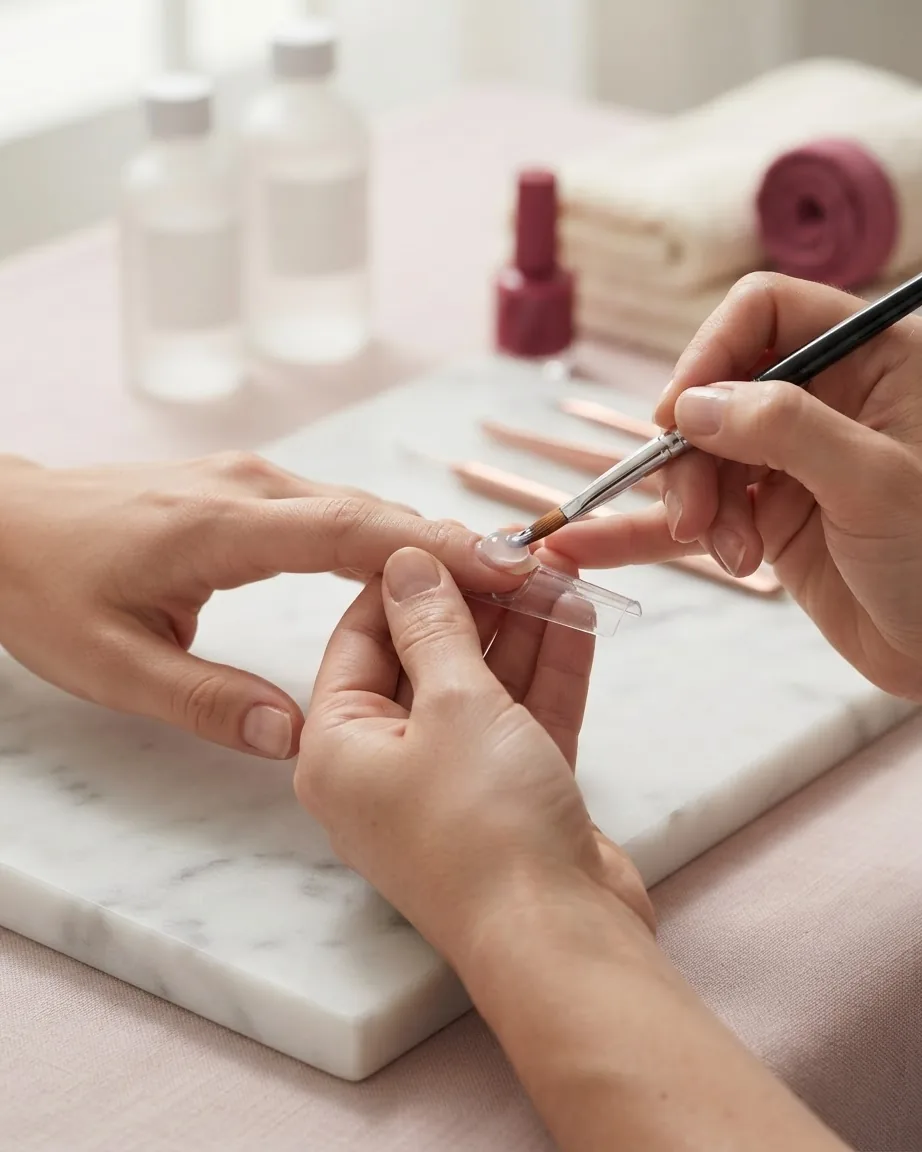
In the hard-gel method, a form slides under the free edge and the technician builds length freehand with a gel that stays rigid once cured. There’s no tip; the shape is sculpted. Because hard gel doesn’t break down in solvent, it comes off by filing – one reason it reads as the more permanent of the two.
The soft-gel route uses a single pre-formed tip that covers the whole nail from the cuticle area to the tip, bonded and cured in place. Byrdie, the Dotdash Meredith beauty title, lays out the modern version of this service through its named nail experts, and the reason it soaks off cleanly is that soft gel dissolves in acetone where hard gel will not. Same umbrella term, opposite removal. For the tip-based path specifically, our Gel X nail tips guide sits alongside this one.
Gel vs. Acrylic: Flexibility, Strength, and the $5 – $20 Gap
Gel and acrylic are different chemistries with a real tradeoff. Gel is more flexible and tends to move with the natural nail; acrylic is denser and harder. Allure, reporting with a cosmetic chemist, frames acrylics as typically longer-lasting because they’re stronger – a durability point, not a wear-time number. Byrdie’s figures describe how long one gel system stays on the hand before growth forces a refresh. Those two claims aren’t the same measurement, so don’t stack them against each other; both agree that natural nail growth sets the outer limit.
The practical decision rule: the cost difference is small. Gel nail extensions generally run $5 – $20 more than acrylic for a comparable full set at the same salon tier, according to Mirellé Inspo’s salon pricing compilation. So the choice turns on feel and finish, not sticker price – flexible and natural-looking versus hard and rigid. One caution on acrylic: avoid any product using MMA (methyl methacrylate), a monomer long flagged as unsafe for nail use.
- Want flexibility and a lighter feel: gel leans this way.
- Want maximum rigidity and length-holding strength: acrylic leans this way.
- Budget is the deciding factor: the gap is only $5 – $20, so let the other two points decide.
How Long Gel Nail Extensions Last Before a Fill
Wear is personal. Byrdie reports, through nail expert Davis, that “for some people, gel extensions last two weeks; for others, they’ll last four to five” – a range driven by how fast your nail grows out from the cuticle, not by any defect in the set. Fast growers see the gap at the base sooner.
The fill schedule is where sources genuinely diverge, and it’s worth keeping all of them rather than pretending there’s one standard. Mirellé Inspo puts fills at $40 – $80 every two to three weeks. Valentino Beauty Pure’s salon-side figure has refills beginning at $35, applied every two to three weeks if you want to keep the overlay. Pick the tighter end if you grow fast or your edges lift early.
What Actually Damages the Nail (It Isn’t the Gel)

The gel itself sitting on the nail is not the villain. The damage is mechanical: over-filing the natural plate, forced or peel-off removal, prying under a snag for leverage, and gluing fresh product over a section that has already lifted. Each of these thins or tears the nail plate – and that thickness does not grow back in place.
Thi Spa & Nails, a San Francisco salon, puts recovery in concrete terms: nails grow approximately 3 – 4mm per month, so a thinned or peeled section has to grow out at the tip before it’s gone. That makes recovery a matter of months, not days. The practical takeaway: a new, well-applied set won’t “fix” an already-thinned plate – it only covers it until it grows out. Avoid the forced peel at all costs, and never let a technician file into the natural nail chasing shine.
Removing Gel Nail Extensions Without Shredding the Plate
Removal depends entirely on which service you got – the terminology trap again. Hard gel over a form is filed down; it will not surrender to acetone. Soft-gel tips soak off.
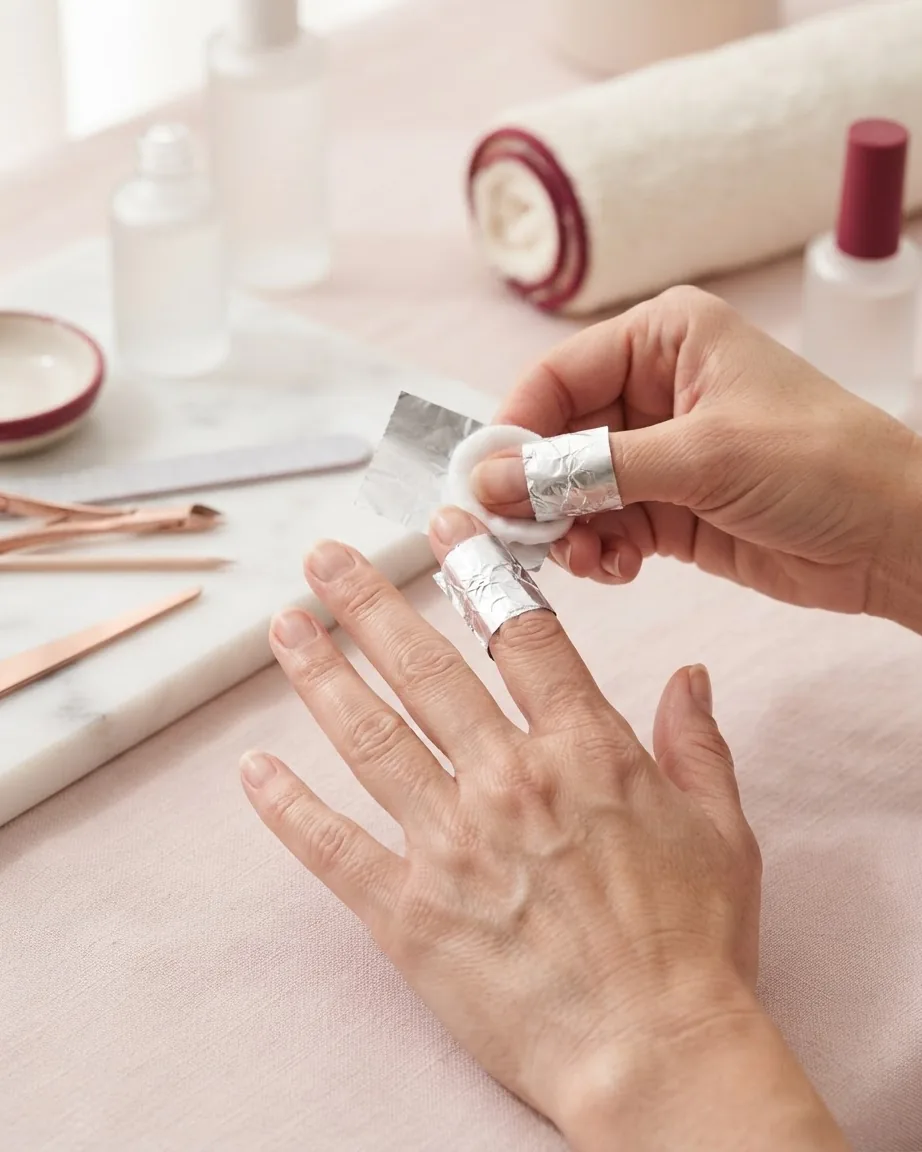
For the soakable kind, Byrdie’s process has the technician file down about 85 percent of the extension first, then soak the remaining thin layer in acetone wraps with foil for about 15 minutes. The whole professional removal should take 30 – 40 minutes at most – if it’s dragging well past that, the soak step isn’t doing its job and someone is likely filing instead of dissolving. Standalone removal, booked on its own, costs $15 – $35 at most US salons and runs 20 – 40 minutes.
The non-negotiable for any soak-off at home is the solvent itself: only pure 100% acetone breaks cured soft gel. Acetone-free remover sits on the surface and does essentially nothing, the same way a nail varnish remover for gel bottle fails on a cured coat. A patient soak beats aggressive filing every time. If any contact with liquid product or solvent reaches the skin, wash it off immediately, and work in a ventilated space.
When a Problem Needs a Dermatologist, Not Another Fill
Cosmetic wear-and-tear is one thing; a reaction or infection is another, and a salon chair is not where you resolve it. Stop and see a professional if you notice persistent pain, itching, swelling, discoloration, or the nail separating from its bed. None of those are fixed by applying a fresh set on top.
This is the line this desk won’t cross: nail-health symptoms are a medical matter, not a styling one. If something looks or feels wrong under or around the extension, a dermatologist – not a reapplication – is the correct next step. Because recovery of a thinned plate tracks nail growth at roughly 3 – 4mm per month, waiting for the damage to “repair itself” under a new overlay isn’t a plan.
Gel Nail Extensions Cost: First Set, Fills, and Removal
A single sticker number misleads, because the service bills in three parts over time. Here’s the picture, assembled from salon-side figures.
- Full set: $65 – $150 at a mid-tier US salon, per Mirellé Inspo – budget shops start around $32, boutique studios reach $150 – $200.
- Single-color hard gel, basic style: begins at $80, with an average around $125, according to Valentino Beauty Pure.
- Fills: $40 – $80 every two to three weeks (Mirellé Inspo), or refills from $35 (Valentino Beauty Pure) – the fill is the recurring line item, not the full set.
- Removal: $15 – $35 standalone.
- Gel vs. acrylic: add $5 – $20 for gel at the same tier.
A clean annual total isn’t something these figures alone can produce – it depends on your fill interval and whether you redo or remove – so treat the fill as the number that actually drives your yearly spend. If you fill every two to three weeks at $40 – $80, that recurring cost outweighs the first set within a couple of months. Mirellé Inspo’s data puts a fill at roughly 55 – 70% of the full-set price, which is why skipping fills to save money usually backfires into a full redo.
Applying Soft-Gel Extensions at Home: Cure Times and Fit
Doing this yourself is possible but not the shortcut it looks like. Byrdie’s experts don’t recommend the DIY route and note it takes at least an hour, if not more. Two things decide whether a home set holds: the nail needs some length for the tip to grip, and the tip has to fit sidewall to sidewall – if you’re between sizes, size up and file down rather than forcing a narrow tip.
Cure timing is set by the system and the lamp, and it’s where home sets most often go wrong. In the NSI soft-gel tip system – NSI has been a nail-technology manufacturer for over 30 years – the tip is flash cured for 5 seconds under the flash light, then all five fingers are cured together for 60 seconds in the lamp. Revel Nail’s official instructions call for a thin layer of “Bond” cured 60 seconds in LED or 2 minutes for UV before the tip goes on. Lamp wattage and type change the numbers, so follow the instruction sheet for your exact system rather than guessing.
- Prep and lightly dehydrate the natural nail (the plate must be clean and dry before any product).
- Apply the system’s bond/base per its sheet and cure – 60 seconds LED or 2 minutes UV in Revel Nail’s instructions.
- Size each tip sidewall to sidewall; if between sizes, go up and file the sidewalls down.
- Seat the tip, flash cure briefly (5 seconds in the NSI system), then full cure all fingers together (60 seconds in NSI’s steps).
- Shape, refine, and finish per the system.
Follow the manufacturer’s sheet over any generic timing – NSI’s official soft-gel tip instructions are specific to its own gel and lamp. Keep solvents and uncured product off bare skin, work with ventilation, and wash off any contact right away.
Picking Your Path: Which Gel Service Fits Your Hands
Run the decision through the fork, not the marketing. If you want flexibility, a natural feel, and a clean soak-off later, the soft-gel tip route fits – just commit to the full acetone soak and skip the peel. If you want maximum rigidity and are comfortable with a file-off removal, hard gel over a form holds structure longer between visits. Either way, the recurring fill at $40 – $80 every two to three weeks is what you’re really signing up for, and the mechanical care – no prying, no over-filing, no gluing over a lift – is what keeps your natural nail intact across sets.
Is Gel-X the same thing as gel nail extensions?
Gel-X is one brand-style of the pre-shaped soft-gel tip category, which falls under the broader “gel nail extensions” label. The label also covers sculpted hard gel built on a form. So every Gel-X set is a gel extension, but not every gel extension is a Gel-X tip – and that distinction changes whether yours soaks off or files off.
Can I file the extension down to make removal faster?
You can reduce thickness, but stop at the thin layer – never file into the natural plate chasing the last of the shine. Over-filing thins the plate, and that loss only disappears as the nail grows out at roughly 3 – 4mm per month. Let acetone finish the job on soft gel; hard gel is filed, not soaked.
Will a new set repair my already-damaged nails?
No. A fresh overlay covers a thinned or peeled area; it doesn’t rebuild it. The plate has to grow out from the base before the weakened section reaches the free edge and gets clipped off. If you see pain, swelling, discoloration, or the nail lifting from its bed, see a professional instead of booking another appointment.
Why do two salons quote me different fill schedules?
Because there’s no single measured standard – only differing recommendations. Your own growth rate and how early your edges lift matter more than the quoted interval. Fast growers and heavy-handed users should lean toward the shorter end.
How Much of a Gel Removal Is Filing, Not Soaking
Byrdie’s own figures give you a way to audit your own removal appointment. The acetone soak is fixed at about 15 minutes, but the whole professional removal runs 30-40 minutes. Subtract the soak and the rest – the filing, wrapping, and handling – is where the nail plate is actually at risk.
- Soak share of removal: 15 / 30 = 50% in a quick removal, 15 / 40 ≈ 38% in a slow one.
Reading: if you’re in the chair well over 40 minutes and most of it is filing, the soak step isn’t doing its job – someone is grinding instead of dissolving, which is exactly the mechanical wear that thins the plate.