>
Hard gel for nails is a methacrylate-based enhancement that cross-links under a lamp into a polymer so dense that acetone cannot dissolve it, which is the single fact that separates it from every soak-off product on a salon shelf. That one property drives everything else: how it wears, how it is removed, and why a botched removal is where most damage actually happens. The material sits somewhere between traditional liquid-and-powder acrylic and the thin soft gel used for color, borrowing structural strength from the first and a odorless brush-on workflow from the second. Understanding where it fits saves your nail plate.
The confusion in the market is real. Two products can both be called “gel,” cure under the same lamp, and behave in completely opposite ways when you try to take them off. Getting that wrong is how people file through their natural nail. So before the color chart, the chemistry.
Quick answer: Hard gel for nails is a thick methacrylate oligomer that hardens under UV or LED light into a cross-linked polymer, used for extensions, structural overlays, and 3D nail art. It is stronger and more flexible than acrylic and cannot be soaked off in acetone; it must be filed down instead. It is not inherently bad for your nails when a trained hand preps lightly and removes it by filing rather than prying. The main risks are over-buffing the natural plate and, per the American Academy of Dermatology, cumulative UV exposure to the skin on your hands.
What hard gel actually is at the molecular level
Hard gel is built from methacrylate oligomers and polymers suspended in a viscous, brush-on medium that stays workable until light hits it. When you place the nail under a lamp, photoinitiators in the formula absorb specific wavelengths and trigger polymerization, chaining those oligomers into a tightly cross-linked network. That cross-link density is the whole story. It is why the cured layer resists solvents, flexes without snapping, and holds an extension out past the fingertip without cracking at the stress point. The material is chemically a cousin of acrylic, both being methacrylate systems, but the delivery and the working time differ sharply.
The U.S. Food and Drug Administration classifies artificial nail systems, including hard gels, as cosmetics under the Federal Food, Drug, and Cosmetic Act. That matters because it sets the labeling and safety expectations the manufacturer is legally held to.
The FDA notes that artificial nails rely on reacting acrylic monomers, such as ethyl methacrylate, with acrylic polymers. If traces of reactive monomer stay uncured in the finished layer, the agency warns they can cause adverse reactions such as redness and swelling in sensitized individuals. That is the argument for a full cure, not a rushed one.
If you want the sibling chemistry spelled out, the deep dive on what builder gel is and how it differs chemically covers the overlap and where the two products part ways.
Hard gel versus acrylic, soft gel, and standard polish
The four common enhancements are not interchangeable, and picking the wrong one for your lifestyle is the most avoidable mistake in the whole category. Acrylic is a liquid monomer mixed with a powder polymer that air-cures and sets hard and rigid. Soft gel, also called soak-off gel, is a thinner methacrylate that cures under light but stays porous enough for acetone to break down. Standard polish is a solvent-based lacquer with no polymerization at all. Hard gel occupies the strong-but-flexible middle: it cures like gel, wears like acrylic, and removes like neither.
Here is the practical breakdown of what each does well:
- Hard gel: flexible strength, ideal for extensions and structural overlays; must be filed off, never soaked.
- Acrylic: maximum rigidity and repairability; strong solvent odor during application; soaks off in acetone.
- Soft (soak-off) gel: thin, glossy, best for color and short overlays; dissolves in acetone.
- Standard polish: no light needed, fastest to remove, shortest wear, no added strength.
People cross-shopping acrylic often arrive with damage from a prior set. The recovery-focused guide on how to get acrylic nails off safely and recover the nail plate is worth reading before you switch systems, because the removal habits you bring over will decide how healthy your natural nail stays.
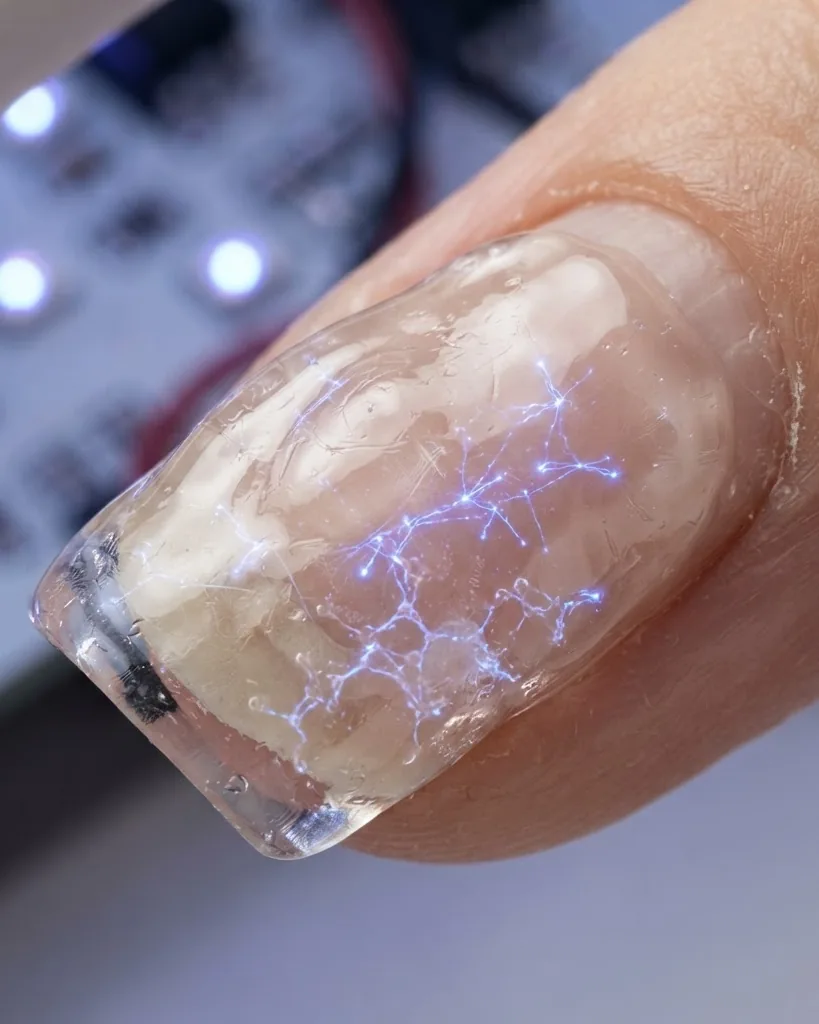
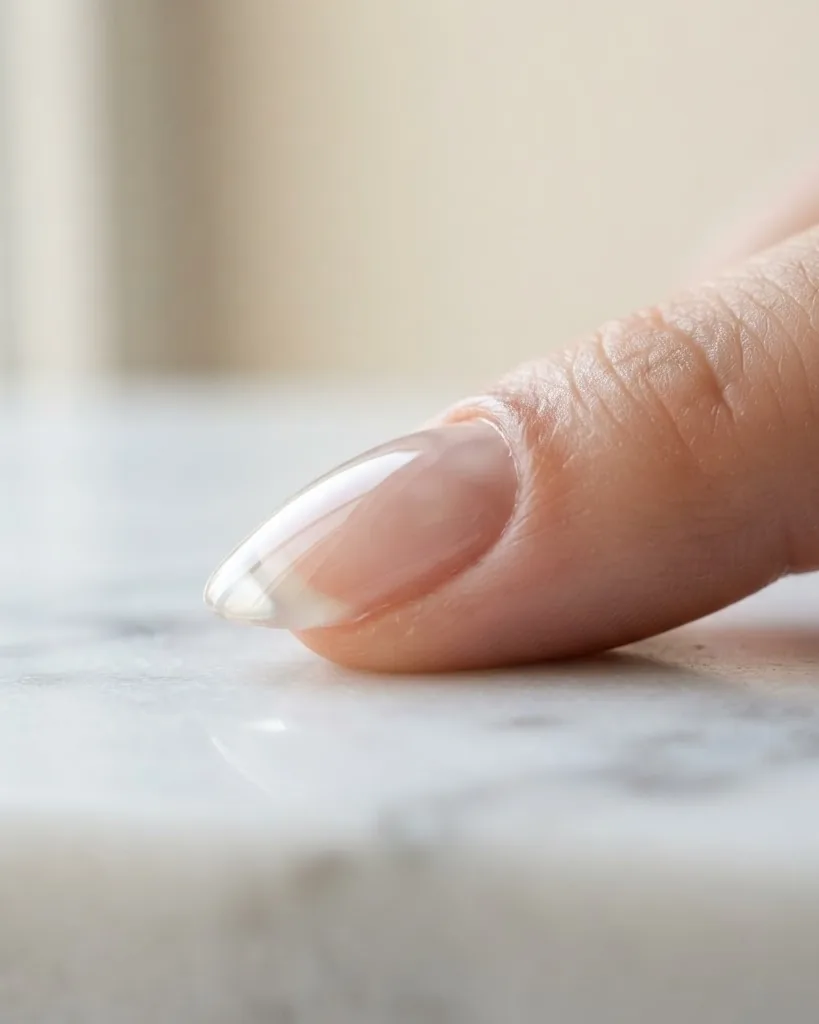
Is hard gel bad for your nails, or is hard gel good for your nails
Is hard gel bad for your nails? Not by itself. The material is inert once fully cured, and the FDA-regulated formulas are designed to bond to a lightly prepared nail plate without corroding it. Damage, when it happens, is mechanical and human: aggressive buffing before application, prying a lifted edge, or filing too deep during removal. Is hard gel good for your nails? It can be genuinely protective, because a well-applied overlay acts as armor for a weak or peeling natural nail, letting it grow out underneath. The outcome depends almost entirely on the hands doing the work, not the tube.
The two real hazards are worth naming plainly. First, over-thinning the natural plate during prep or removal, which leaves it flexible, sensitive, and prone to splitting. Second, uncured monomer against skin, which the FDA links to redness and swelling in sensitized people.
Neither hazard is inevitable. Light prep, a full cure, and filing rather than prying eliminate most of the risk. Choosing the best hard gel for nails means less about the brand name and more about a formula matched to a lamp that fully cures it.
If you are already noticing thinning or white patches, ease off enhancements and let the nail rebuild before the next set.
How UV and LED lamps cure the gel at specific wavelengths
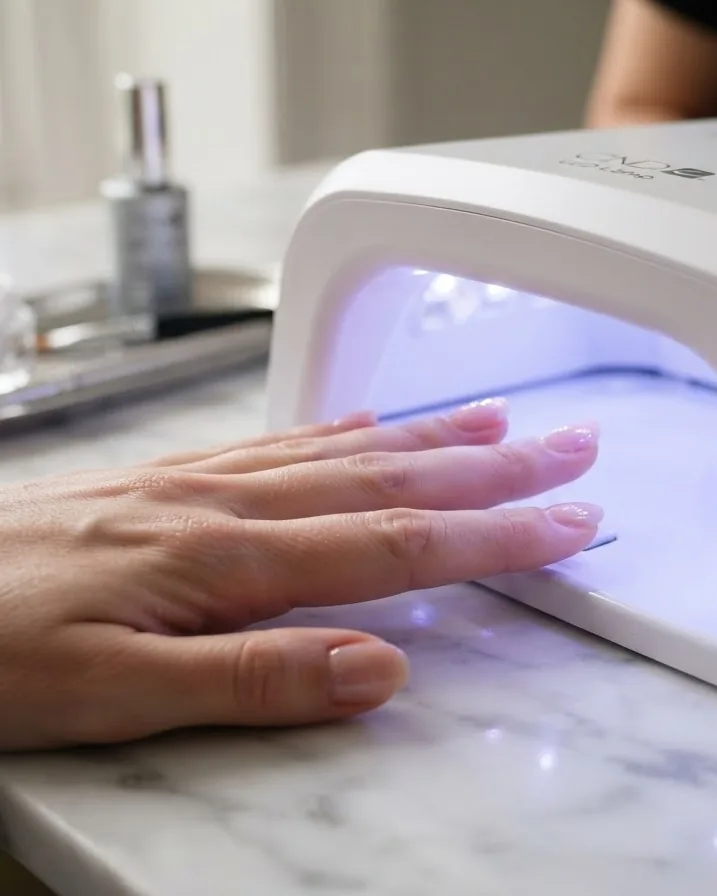
Curing is not “any light will do.” Hard gel polymerizes only when its photoinitiators absorb the wavelength they were formulated for, and mismatching lamp to gel is how you get a tacky, undercured layer that traps reactive monomer. Professional LED nail lamps cure hard gel formulas effectively by emitting specific, narrow wavelengths, typically 365 nanometers and 405 nanometers, in 30 to 60 seconds per cure. Older UV lamps emit a broader band and generally cure the same material more slowly. The takeaway for anyone buying a kit: read the gel’s required wavelength and buy a lamp that produces it, not the reverse.
A few technical points that decide whether your cure holds:
- Match the lamp output to the gel’s stated wavelength; 365 nm and 405 nm are the common targets.
- Respect the full cure time; a 30 to 60 second window exists so the network fully cross-links.
- Thick layers cure incompletely from the bottom; build in thin passes and cure each.
- A sticky top layer after curing is often the inhibition layer, not undercure, but only if the interior set hard.
There is a health dimension to the lamp itself. The light that cures gel is UV, and the American Academy of Dermatology treats repeated exposure to the skin as a real, if modest, consideration. That is covered in the safety section below.
Using hard gel for extensions, overlays, and 3D nail art
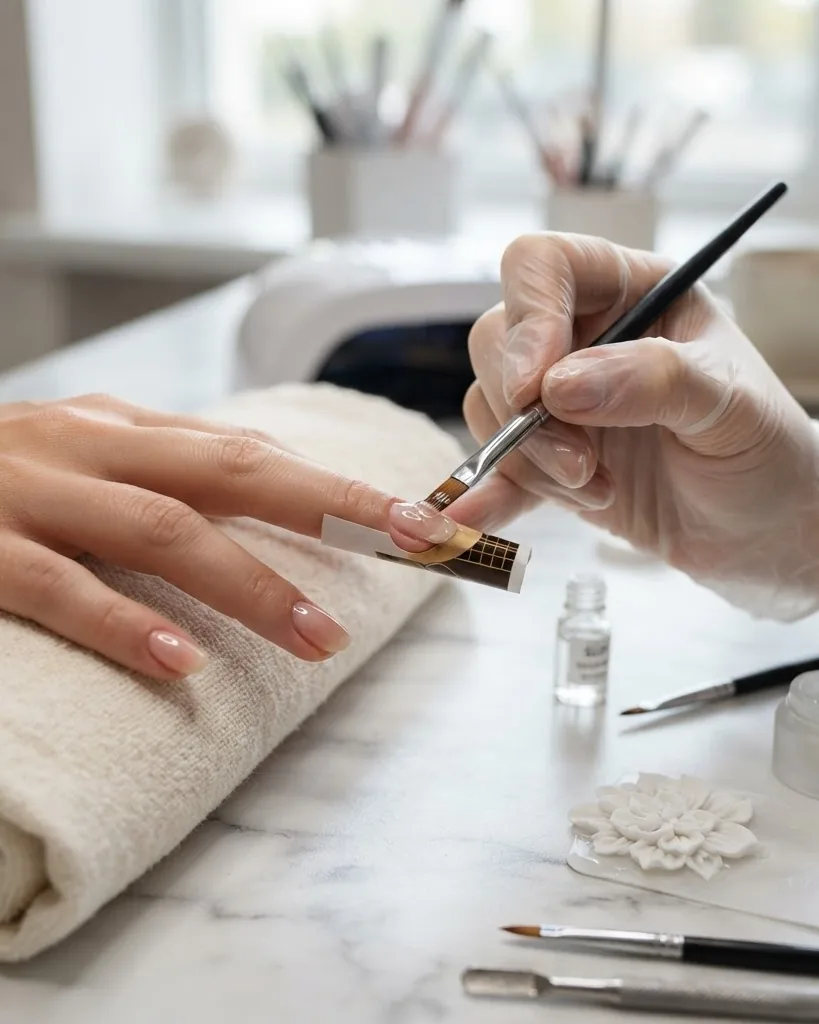
Can you use hard gel for 3D nail art? Yes, and its viscosity is exactly why it is the go-to for sculptural work. Because hard gel is thick and stays put until you cure it, you can build a raised bow, a marbled ridge, or a stacked floral element and freeze it in place with a flash cure before it slumps. That same body makes it excellent for nail extensions, where the product is sculpted over a form or tip to lengthen the nail with a strong, flexible free edge. Structural overlays, where gel is applied over the natural nail for reinforcement without added length, use the identical material at a thinner build.
The workflow logic is consistent across all three uses. You build in thin controlled layers, cure each, and let the product’s own viscosity hold the shape you sculpt.
For extensions specifically, an apex, the high point of arch that carries stress, is what keeps the nail from cracking. Hard builder gel for nails is the phrase you will see on tubes meant for this structural work, and it behaves the same way as classic hard gel with slightly more self-leveling.
Shape choice interacts with strength. A long stiletto puts more leverage on the stress zone than a short round, so the guide on matching nail shape geometry to your own nails safely is a useful companion when you plan an extension length.
For the sculpting tools themselves, the taxonomy in the complete safety and buying guide to nail art instruments explains which brushes and dotting tools handle thick gel without dragging.
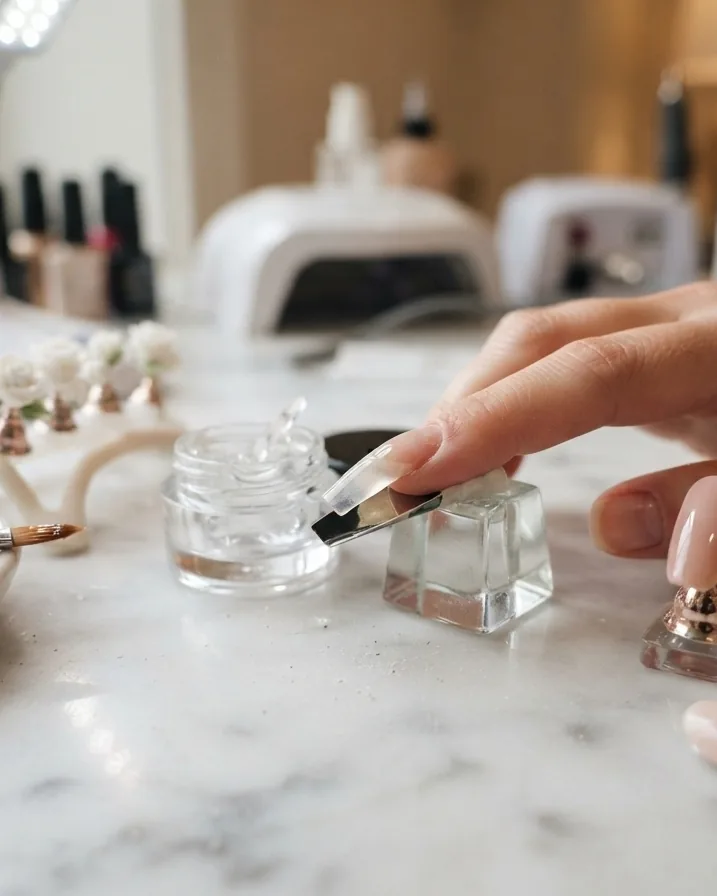
Why acetone will not remove it and how to file it off safely
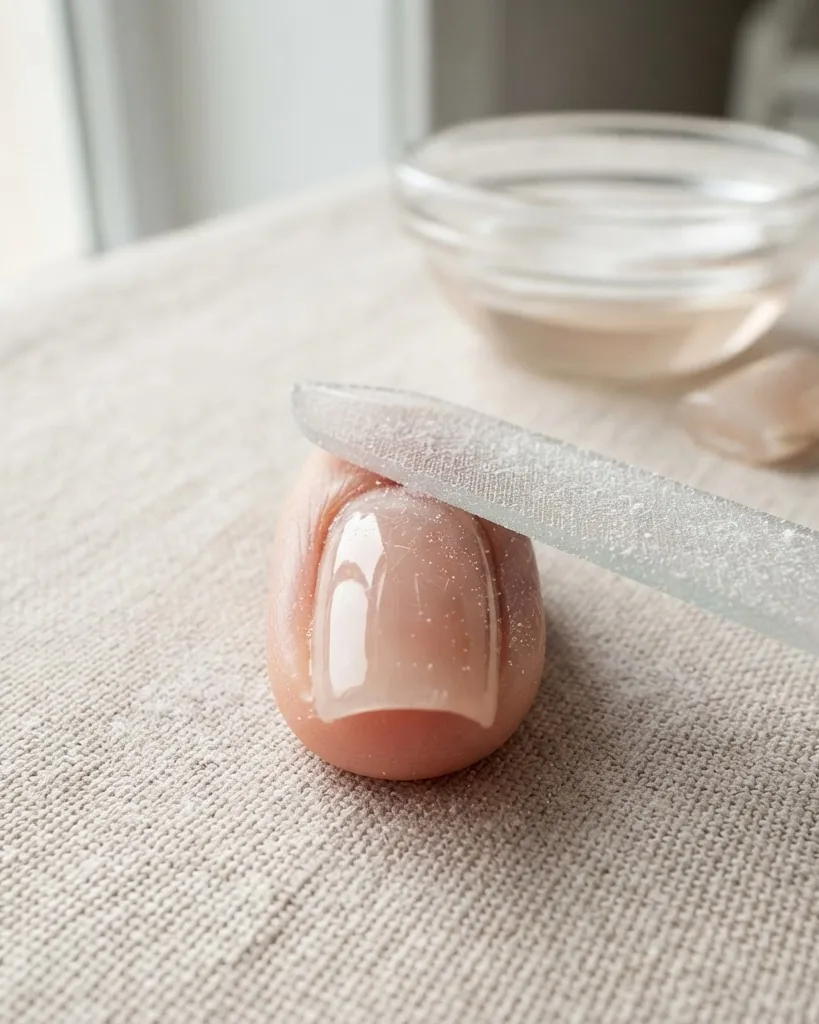
Traditional hard gel forms a highly cross-linked polymer structure that is impervious to acetone, which means it must be filed off rather than soaked off. This is the fact that trips up the most people, because a soft gel manicure comes off in fifteen minutes of acetone wraps and hard gel simply will not budge under the same treatment. Trying to force it, soaking longer, prying at a softened edge, or peeling, is precisely how the natural nail plate gets torn. Removal is a controlled reduction: you file the bulk down with a coarse-to-fine progression, stopping at a thin remaining layer before you switch to a gentle buffer.
The safe removal sequence, in order:
- File down the surface shine and bulk with a coarser grit, keeping the file flat and moving.
- Slow to a finer grit as you approach the natural nail; watch for a color or texture change signaling you are close.
- Buff the last thin veil off gently rather than filing to the plate.
- Stop the moment you see or feel the natural nail; a thin residual layer is safer than an over-filed bed.
- Oil and rehydrate the nail and surrounding skin afterward.
If you feel heat or sensitivity while filing, stop. That is friction reaching the plate. A professional removal exists for a reason.
Permits, cosmetic regulation, and what compliance costs an operator
The regulatory backdrop is more crowded than most clients realize, and it shapes what a legitimate salon can and cannot put on your nails. In the United States, nail products including artificial nails and hard gels are regulated by the U.S. Food and Drug Administration as cosmetics under the Federal Food, Drug, and Cosmetic Act. The FDA governs the safety, labeling, and regulatory classification of these products; it does not pre-approve most cosmetics but holds manufacturers responsible for safety and truthful labeling. When the agency flags that uncured ethyl methacrylate can cause redness and swelling, that warning carries the weight of the body that oversees the whole category.
Several named authorities and terms sit around this space, and each governs a different slice:
- U.S. Food and Drug Administration (FDA): cosmetic safety, labeling, and classification of nail systems.
- American Academy of Dermatology (AAD): medical guidance on skin and nail health, including UV protection during gel manicures.
- Centers for Disease Control and Prevention (CDC): broad public-health guidance relevant to salon sanitation practices.
- National Institutes of Health (NIH): the biomedical research base underlying much dermatological guidance.
The phrase YMYL, meaning Your Money or Your Life, describes the caution that any content touching health and finances deserves, and nail chemistry qualifies because it touches both your skin and your wallet. Established professional bodies in the trade, including the International Beauty Distributors network known in the industry as IBD and the trade knowledge associated with NSI, publish their own application standards on top of federal rules.
You can read the FDA’s own consumer page on nail care products and how the agency regulates them for the primary-source version of these rules.
UV exposure precautions from the American Academy of Dermatology
The lamp is the one part of a gel service that touches your skin with radiation, and the dermatology profession has a specific, low-effort answer for it. To protect against the UV radiation used to cure gel products, the American Academy of Dermatology recommends applying a broad-spectrum, water-resistant sunscreen with an SPF of 30 or higher to the hands before a manicure. SPF here stands for Sun Protection Factor, and broad-spectrum means it blocks both UVA and UVB. The exposure per session is small, but it is repeated every few weeks for people who maintain enhancements, and that cumulative dose is what the recommendation addresses rather than any single visit.
The practical protection steps are simple and stack well:
- Apply broad-spectrum, water-resistant SPF 30 or higher to the backs of the hands before curing.
- Consider UV-protective gloves with the fingertips cut off, leaving only the nails exposed.
- Keep skin off the direct light path where the design allows.
None of this is a reason to avoid gel; it is a reason to treat the lamp the way you would treat any other sun exposure. The AAD publishes its full list of dermatologist tips on keeping nails healthy during gel manicures, which is the source for the SPF 30 guidance above.
Choosing the best hard gel and lamp for nail extensions
Picking a system is less about the loudest brand and more about three things fitting together: the gel’s chemistry, the lamp’s wavelength, and the job you want done. For nail extensions and structural work, you want a hard builder gel for nails with enough body to hold an apex, paired with a lamp that outputs the gel’s stated 365 nanometer or 405 nanometer wavelength so it cures in that 30 to 60 second window. A cheap lamp that cannot reach the gel’s required wavelength will leave you with a soft, tacky build no matter how good the gel is, and that is where uncured monomer and lifting come from.
A short buying checklist that keeps you out of trouble:
- Confirm the lamp emits the wavelength your gel requires; do not assume any LED lamp cures any gel.
- Choose a viscosity matched to the task: thicker for sculpted extensions, self-leveling for overlays.
- Prefer formulas from manufacturers who label ingredients transparently, in line with FDA labeling expectations.
- Budget for removal too; hard gel needs filing, not a bottle of acetone.
Color and finish are a separate question from structure, and if you are pairing a hard gel base with a bold lacquer top, the breakdown in the guide to matching red nail polish to your undertone and decoding the label helps you avoid staining a light-cured surface.
Is hard gel bad for your nails if you get it done often?
Frequent hard gel itself is not the problem; the removal is. Damage accumulates when each fill or new set involves aggressive buffing or prying rather than careful filing. Done with light prep, a full cure, and filed removal, regular hard gel can protect a weak nail. The FDA’s caution is mainly about uncured monomer and fit, not routine wear on a properly prepped, healthy nail plate.
Can you use hard gel for 3D nail art on natural nails?
Yes. Hard gel’s thick viscosity lets you sculpt raised elements like bows, flowers, and ridges directly on a prepped natural nail, then flash-cure to lock the shape before it slumps. Build in thin layers, curing each, so the interior sets fully under the lamp. Keep 3D work off high-impact fingers, since a raised design catches more and can pull at the base if knocked.
Is hard gel good for your nails compared to acrylic?
Both are methacrylate systems, so neither is categorically healthier. Hard gel is more flexible and odorless during application, while acrylic is more rigid and easier to repair. For nail health, the deciding factor is removal: acrylic soaks off in acetone, hard gel must be filed. A skilled filed removal protects the plate as well as, or better than, a rushed acetone soak.
Can hard gel be soaked off in acetone like soft gel?
No. Traditional hard gel forms a highly cross-linked polymer that is impervious to acetone, so soaking does nothing but dry your skin. It must be filed off with a coarse-to-fine grit progression, stopping short of the natural nail. This is the single biggest source of confusion between soft, soak-off gel and true hard gel, and getting it wrong leads to peeling and prying damage.
The bottom line on hard gel for healthy, strong nails
Hard gel earns its place for anyone who wants length or reinforcement that flexes instead of shattering, and its reputation for damage is almost always a removal story rather than a chemistry story. The FDA regulates it as a cosmetic and warns about uncured monomer; the AAD asks only that you shield your hands with SPF 30 or higher against the curing UV. Match your gel to a lamp that hits 365 or 405 nanometers, cure fully in that 30 to 60 second window, and file it off rather than force it. Do those, and the material protects your nails more than it threatens them.
If you are weighing gel against removing an existing set first, start with the recovery guidance in the piece on getting acrylic nails off without wrecking the plate before you book anything new. A healthy natural nail is the foundation every enhancement is only as good as.
[req:1632105]