Cured gel does not dissolve the way regular lacquer does – it bonds to the nail plate under a UV or LED lamp, which is exactly why a bottle of gentle everyday polish remover slides right off without touching it. The right gel nail polish remover is almost always 100% pure acetone, used as a timed soak after the shine has been filed off, and the whole job runs about 10 to 20 minutes depending on how thick the gel is. Everything below sorts out which removal path fits your nails, which shortcut wastes your afternoon, and which habit does the real damage.
This is cosmetic guidance, not medical advice. If a nail looks infected, lifts from the bed, or hurts, that belongs to a professional, not a soak bowl.
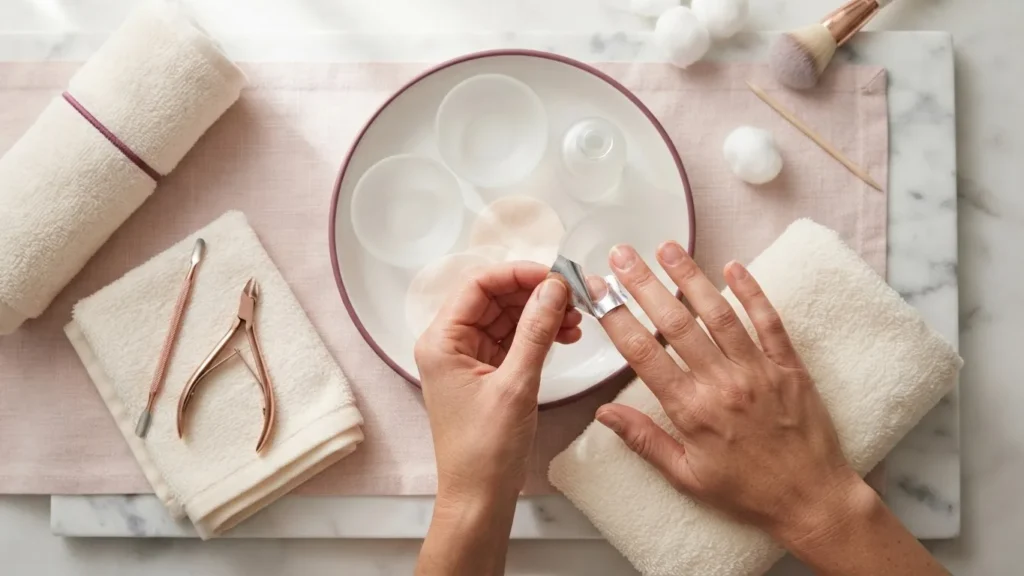
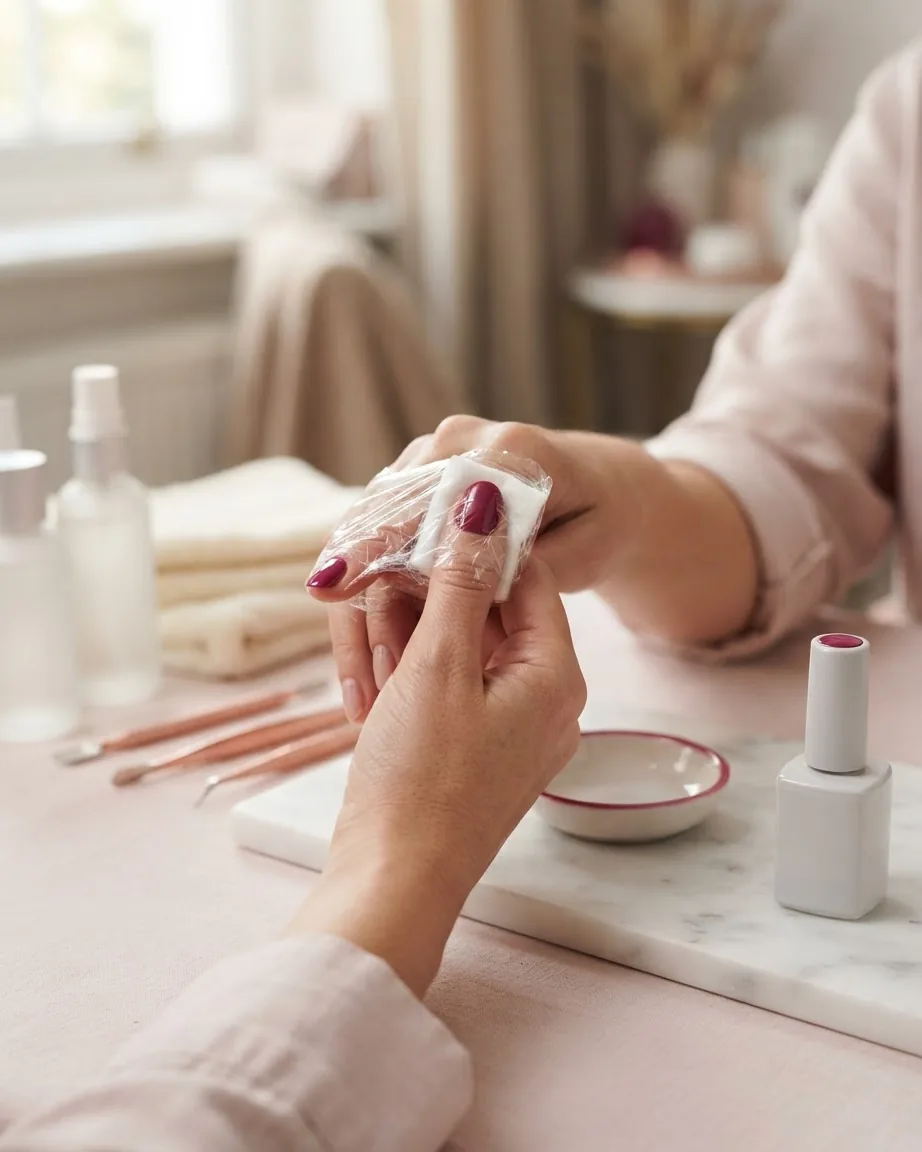
Quick answer: Lightly file the glossy top layer, saturate a cotton piece with 100% pure acetone, press it on the nail, and seal it under foil or plastic wrap. Leave it about 10 to 15 minutes, then push the softened gel off with a cuticle pusher. The length of a full gel nail polish remover session depends on how thick the application is. Warm, soapy water and dish soap will not break cured gel down. Hard gel cannot be soaked off at all – it has to be filed. After removal, nails feel softer for about 24 hours, so hydrate and give them a rest.
The acetone soak-off, step by step – and why 10 minutes isn’t one number
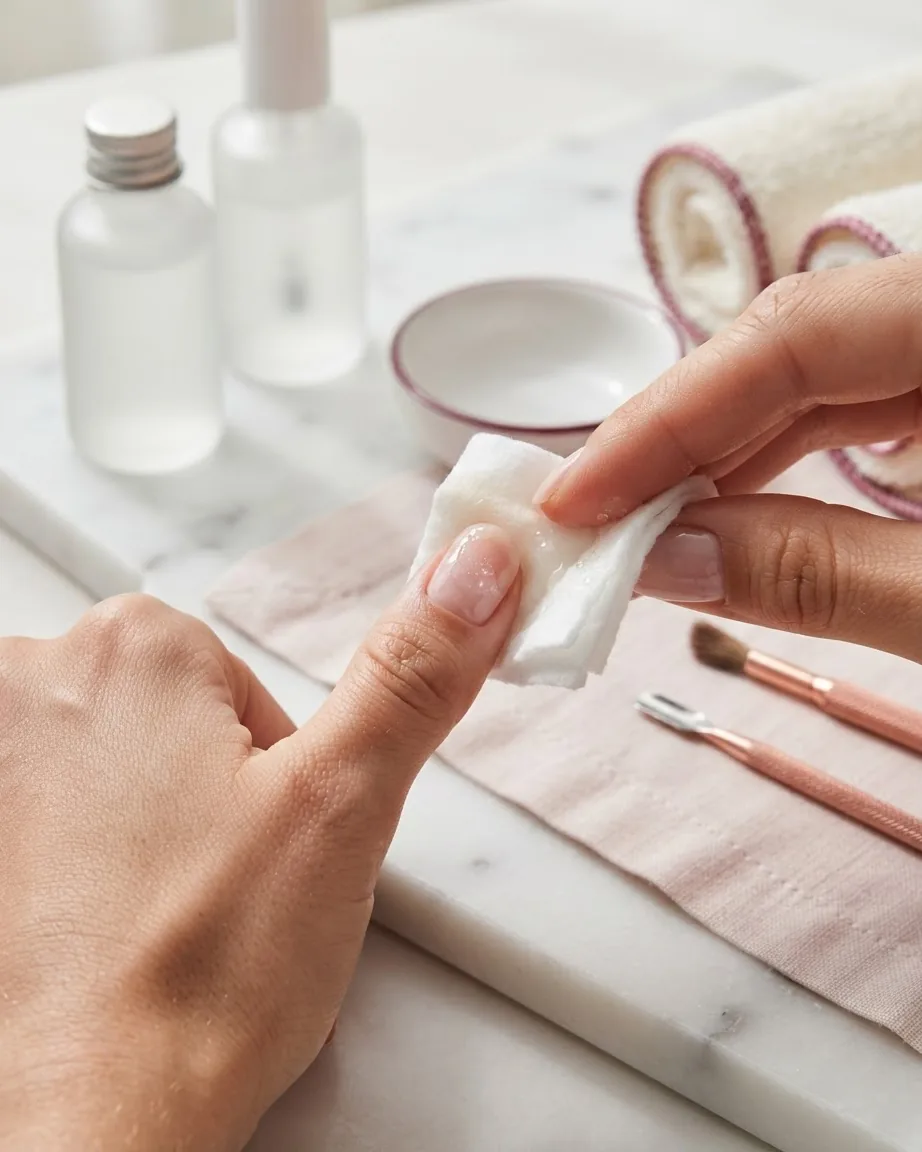
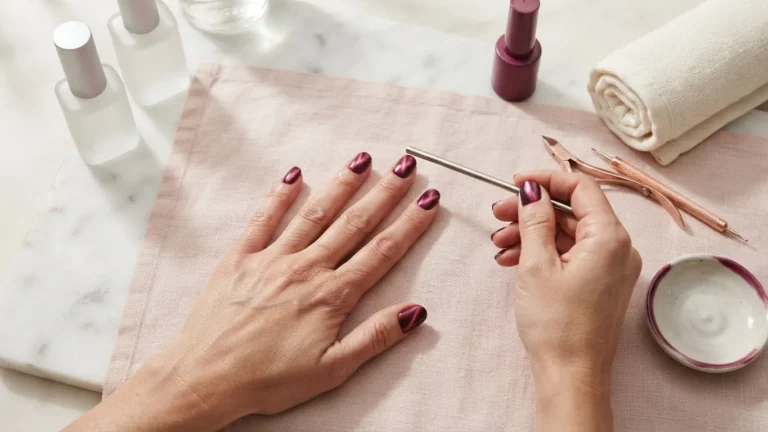
The at-home method mirrors what a salon does. A technician uses a coarse file to take down the shiny top layer, then places acetone-soaked cotton on each nail and wraps the fingers in foil to let the acetone soak in for about 10 minutes, according to the walk-through Vogue published with celebrity nail artists and a dermatologist. The order matters: file first so the seal is broken, then soak, then push.
Here is where the timing confuses people. The figures floating around describe two different clocks. The soak-and-wait phase is about 10 to 15 minutes – the window the acetone sits against the gel. Sally Beauty lists the soak as “about 10 to 15 minutes,” and Essie gives the same 10-15 minutes once every nail is tightly wrapped. The primary dermatology guidance, from the American Academy of Dermatology and relayed through Vogue, states it plainly: “Leave the plastic wrap on for 10 minutes.”
The other clock is total removal, start to finish. Sally Beauty puts that at about 10 to 20 minutes, “depending on the thickness of the application.” So when someone asks how long gel removal takes, the honest answer is: the soak is 10 to 15 minutes, the whole job is 10 to 20 – and both only apply to soak-off gel polish, not to every product that can end up on a nail.
The AAD recommends 100% pure acetone for best results, a point Vogue attributes directly to the Academy. Weaker or diluted removers stretch the soak out or leave gel behind. For a fuller picture of how these products are built in the first place, see our What Are Gel Nails guide.
Will dish soap, warm soapy water, or regular remover take gel off?
No – and this is the shortcut that eats the most wasted time. The belief that any gentle liquid will loosen gel if you just give it long enough is wrong about what cured gel actually is. It is a hardened film bonded to the nail, not a coat of lacquer sitting on top.
Sally Beauty is blunt about the middle options: non-acetone removers or a soak in warm, soapy water “may loosen the polish slightly,” but “they will not fully break it down.” Dish soap is weaker still – it might soften the very surface, but it does nothing to the cured film underneath. None of these is a removal method; at best they’re a mild assist before the real work.
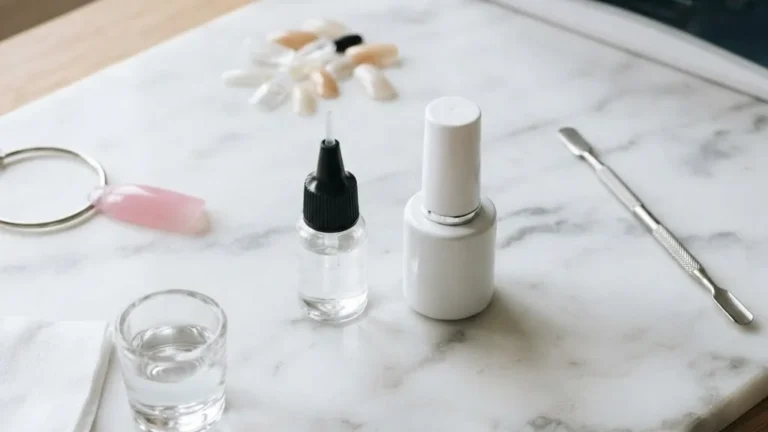
There is one genuine acetone-free route, and it is not any of the above. It is a formulated gel remover that works by a different chemical action entirely. Sally Beauty describes an acetone-free product used by buffing the nail with a medium-grit file, brushing on a thick coat, applying a second coat, and then the polish bubbles and begins to crack so it can be pushed off. That’s a purpose-built remover, not a kitchen substitute. The distinction worth holding onto: “no acetone” from a formulated gel remover can work; “no acetone” from the sink will not.
If you landed here because you have no remover at all in the house, the solvent logic in our remove polish without remover guide is useful background – though note that cured gel is a far tougher case than ordinary lacquer.
Gel won’t budge after a full soak – soak longer, or something else?
Longer is not the lever, and this is the single most useful correction for a stuck set. Essie states it directly: acetone only ever removes most of the gel, “no matter how long it stays on.” Leaving cotton on longer does not finish a job that the soak started – it just dries your skin out.
The actual fix is cycles. Re-file the surface lightly to reopen the seal, re-wrap with fresh acetone cotton, and wait again. Essie’s instruction for a nail that isn’t ready: “wrap another acetone cotton ball to the nail and wait another 5 minutes.” Think in rounds of filing and re-soaking, not one heroic soak.
There’s a related timing trap working against you. Because acetone evaporates easily, peeking too early actively costs you time – Essie notes that “checking on the nails before the 10 minutes are up can add time to the removal,” because every time you open the wrap, solvent escapes and the nail starts drying. Set a timer, check one nail, and leave the rest sealed. Patience here is mechanical, not moral: the acetone needs an unbroken window to work.
Builder gel, BIAB, and hard gel: why soaking the same way fails

This is the distinction most generic removal guides skip, and getting it wrong leads to over-scraping a nail that was never going to soak off. Not all gels behave the same under acetone, a point Essie makes explicitly.
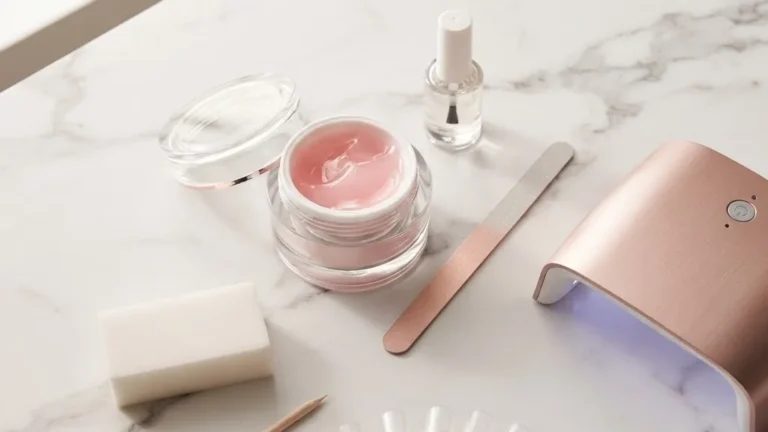
- Soak-off gel polish – the thin color coat most people mean by “a gel mani.” This is the product the 10 to 15 minute acetone soak was designed for.
- Builder gel / BIAB – thicker, structural. Essie’s guidance: file down a lot more of the gel thickness before the acetone soak, which is what actually speeds removal. Soak it like thin gel polish without filing enough and you’ll wait and wait for nothing.
- Hard gel – cannot be soaked off at all. Per Essie, hard gels “can only be filed off, preferably by a professional manicurist.” Acetone simply does not break this material down.
So before you reach for the remover, identify what’s on your nail. If it’s hard gel, the bottle of acetone is the wrong tool and a file is the right one – ideally in a professional’s hands. If it’s builder or BIAB, budget extra filing before the soak even starts. A nail drill tempts people here as a speed trick; the professional view relayed by Vogue is to not use a drill on yourself at home to speed the process up.
Can you warm the acetone to speed it up?
Warming acetone does genuinely speed removal – heat helps it break the gel down faster. But there is exactly one safe way to do it, and the wrong way is a fire risk. Acetone is highly flammable. Never heat it directly on a stove, and never put it in a microwave.
The safe method is an indirect water bath: fill a larger bowl with warm water, set a smaller bowl of acetone inside it, and let the water do the warming. Then run the soak as usual, around 10 to 15 minutes. The trade-off is simple – you get faster removal only by keeping an open flame, a heating element, and a microwave completely out of the picture. If you can’t warm it indirectly, skip the warming and just soak longer in cycles.
Protecting skin and nails during the soak – and the 24-hour rule after
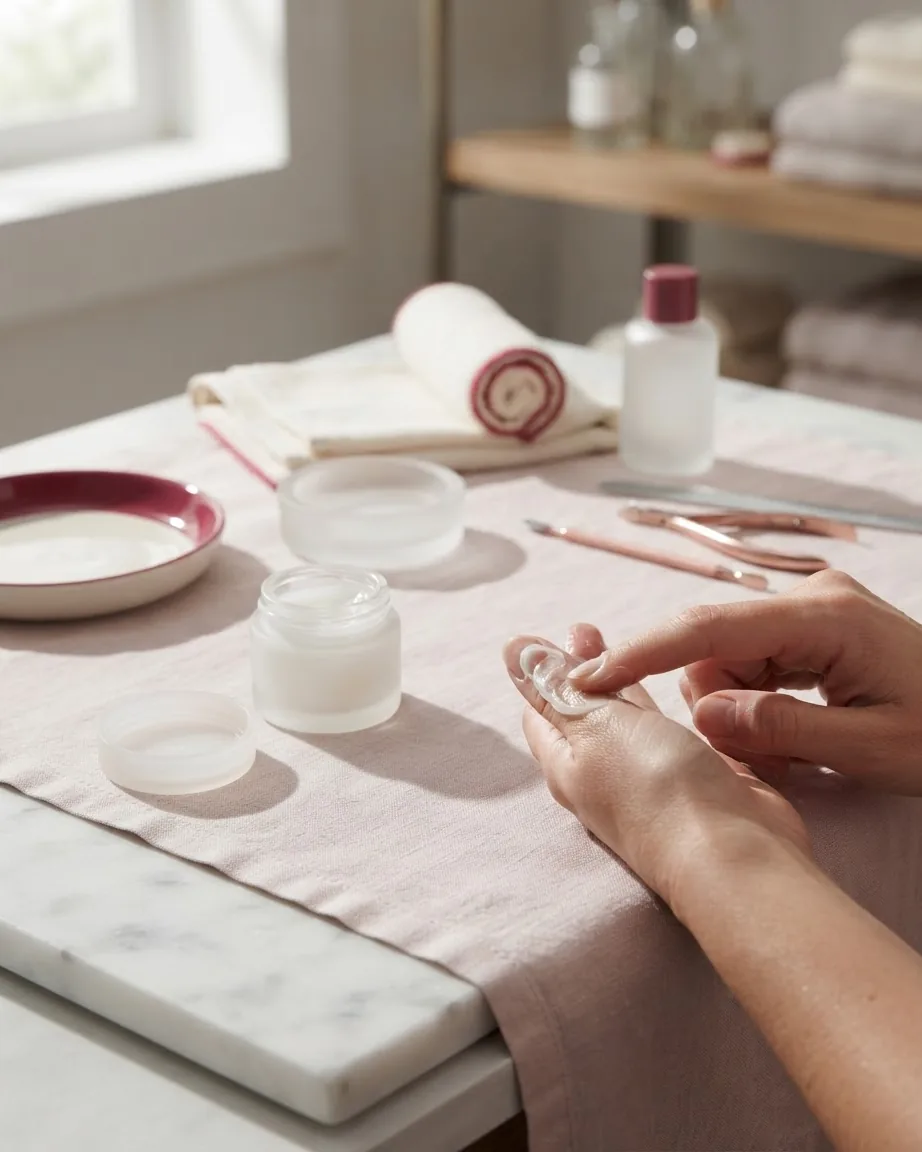
Acetone pulls moisture from skin and nail, so the protection happens in two places: before and after. Before the soak, a dermatologist quoted by Vogue advises applying a thin layer of petroleum jelly to the cuticle and surrounding skin for nourishment – a barrier that takes the edge off the solvent. This goes on skin, never as a patch test of any raw product.
Afterward, expect softer nails, and know why. Essie explains that water passes through our nails at about half the rate when they’re wearing a coating like gel or acrylic. Strip the coating and the nail is suddenly in a different state – it feels soft because it’s rehydrating. Essie’s number to trust: give your nails 24 hours to return to normal. That softness is temporary, not damage.
During that window, be gentler than usual. Essie warns against sharp objects on freshly bared nails until they firm back up. Then hydrate – cuticle oil, hand cream, a protective ointment – and, importantly, space your gel manicures out. The dermatologist in Vogue’s piece notes that getting gel manicures too often leaves nails weak, and recommends taking a break to let them recover. Recovery is a scheduling choice as much as a product one.
Why peeling gel off – even when it’s lifting – damages the nail
A chipped edge begging to be picked is the most tempting and most damaging thing on this list. The harm is specific and it accumulates. When you peel gel, you don’t just remove gel – you lift keratin layers off the nail plate along with it.
Sally Beauty quotes nail expert Juli Russell on the mechanism: “Damage comes from improper removal. If you rip off gel or over-file the nail, you’re pulling layers of keratin from the nail plate.” Vogue’s experts land in the same place – the celebrity nail artist interviewed there notes you might not see damage the first or second time, but “the number of layers that peel off each time will cause a weak nail in the end.” That reframes the whole weak-nails complaint: it is improper removal, not the gel itself, that thins nails over time.
Over-filing does the same thing from the other direction. With dip powder and similar systems the rule is to never file past the color into the natural nail. The soak exists precisely so you don’t have to pry – let the acetone soften the gel, then push, never force.
The genuinely no-solvent route: growing it out
If acetone is off the table – sensitivity, already-fragile nails, personal preference – there is one real non-chemical path, and a named authority backs it. The AAD, relayed by Vogue, says growing your nails out completely offers the safest alternative to removing gel polish. The method is just maintenance: clip your nails once a week until the gel grows off the end.
Know the timeline before you commit. Fingernails clipped weekly clear in the span of a normal grow-out. Toenails are a different population entirely – the AAD puts their full grow-out at 12 to 18 months. That’s not a typo; toenails grow slowly, so gel on a toenail essentially stays until the nail replaces itself. For a toe, soaking or professional filing is usually the practical call; patience as a strategy really only suits fingernails.
Matching the remover to your nail
The decision comes down to three questions answered in order. What’s on the nail – thin gel polish, builder/BIAB, or hard gel? Thin gel polish takes the 10-to-15-minute acetone soak; builder and BIAB need heavy filing first; hard gel gets filed off, preferably by a professional. Second, can you tolerate acetone? If yes, 100% pure acetone is the reliable workhorse; if no, a formulated acetone-free gel remover works by bubbling the film, while the sink does not. Third, how fast do you need it gone? A warm-water bath speeds the soak safely; growing it out is slowest of all and best reserved for fingernails, given the 12-to-18-month toenail timeline. Answer those three and the right remover picks itself.
Is 100% acetone really necessary, or will a cheaper remover do?
For cured gel, strength is the whole job. The Academy of Dermatology’s recommendation, carried by Vogue, is 100% pure acetone for best results. Diluted or “nourishing” acetone-blend removers contain less active solvent, so they drag the soak out or quit before the gel fully softens – pushing you toward extra filing rounds. Buying a dedicated bottle of pure acetone is cheaper than the time lost fighting a weak one.
My gel is bubbling and cracking – did I ruin it?
Not if you used a formulated acetone-free gel remover. Bubbling and cracking is the designed behavior of that product type: Sally Beauty describes the film beginning to bubble and crack, which is your cue to push it off. With a standard acetone soak, though, you want softening and slight wrinkling, not dramatic bubbling – that distinction tells you which product you’re actually holding.
Can I use a nail drill at home to remove gel faster?
The professional advice relayed by Vogue is direct: don’t use a drill on yourself at home to speed the process. Drills remove material fast and unforgivingly, and on your own non-dominant hand the odds of grinding into the nail plate climb sharply. Filing by hand to break the shine is enough prep; let acetone do the dissolving. If you genuinely want speed, warm the acetone by water bath instead.
How often can I safely get gel manicures?
There’s no fixed cap, but the principle from Vogue’s dermatologist is that doing them too often keeps nails weak, so building in recovery gaps matters. Since nails need about 24 hours after each removal just to reach their normal firmness again, back-to-back gel sets never give the plate a real break. Watch for persistent thinning or peeling between sets – a sign to stretch the interval or consult a professional.
The real clock on stubborn gel: why cycles beat one long soak
When gel isn’t ready, the fix is re-filing and re-wrapping for another 5 minutes per round, so the clock climbs in 5-minute steps. Here’s what that actually adds up to, using only the numbers in this guide (15-minute soak, 5-minute re-soak rounds):
| Item | Value |
|---|---|
| First soak only | 15 min |
| + 1 re-soak round | 15 + 5 = 20 min (still inside the quoted total) |
| + 2 re-soak rounds | 15 + 5 + 5 = 25 min (past the 10-20 min total) |
| + 3 re-soak rounds | 15 + 5 + 5 + 5 = 30 min |
This also undercuts the “just leave it on longer” instinct: a single long heroic soak does a worse job, since it only dries your skin while the gel stops softening. Two short rounds beat one long sit.