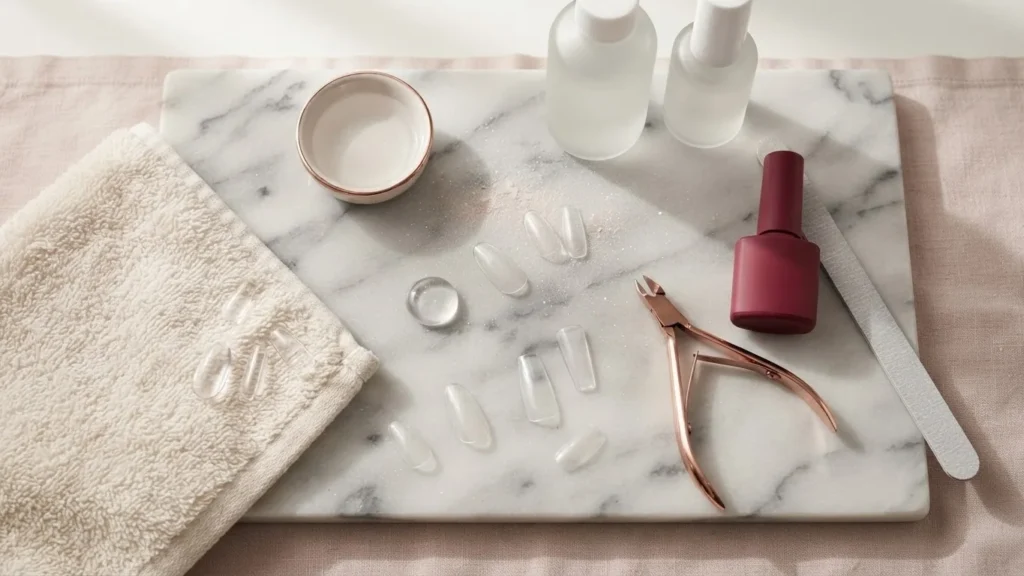
Among the common acrylic nail shapes, the roundest silhouettes hold up best and the tapered ones fail first. Nailsami ranks them from weakest to strongest as stiletto, coffin, almond, square, squoval, oval, round, because a continuous curve carries no corners to concentrate stress. At a sharp corner, EyeCandys notes the local stress is concentrated well above the average across the rest of the nail. Longer, pointed shapes also need real length to form, so short natural nails usually require an extension to get there.
The short answer: choose an acrylic nail shape by three things. For durability, round and oval top the list; for drama, coffin and stiletto, which break soonest. Almond needs roughly 3 mm to 5 mm of free edge to taper, so it cannot be worn truly short without a tip. Short, wide fingers look longer under a narrow oval or almond; broad beds suit a squared edge filed straight. To build length a bare nail cannot reach, hard gel on forms runs about $135 to $160 at one studio.
Strength and length requirements across the acrylic nail shapes
The table lines up what the sources say about each shape’s durability rank, the free edge it needs, and whether a short natural nail can carry it unaided.
| Shape | Strength rank (weakest to strongest) | Free edge / length note | Works short without a tip? |
|---|---|---|---|
| Stiletto | 1 (weakest) | Needs real length to form the point | No |
| Coffin | 2 | Free edge must be well beyond the fingertip | No |
| Almond | 3 | 3 mm: 5 mm of free edge to taper | No |
| Square | 4 | Any length; corners are stress points | Yes |
| Squoval | 5 | Any length | Yes |
| Oval | 6 | Yes | |
| Round | 7 (strongest) | Any length, follows the fingertip | Yes |
Nailsami states “that round ranks strongest, because a continuous curve has no corners, stress points, or thinned sidewalls to concentrate stress,” in its shape-and-finger guide.
Round: the lowest-breakage edge
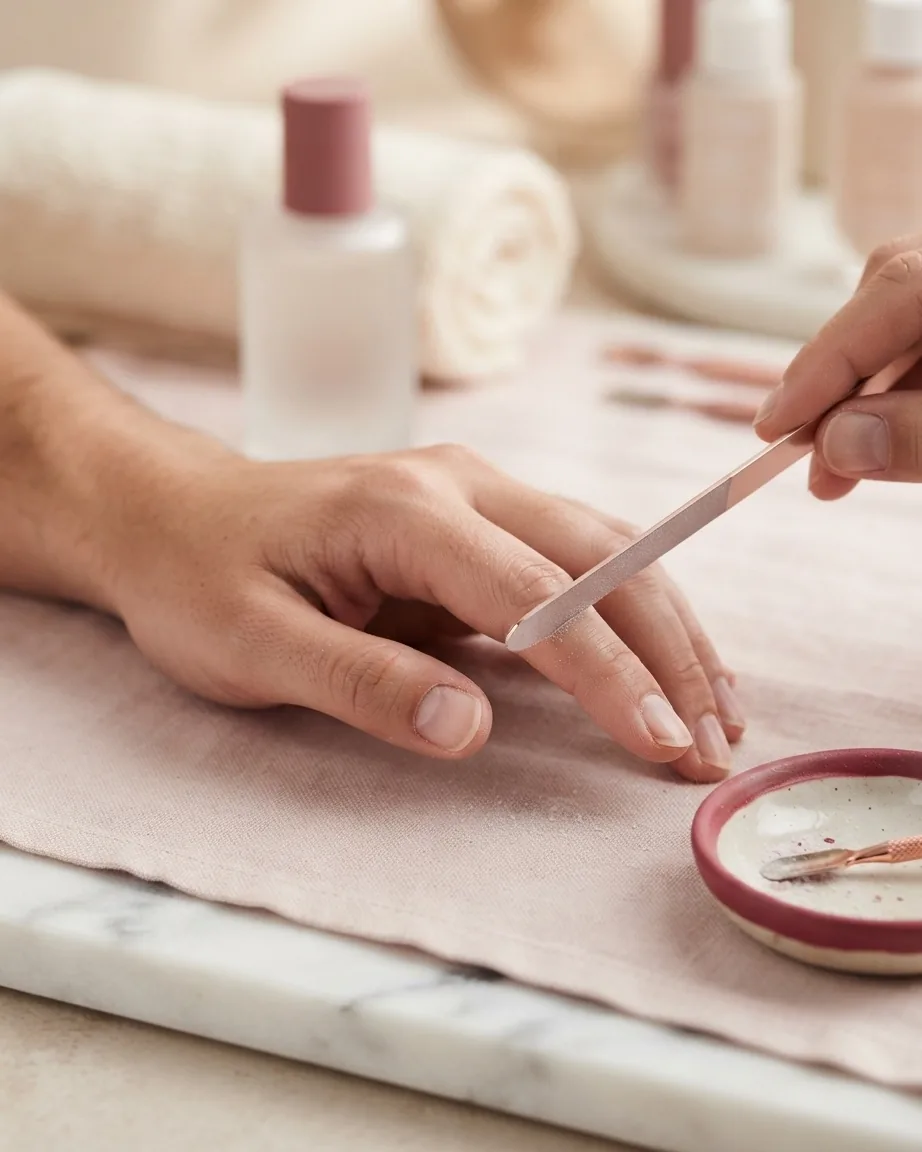
Round follows the natural curve of the fingertip and files to a soft semicircle. It sits at the strong end of the Nailsami ranking because the unbroken arc gives force nowhere to concentrate, unlike a squared corner. On short nails it reads as tidy rather than styled, which makes it a practical pick for hands that type, lift, or work. There is little free-edge requirement, so a bare nail or a short acrylic set both take the shape cleanly. The trade-off is reach: round adds almost no apparent length, so fingers that want elongation get more from oval or almond.
See also: our acrylic nail tips guide.
Square: clean corners, built-in stress points
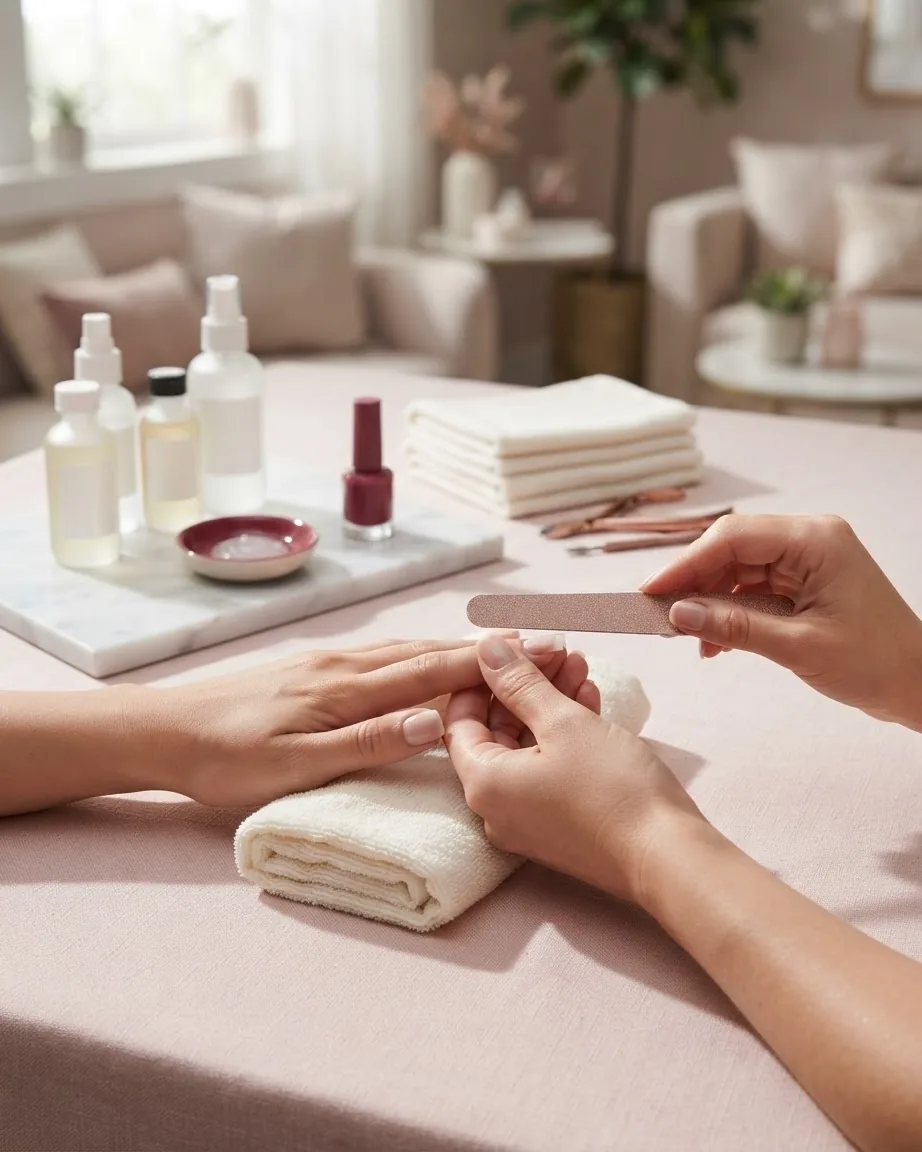
Square files flat across the tip with straight sidewalls and sharp 90-degree corners. It fills a broad nail bed and holds polish lines crisply, which is why it photographs well under French tips. The corners are the catch: each one is a stress point, and EyeCandys summarizes the fracture-mechanics reason a sharp corner concentrates stress well above the average of the surrounding structure.
That puts square in the mid-pack of the durability ranking, below the fully rounded shapes. Filing the corners even slightly rounded softens the concentration without losing the squared look. On short, wide fingers a full square can emphasize width, so a narrower set of sidewalls, or a different shape, usually flatters more. For an active reader, square works best kept short, where the lever arm on each corner stays small.
Squoval: the square that stops snapping at the corners
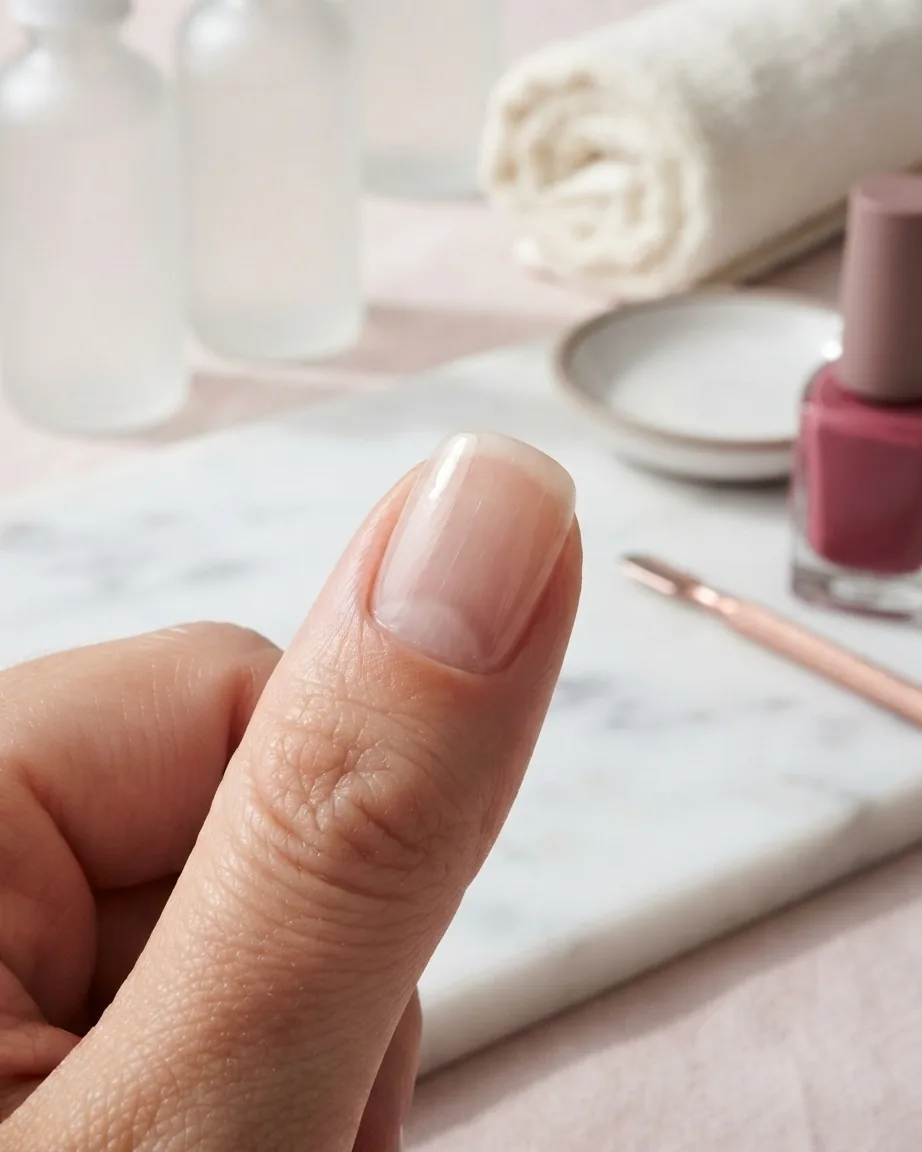
Squoval keeps the flat tip of a square but rounds the corners off, which is exactly why it ranks a step stronger than square in the Nailsami order. The softened corners shed the stress that squared edges concentrate, while the flat front still fills a wide bed. It carries any length and asks for no minimum free edge, so it suits short natural nails and extensions alike. For hands that want the structured look of a square without the corner breakage, squoval is the compromise most sources land on.
Oval: length without a point
Oval tapers gently on both sides to a rounded tip, with no flat front and no corner. That makes it one of the shapes that lengthens the hand without the fragility of a sharp point. It takes any length and needs no tip to achieve, so a bare nail can wear it. Readers choosing between elongation and durability get both here, which is why oval and almond are the pair most often called broadly flattering.
Almond: the taper that needs real length
Almond narrows along both sides to a rounded peak, like the nut it is named for. The defining constraint is length: Nailsami states the almond taper needs “enough nail beyond the fingertip to shape; typically 3-5mm of free edge” in its finger-matching guide, which is 3 mm to 5 mm. A short natural nail cannot reach that, so almond on short nails means an extension. It ranks above coffin and stiletto for strength because the tip stays rounded rather than pointed, but the taper still thins the sidewalls, so it is not as durable as oval or round.
For short, wide fingers almond earns its reputation: the narrowing sidewalls draw the eye lengthwise and slim the overall look. The peak is where breakage starts if the set is worn long, so readers who are hard on their hands should keep the length modest. On an extension, the artificial material carries the taper, which changes how the shape wears compared with the same silhouette filed into a thin bare nail.
Coffin (ballerina): drama with a short clock
Coffin tapers from the base and finishes in a flat, squared-off tip, named for the silhouette it traces. It sits second-weakest in the Nailsami ranking, one step above stiletto, because it combines a taper that thins the structure with squared tip corners that concentrate force. EyeCandys’s stress-concentration figure explains why those corners give out.
Coffin cannot be worn short: the free edge has to run well past the fingertip to read as the shape at all, so short natural nails need acrylic or hard gel to build it. To get the length immediately, NashlyNails quotes hard gel extensions on forms at $135 to $160. For a reader who wants the look but breaks nails easily, this is the trade-off to weigh: maximum drama, minimum margin before a corner chips.
Stiletto: the weakest shape on the ranking
Stiletto tapers to a single sharp point, and Nailsami places it at the bottom of the strength order. The reason is structural: all the width funnels into one tip, and the point is the extreme case of the stress concentration EyeCandys describes, where a sharp corner carries stress well above the average.
It also needs significant length to form the point, so it is an extension shape, not a short-nail shape. Readers drawn to stiletto should treat it as a statement set rather than a daily driver, and expect the tip to be the first thing to go. Hard gel or acrylic does the building; at one studio that runs $135 to $160 for shaped extensions on forms.
See also: our gel nail extensions guide.
Coffin versus ballerina: a naming disagreement the sources have not settled
The two terms are used both ways, and the sources do not agree, so this is a point to know rather than a thing to pick. Byrdie treats them as one shape, writing that “Coffin nails, also known as ballerina nails, have a narrow, square tip and tapered sides” in its manicurist roundup. Nailsami agrees they are identical, two names for the same taper-to-flat-tip silhouette. OPI dissents: it describes coffin as slightly more angled than ballerina and less rounded along the sides. So if a technician distinguishes them, ask which silhouette they mean before the file touches the nail; if they use the words interchangeably, that is also common usage.
Lipstick: the slanted tip most salons skip
Lipstick takes its name from a fresh lipstick bullet: one sidewall runs long while the tip is cut on a diagonal slant rather than straight across or to a point. It is a statement shape rather than a durability choice, and like other long, angled silhouettes it needs length to read, which on short natural nails means an extension. Because the slant leaves one edge longer, that corner becomes the weak point under pressure, the same stress-concentration logic that undercuts squared and pointed tips. Readers who want it built from scratch should expect the same extension work and pricing as other long shapes.
Arrowhead: a point that pushes feasibility further
It cannot be worn short and depends on an extension to form the point, so a bare short nail is not a candidate. The angular tip is the first casualty of any knock. Treat it as occasion wear: the look is striking, the margin before a break is thin, and the building work matches the other long, pointed shapes that need acrylic or hard gel on a form.
How to choose the best acrylic nail shapes for your situation
Three questions settle most of it: how hard are you on your hands, how long is your natural nail now, and what do you want the shape to do visually. The decision set below is built from the Nailsami strength ranking, the EyeCandys stress mechanism, and the length figures the guides give.
- Prioritize durability: round or oval. The continuous curve has no corner to concentrate the stress spike, so these last longest.
- Short, wide fingers: a narrow oval or almond.
- Short natural nails, want a long shape: plan on an extension. Almond alone needs 3 mm: 5 mm of free edge; coffin and stiletto need more.
- Want the length right away: hard gel on forms runs about $135 to $160 at one studio.
- Active hands: skip stiletto and coffin, which rank weakest, and keep square short to shrink the lever on its corners.
Flare (duck) nails: the shape that widens at the tip
Flare, also called duck nails, reverses the usual taper: instead of narrowing toward the tip, the sidewalls splay outward so the free edge is wider than the base. It is a specialty look rather than a durability pick, and because the widest point sits at the tip, that outer edge takes the most leverage under any knock. On short, wide fingers the outward flare tends to add visible width rather than length, so readers chasing a slimming effect usually land on oval or almond instead. Building a true flare needs sculpting on a form, the same extension work the longer shapes require.
Shape on natural, gel, and acrylic nails is not the same wear
The same silhouette behaves differently depending on what carries it, and this is the point most generic guides skip. A sharp taper filed into a thin natural nail thins the sidewalls of the nail plate itself. Built on an acrylic or hard-gel extension, the taper is cut into the added material, so the shape’s fragility lives in the enhancement, not the bare plate underneath. That is why a shape called weak on the ranking is weak as built material, not automatically a verdict on your natural nail.
Allergen warning
“Acrylic” is also not one substance. The CDC’s National Institute for Occupational Safety and Health documents that in 1974 the FDA banned methyl methacrylate “for use in all nail products because it caused deterioration of nail plates, nail dislocation, and/or allergic dermatitis in both customers and nail technicians,” on its engineering-controls page. Modern professional acrylic pairs an EMA monomer liquid with a PMMA polymer powder instead. If a nail reaction or persistent damage appears, that is a question for a licensed professional, not a filing you fix at home.
The angular corners are, again, where force concentrates, so the same corner-rounding that strengthens a squoval applies here if durability matters more than the hard line. It takes any length and needs no minimum free edge, so short natural nails can wear a short edge without an extension.
Matching nail shape to hand type: a quick guide
This pairs the common hand types with the shape the guides point to, and the reason behind each.
- Long, slim fingers: most shapes work; squared and squoval add presence without needing to elongate further.
- Narrow nail beds: oval and almond follow the bed; avoid wide flared tips that fight the line.
- Wide nail beds: square, squoval, or edge fill the front cleanly.
- Active hands: round or oval for the fewest stress points; keep length modest.
See also: our press-on nails guide.
Frequently Asked Questions
What acrylic nail shape lasts the longest?
Round holds up best. The Nailsami order runs stiletto, coffin, almond, square, squoval, oval, then round at the strong end, because the unbroken arc gives force no corner to gather in. By contrast, a sharp edge concentrates stress well above the surrounding structure, which is why the pointed and squared shapes fail soonest.
What acrylic nail shape looks the most natural?
Oval and round track the fingertip’s own curve, so they read closest to an unenhanced nail. Pointed and long squared shapes, by design, look applied rather than grown.
Can I change my acrylic nail shape?
Often, at a fill, and the direction matters. Filing from a squarer or wider shape down to a narrower one, say square to almond, removes material and is straightforward. Going the other way, toward more length or width than the current set carries, needs new product built on, so expect extension work rather than a quick file-down.
Which acrylic nail shape is strongest?
Round, for the same structural reason it lasts longest: no corner, no thinned sidewall, nowhere for the stress spike to land. Oval and squoval follow. If strength is the deciding factor over drama, these three are the set to pick from, and keeping length short lowers the leverage on any edge further.