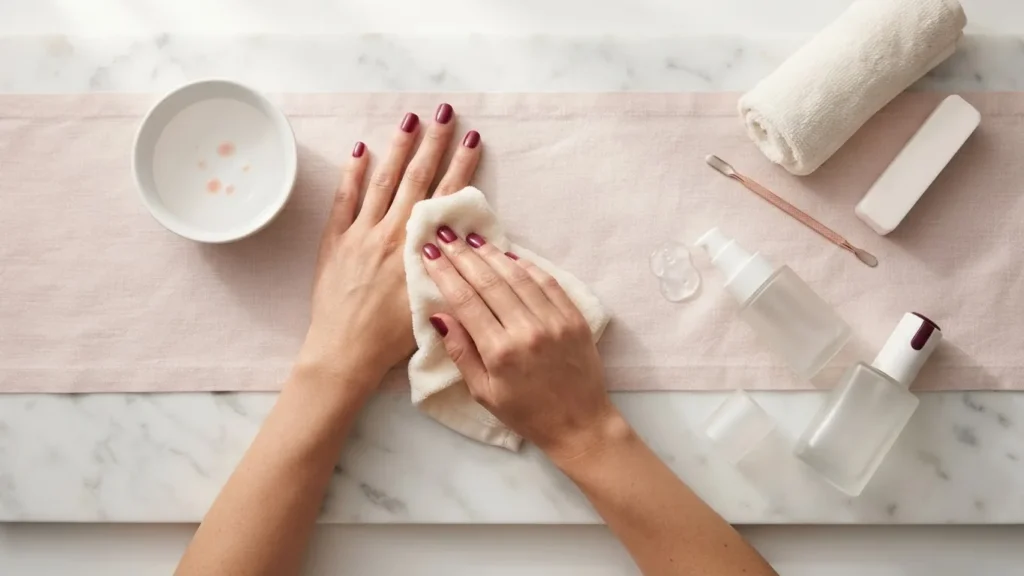
The active ingredient in most working substitutes is the same one that made your polish dry in the first place: a solvent. Nitrocellulose, the film-former in ordinary lacquer, hardens as its solvents evaporate, and it will soften again when a strong enough solvent reaches it. That single fact governs everything below. When you learn how to remove nail polish without nail polish remover, you are really choosing which household solvent or abrasive to reach for, and how long to leave it on, because none of them work as fast as acetone.
The methods here come from cosmetic brand guides, an independent lab-style experiment, and community answers, cross-checked where they disagree. This is cosmetic guidance only. Any redness, splitting, or pain after soaking is a matter for a licensed professional, not a home fix.
The fastest working method: 75% alcohol from hand sanitizer
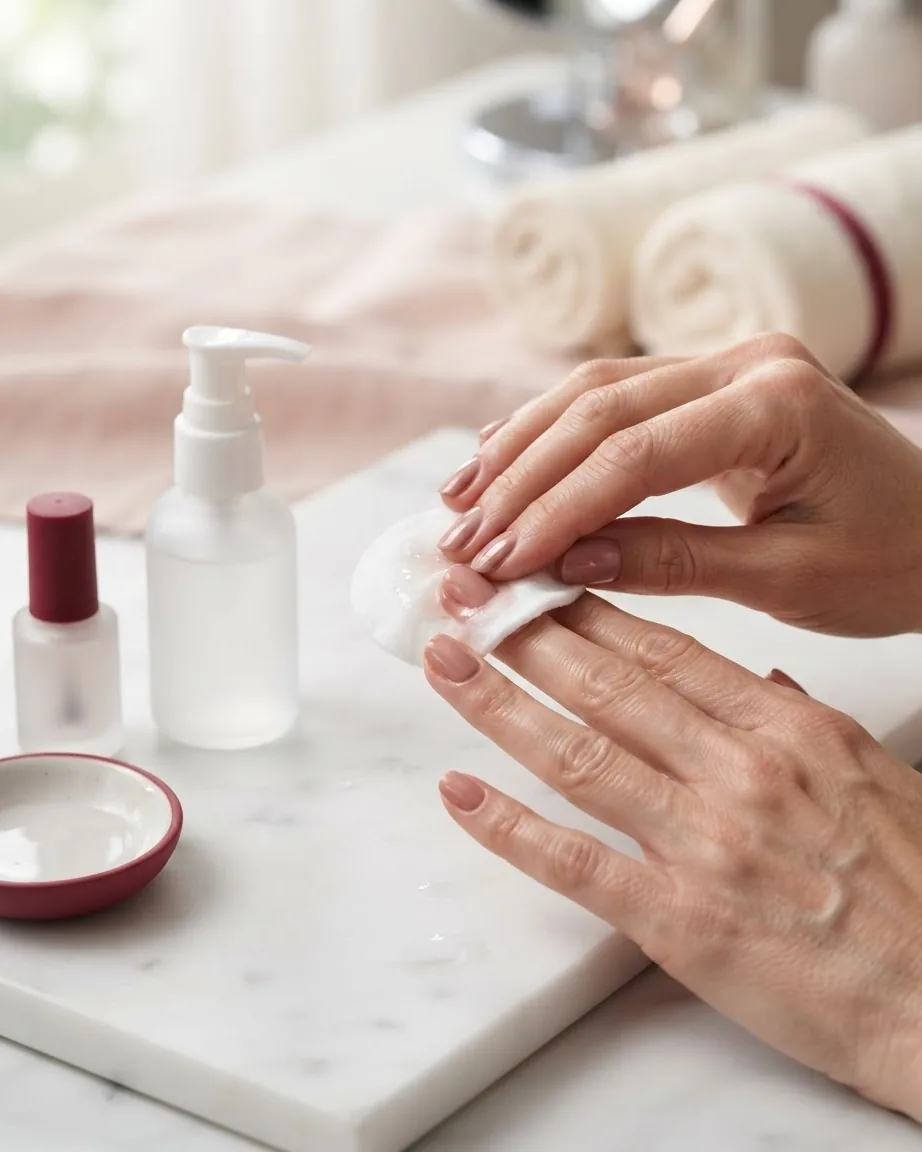
If you have a bottle of hand sanitizer that lists 75% isopropyl alcohol, that is the closest household stand-in for a store remover. Mindbodygreen notes that a sanitizer with 75% isopropyl alcohol “effectively dissolves the pigment” in nail polish. Alcohol is a solvent, so it attacks the same bonds acetone does, just more slowly.
Procedure:
- Pump a generous amount of 75% sanitizer onto a cotton pad until it is saturated, not damp.
- Press the pad flat against one nail and hold it in place so the alcohol has time to penetrate the film.
- Wipe in one direction from cuticle to tip. Reload the pad for each nail.
- Repeat on stubborn nails; dark and glittery shades need two or three passes.
Straight rubbing alcohol, hairspray, and alcohol-based perfume or body spray work on the same principle. Beverly Hills MD points out that most perfume and body spray is alcohol-based, which makes them workable candidates. They are also expensive to pour onto cotton, so treat them as a genuine last resort rather than a plan.
The warm-water soak that makes every other method faster
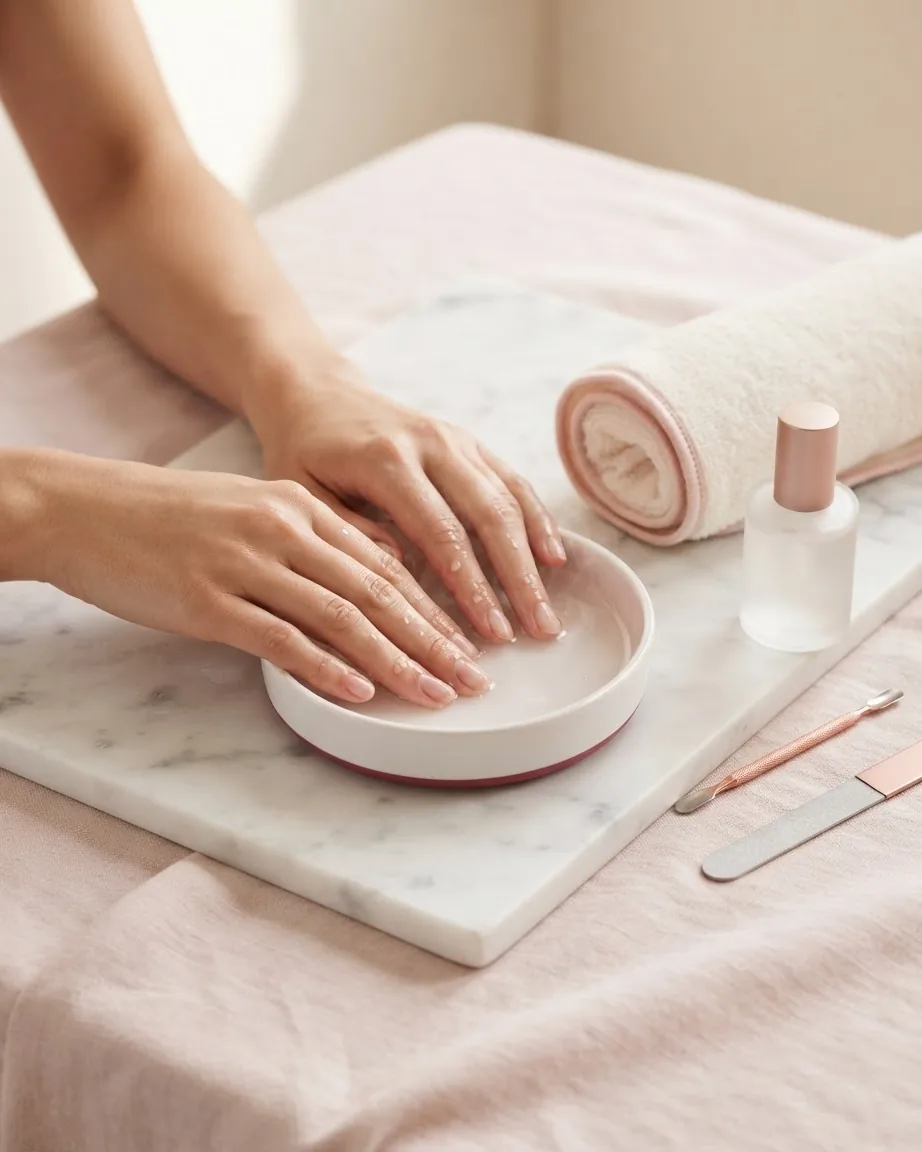
Skip this step and most of the mixtures below underperform. Beverly Hills MD advises soaking your nails in warm water for around 15 minutes first to soften the polish before any solvent goes on. Warm water swells the lacquer film slightly and loosens its grip on the nail plate, so the alcohol or acid that follows has an easier path in.
Fifteen minutes is longer than it sounds when your hands are in a bowl. Set a timer rather than guessing; the point is a measured soak, not a quick dip. After the water, dry the nails and move straight to your chosen remover while the film is still soft.
Citrus and vinegar: the two ratios that disagree
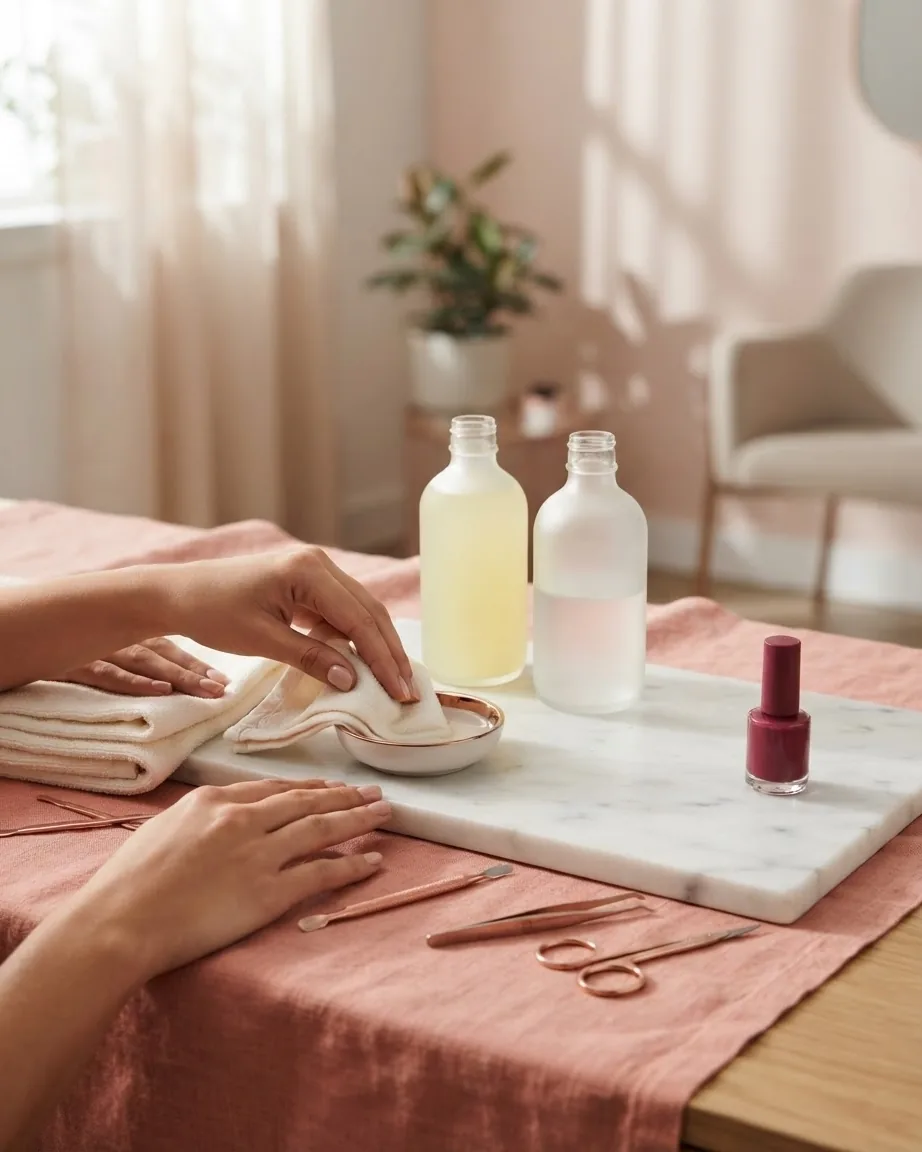
Lemon juice and vinegar together make a mildly acidic bath that can lift polish, but sources do not agree on the proportions, and the difference is worth knowing before you mix.
Mersi Cosmetics recommends equal parts white vinegar and freshly squeezed lemon juice, a simple 1:1 mix, then soaking nails for 10 minutes. An independent experiment documented on Scribd tested the proportions and reported that a 2:1 ratio of lemon to vinegar “was the most effective in removing nail polish.” As the write-up puts it, “We found that the mixture of lemon and vinegar in the ratio 2:1 was the most effective in removing nail polish.”
How to resolve it: if you want the easier recipe and a shorter soak, use the 1:1 mix. If you want the proportion that tested best and you have the lemons for it, weight it toward citrus at 2:1. Either way, keep hands in the bowl for the full 10 to 15 minutes, then push the polish off with a soft cloth or a toothbrush.
One caution the recipes skip: both lemon juice and vinegar are acidic, and a long soak can leave the skin around the nail dry or irritated. If your cuticles sting or the skin reddens, rinse immediately and stop.
Hydrogen peroxide and hot water: the oxidizer route
For an oxidizer instead of an acid, hydrogen peroxide is the household option. Beverly Hills MD gives a specific mix: two parts hydrogen peroxide to one part hot water, with a worked example of half a cup of hydrogen peroxide and a quarter cup of hot water.
Procedure:
- Combine two parts peroxide with one part hot water in a shallow bowl.
- Submerge your fingertips and soak for 10 to 15 minutes.
- Rub each nail with a cotton pad or cloth; the softened film should slide off.
- Rinse your hands with plain water afterward.
The hot water in the mix does part of the work by keeping the film warm and pliable, which is why this method pairs naturally with the warm-water prep above rather than replacing it.
Toothpaste with baking soda: the abrasive when no solvent works
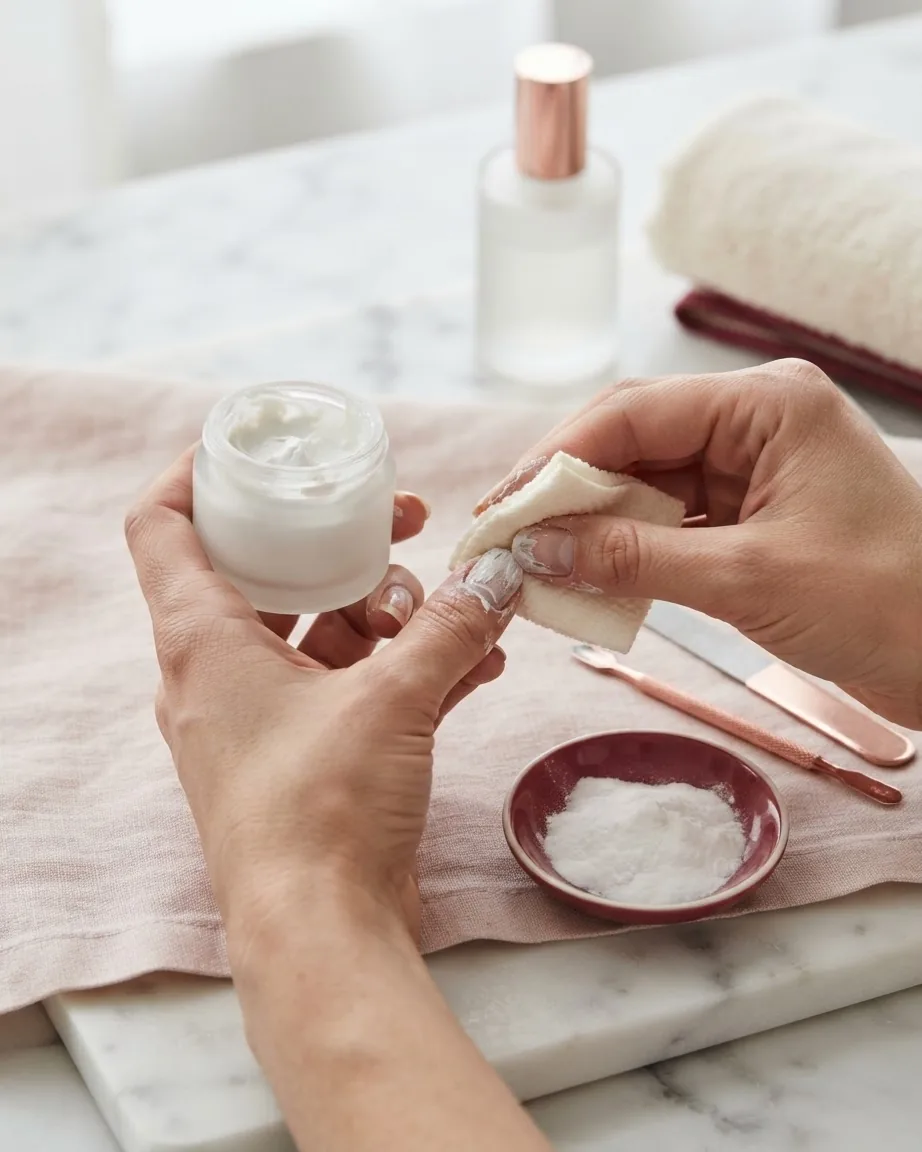
When you have no alcohol, no lemons, and no peroxide, the fallback is mechanical rather than chemical. Beverly Hills MD notes that toothpaste can substitute for acetone remover, and the working ingredient is baking soda, which acts as a mild abrasive. You are not dissolving the polish; you are physically scrubbing it off.
Mersi Cosmetics describes the same approach: apply a baking-soda toothpaste, let it sit for 10 minutes, then scrub gently with a toothbrush. Use an old, soft brush and light pressure. Because this method relies on friction, it is the slowest and the most likely to feel like work, and it does best on a single thin coat rather than a thick layered manicure.
Abrasion has a limit worth respecting: scrubbing hard enough to shift stubborn polish is also scrubbing your nail plate. Keep the strokes gentle and stop if you see the surface dulling.
The fresh-coat trick: reliquefy, then wipe fast
This method sounds backward and works on real chemistry. You paint a fresh coat of polish over the dried one, and the new solvents soften the old film. A community answer on Quora explains it plainly: nail polish dries through evaporation of its solvents, and “applying the second coat effectively softens these same solvents. This allows the polish to return to a liquid state.”
The timing is the entire trick, and no source pins it down for you. The window is short: wipe the nail while the fresh coat is still wet and the underlying layer is briefly liquid. Wait too long and the solvents evaporate again, leaving you with two dried coats instead of a bare nail. Work one nail at a time, wipe immediately with a cloth, and do not paint all ten before you start removing.
What these DIY methods cannot remove
Every method on this page targets ordinary air-dry lacquer, the kind held together by evaporating solvents. Gel, dip powder, and acrylic are a different problem entirely, and household solvents will not touch them.
UV and LED gel polish cures into a hardened plastic through a light-triggered reaction, not through evaporation. There is nothing for alcohol or vinegar to reliquefy, which is why gel needs a proper acetone soak or professional removal; the same logic applies to builder gel and to hard gel enhancements, which are engineered specifically to resist solvents. Acrylics and dip powder are cured resin systems in the same category; removing those safely is its own process, covered in our guide on how to get acrylic nails off. If you try to scrub or peel any of these off with a toothbrush, you will take nail plate with them.
Choosing the right method for your situation
The correct pick depends on what you have in the house and what you painted on.
- You own 75% hand sanitizer: use it first. It is the fastest and needs only a saturated pad, not a soak.
- Dark or glitter polish: do the 15-minute warm-water soak first, then alcohol, and expect multiple passes.
- Only pantry items: the citrus mix at 1:1 (easy) or 2:1 lemon-heavy (tested best), soaked 10 to 15 minutes.
- Nothing liquid at all: baking-soda toothpaste and a soft toothbrush, sitting 10 minutes before you scrub.
- A stray coat you want gone in a minute: the fresh-coat wipe, done one nail at a time.
All of these are stopgaps. If you change color often, a dedicated remover still saves your nail plate the repeated acid, alcohol, and friction exposure that these workarounds carry. For color choices that stain less in the first place, our guide to reading a red polish label covers which formulas leave the worst residue.
Frequently asked questions
Why do these methods take 10 to 20 minutes when acetone works in seconds?
Acetone is a fast, aggressive solvent built for the job. Alcohol, vinegar, lemon, and peroxide are weaker at breaking down nitrocellulose, so they need contact time to penetrate the film. The 10 to 20 minute soak is not optional padding; it is the time the weaker solvent needs to do what acetone does almost instantly.
Can I skip the warm-water soak to save time?
You can, but the removal will take longer and demand more scrubbing. The 15-minute warm-water step swells the polish film and loosens its bond to the nail, so the solvent that follows works with less effort. Skipping it usually means more passes and more friction, which is harder on the nail surface than the wait would have been.
Is soaking my fingers in vinegar or 75% alcohol bad for my skin?
Both are drying. Acidic citrus-vinegar baths and high-alcohol soaks can leave the skin around the nail dry, tight, or irritated after 15 to 20 minutes of contact. Rinse with plain water as soon as you finish, and apply hand cream. If skin reddens, stings, or splits, rinse immediately and consult a licensed professional rather than continuing.
Which citrus ratio should I actually use?
Both are valid. Mersi Cosmetics recommends equal parts, 1:1, for simplicity. The independent experiment on Scribd found 2:1 lemon to vinegar removed polish most effectively. If you want the tested-best result and have the lemons, go 2:1; if you want the easiest mix with a 10-minute soak, 1:1 is fine. How fast do I need to wipe off the fresh coat of polish? Fast, and no source gives an exact second count. The reliquefying only lasts while the new coat is still wet, because it works by the fresh solvents briefly returning the old film to a liquid state. Once those solvents evaporate a second time, you are left with two dried coats instead of a bare nail. Work a single nail at a time and wipe immediately, rather than painting several and coming back to them. Will any of these remove gel or acrylic? No. Alcohol, citrus, vinegar, peroxide, and toothpaste only affect ordinary air-dry lacquer, which softens when a solvent reaches it. Gel cures under UV or LED light into a hardened plastic, and dip powder and acrylic are cured resin systems, so there is nothing for these household solvents to reliquefy. Those need a proper acetone soak or professional removal instead. The pattern across all six methods is the same one the opening laid out: you are substituting a weaker solvent or a physical abrasive for acetone, and paying for it in time. Reach for 75% hand sanitizer if you have it, soften the film in warm water first, and match the method to the polish on your nails. And when a soak dries your skin or a scrub dulls the nail surface, stop; a home workaround is never worth pain, splitting, or bleeding, which belong with a licensed professional.