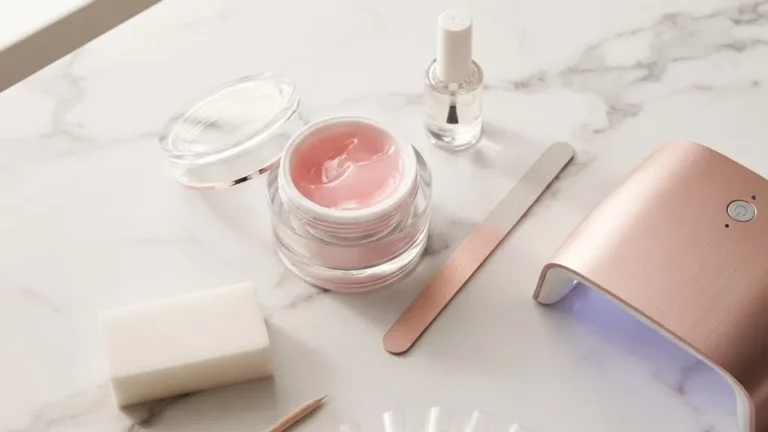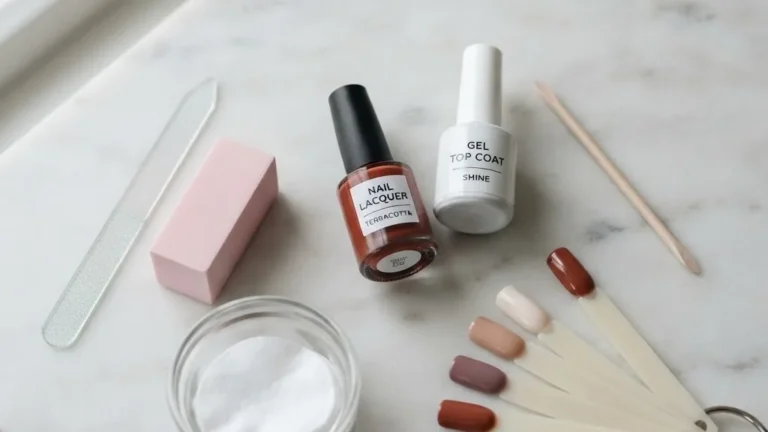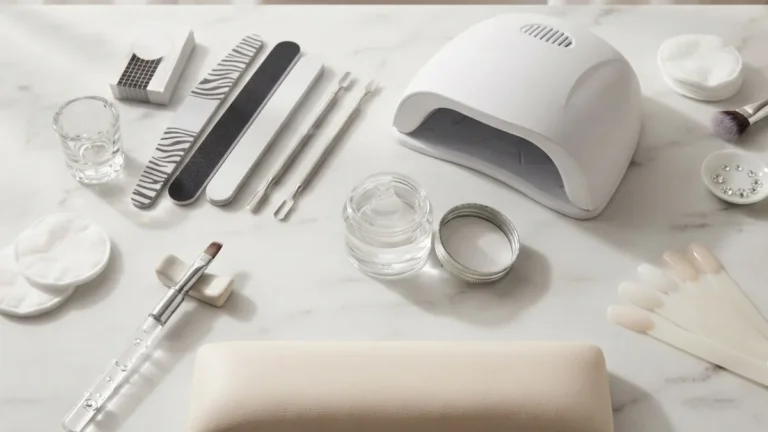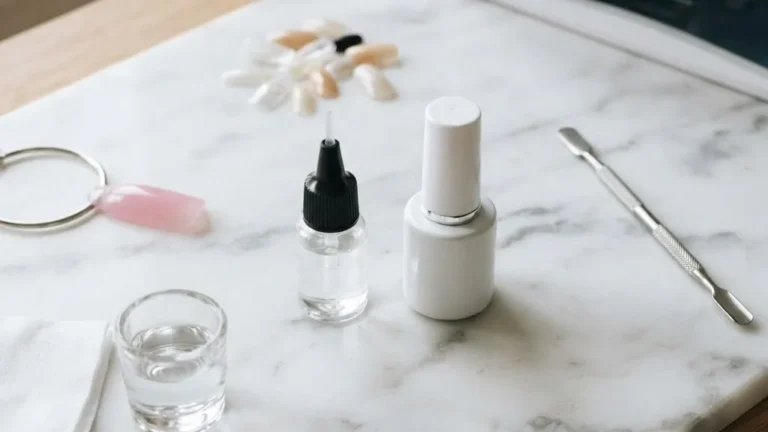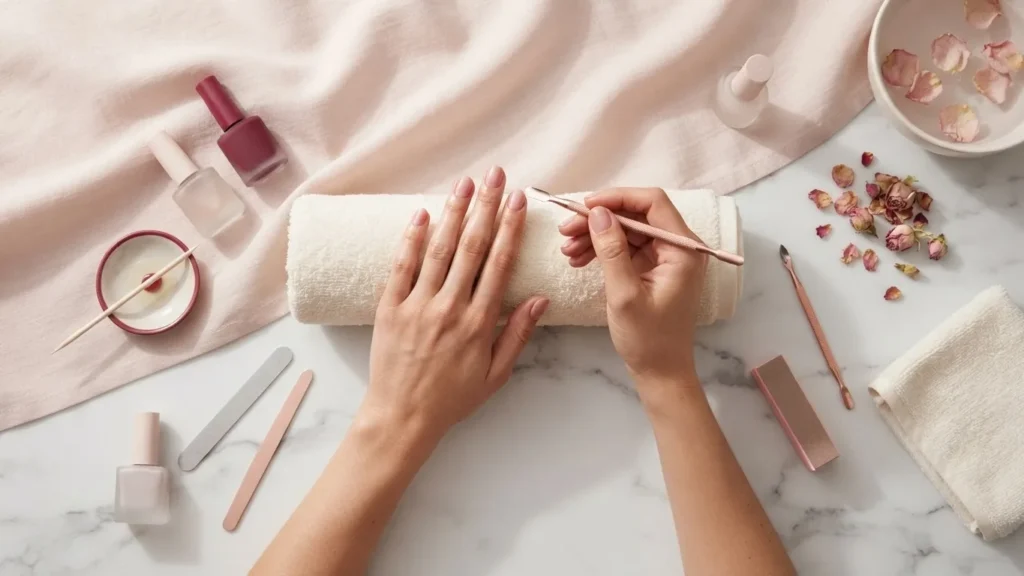
Ask two salons for “gel nails” and you can walk out with two different services: one a thin lamp-cured color coat over your own nail, the other a sculpted overlay or extension built up in gel. So what are gel nails, precisely? They are nail coatings or enhancements made from acrylate-based resin that stays liquid until a UV or LED lamp cures it solid. That single word hides a family of products with different thickness, wear, and removal, which is why booking the wrong one is the most common mistake this article helps you avoid.
Quick answer: Gel nails are acrylate or methacrylate coatings that harden under a UV or LED lamp instead of air-drying. The term covers two broad services. Gel polish (soft gel) is a thin, pigmented coat over the natural nail, marketed for roughly 2 weeks of wear. Gel enhancements – builder gel, hard gel, and full-cover tips – are thicker layers that add length or structure, commonly quoted at 3 to 4 weeks. Soft gel dissolves in acetone; hard gel must be filed off. When you book, name the exact product and how it comes off so you get what you expect.
The Term Means Two Different Services – Say Which One at Booking
The ambiguity is baked into the term. A commercial service page from hellonails.com uses “gel nails” mainly to describe builder-gel overlays and extensions, and quotes a wear window of up to 3 to 4 weeks without chipping or fading. Meanwhile, a walk-in asking for “gel” often just wants gel polish – color that lasts longer than regular lacquer. Both are correct. Neither is complete.
To get the right service, say the product family and the finish you want. “I’d like gel polish over my natural nails, no extensions” points to a thin soak-off coat. “I want a builder-gel overlay for strength” or “Gel-X tips to add length” points to a thicker, structural service. If a price list says “gel nails” with a single number, ask two questions: is this polish or an enhancement, and does it soak off or file off? Those answers tell you the wear, the cost, and the time you’ll spend at removal.
The Taxonomy: Soft Gel, Hard Gel, Builder Gel, and Tips
Everything sold under this label cures under a lamp, but the resins and their behavior differ.
- Gel polish (soft gel): A thin, flexible, pigmented coat applied over the natural nail. It dissolves in acetone, which makes at-home removal realistic.
- Soft-gel overlay: The same chemistry laid thicker for a bit more surface protection, still acetone-soluble.
- Hard gel: A rigid, high-strength gel used to build length and structure. It does not dissolve in acetone and must be filed down – covered in depth in our guide to hard gel chemistry, curing, and removal.
- Builder gel: A middle-ground reinforcement gel, sometimes soak-off, sometimes file-off depending on the formula. The distinctions are laid out in what builder gel actually is.
- Full-cover soft-gel tips (Gel-X style): Pre-shaped plastic tips adhered and cured with soft gel, then finished. They add length without hand-sculpting.
- Semi-cured gel strips: Pre-made gel films you press on and finish under a lamp.
The line that matters most for your schedule is soak-off versus file-off. Soft gel and most gel polish soak off in acetone. Hard gel and many builder formulas must be filed. Knowing which you’re getting decides how you’ll take it off weeks from now.
How the Cure Works: Acrylates, Photopolymerization, and Lamp Type
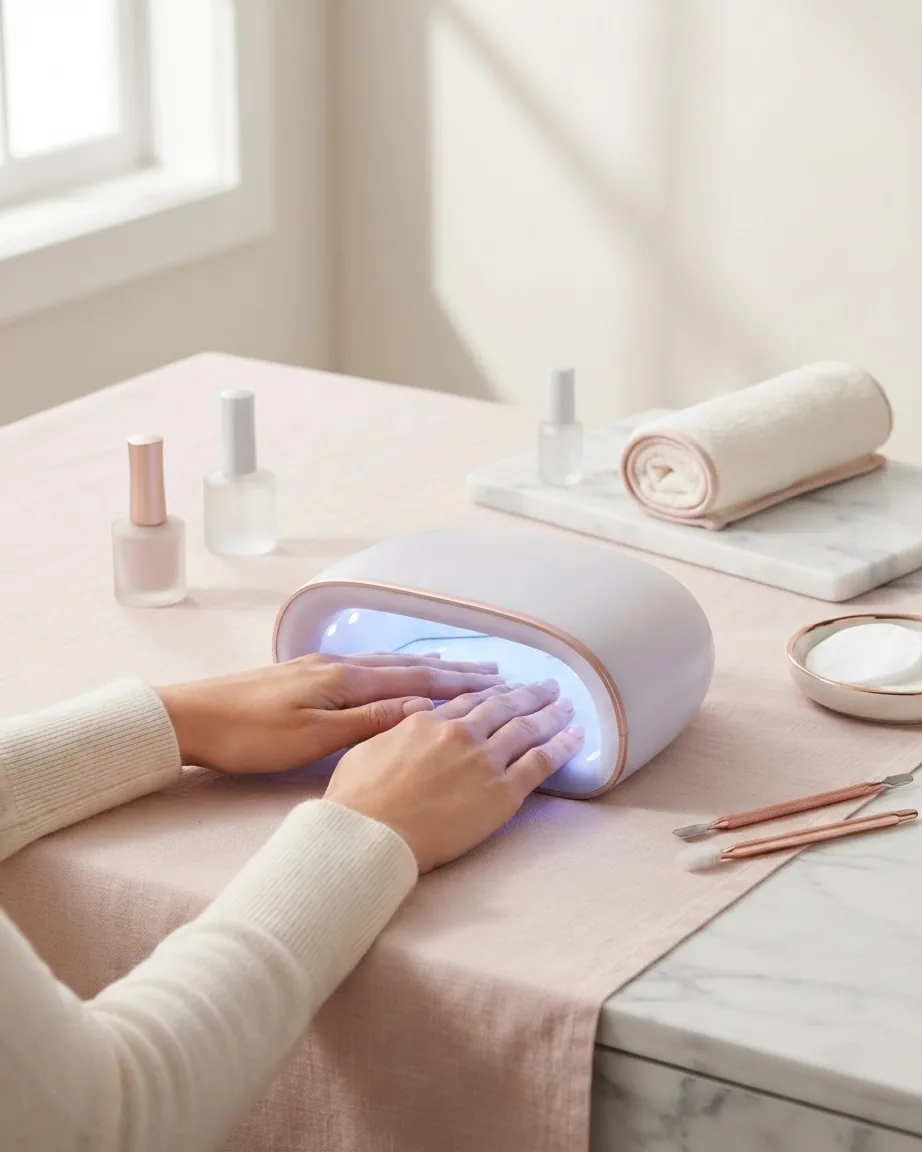
The product is a resin of acrylate and methacrylate monomers plus a photoinitiator. When the right wavelength of light hits it, the photoinitiator triggers photopolymerization: the liquid monomers link into a hard solid in seconds to minutes. That’s why it needs a lamp and regular polish doesn’t.
Two lamp types exist. Traditional UV lamps and modern LED lamps both emit UVA to drive the cure; LED units generally cure compatible gels faster. Cure time depends on the lamp’s output and the gel’s formula, so the manufacturer’s stated time for that specific gel-and-lamp pairing is the number to trust – not a generic “cure for 60 seconds.” One published laboratory study used a 54-watt nail dryer fitted with six bulbs emitting 365 to 395 nanometres, a useful sense of the wavelength range these devices produce.
The failure mode to know is undercuring. If a gel is too thick, the lamp is underpowered for the formula, or the time is cut short, the surface may set while monomer stays reactive underneath. Uncured monomer against skin is the main route to allergy, covered below.
Gel Polish and BIAB: Cure Times by Lamp, and Realistic Wear
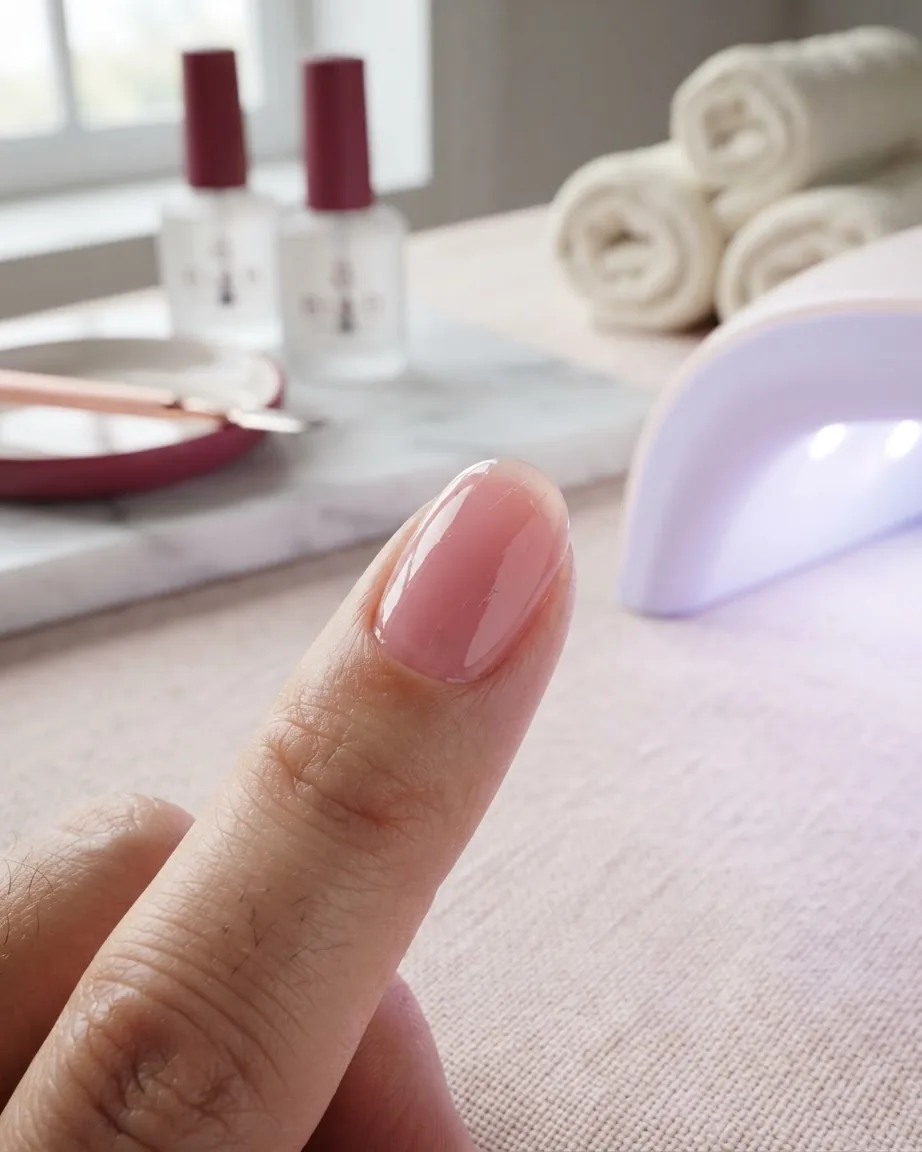
Gel polish and “builder in a bottle” (BIAB) are the soft-gel end of the family – thin, brushable, and soak-off. Cure time is set by the lamp’s wattage and the specific product, not by a universal rule. A higher-wattage LED lamp cures a compatible soft gel faster than a low-wattage or older UV unit; always follow the cure time printed for that gel with that lamp. Mixing a gel with a lamp it wasn’t tested against is a common cause of undercured, peeling coats.
On wear: gel polish is generally marketed for about 2 weeks, while thicker enhancements are quoted at 3 to 4 weeks – a figure hellonails.com attributes to nail growth and personal care rather than the product alone. Real-world longevity depends on how much you type, clean, or expose hands to water and solvents. Growth is the ceiling nobody can beat: the American Academy of Dermatology notes that artificial nails worn longer than a few weeks commonly need touch-ups every two to three weeks as the natural nail grows out. If you want to explore long-wear color specifically, our piece on reading a red polish label and preventing stain covers pigment behavior that carries over to gel.
Gel-X and Soft-Gel Extensions: Numbered Prep, Declared Tips
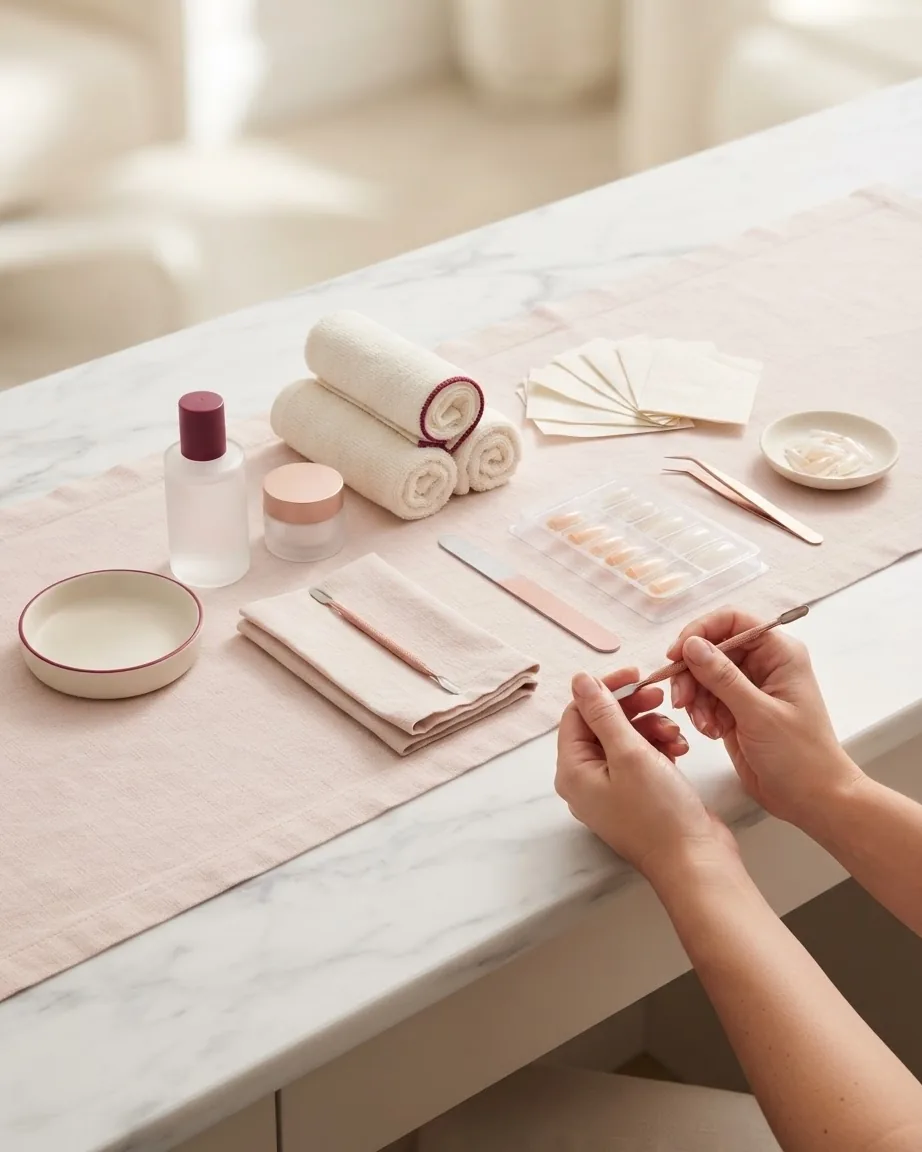
Full-cover soft-gel extensions – the category most people mean by “Gel-X” – use pre-shaped tips from the Aprés Gel-X system, adhered and cured with soft gel. Because they soak off in acetone, they’re often chosen over acrylic for that reason alone. The prep, in standard order:
- 1. Size and fit each tip to the natural nail width before anything is applied.
- 2. Push back and tidy the cuticle area; the tip must seat on clean nail plate.
- 3. Lightly buff the shine off the natural nail so gel can grip.
- 4. Dehydrate and prime the nail plate per the system’s instructions – product goes on the nail, never flooded onto skin.
- 5. Apply gel to the tip, position it, and cure under the matched lamp for the stated time.
- 6. Shape, refine, and seal with a top coat, then final cure.
If you’re weighing shape before you commit to length, our overview of matching nail geometry to your own nails helps you avoid extensions too long to live with. The tools involved – and how to keep them sanitary – are covered in our nail instrument safety and buying guide.
Dip Powder and Shellac: Soak-Off Timing, and Never File Past the Color
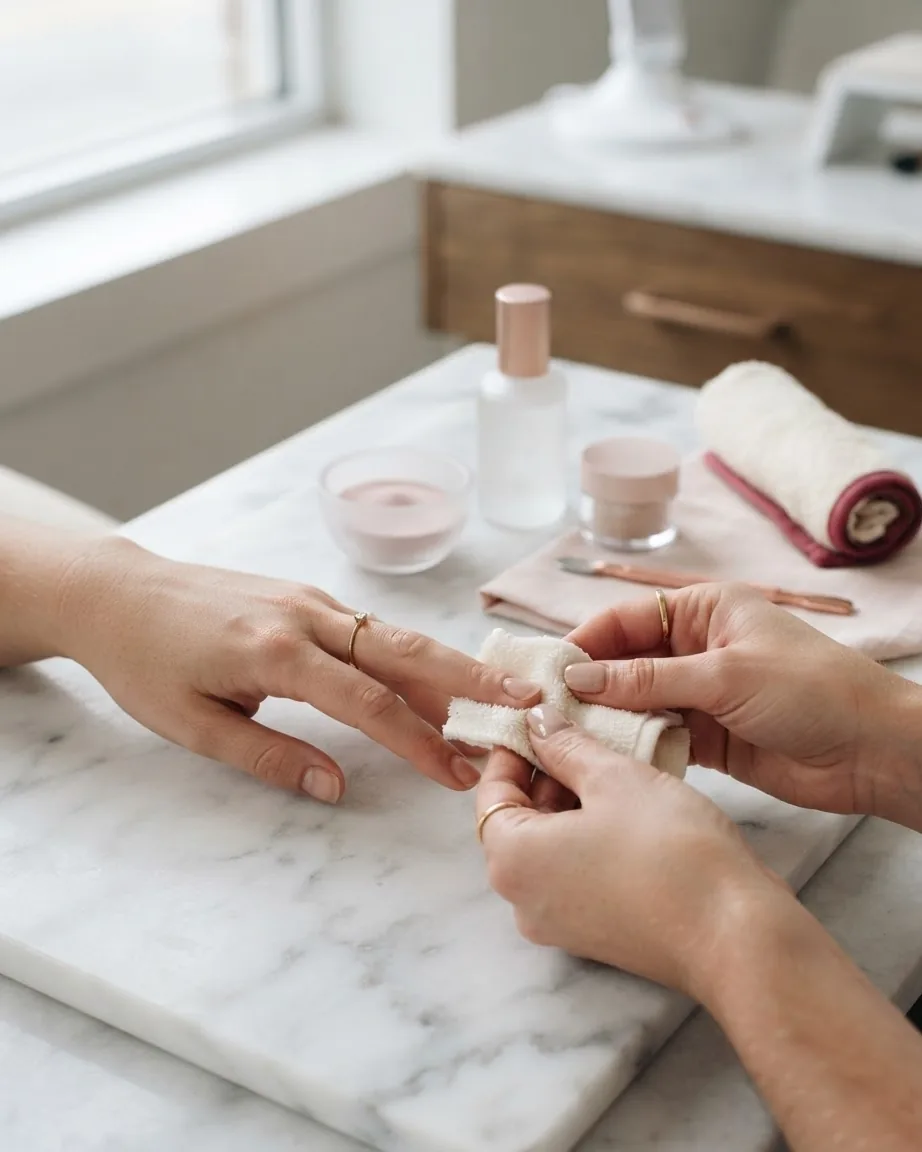
Dip powder and shellac often sit next to gel on a menu, and both come off by soaking rather than peeling. The safe method mirrors gel-polish removal. Below is the timing the AAD publishes for gel polish, which is the reliable soak-off reference:
- Salon-style wrap: acetone-soaked cotton wrapped on the nail – the AAD’s protocol has the coating coming off after about 15 minutes.
- Detailed at-home method: the AAD’s step-by-step uses 100% acetone with plastic food wrap left in place for 10 minutes.
The two AAD figures aren’t a contradiction – they’re different protocols. Use the 10-minute wrap-and-check for the at-home method and expect to reapply if the coating hasn’t loosened. When filing is part of removal, the rule is strict: file only the top shine and any hard-gel bulk, and stop at the color layer. Filing past the color into the natural nail plate is where thinning and damage begin. If you’ve dealt with over-filed nails before, our safe acrylic removal and recovery guide explains the same recovery principles.
What Gel Can Do Well – and Where It Damages Nails
The appeal is real: the coating cures hard immediately, so there’s no smudge-in-your-bag window, it resists chipping better than regular lacquer, and thicker formulas reinforce weak or splitting nails and can add length. Finishes range from high-gloss to matte, and color options are wide.
The damage almost never comes from the product sitting on the nail – it comes from how nails are prepped and removed. The mechanisms to avoid: overfiling the natural plate during prep or removal; forced peeling, which tears off layers of your own nail with the gel; repeated acetone soaks that dry the skin and nail; and traumatic breakage when a long enhancement catches and levers the natural nail. There’s also a subtler risk – a hard coating can mask a developing nail infection you’d otherwise notice. Any discoloration, lifting, pain, or swelling under an enhancement is a reason to see a professional, not to re-cover it. This site does not diagnose nail conditions; that’s a clinician’s job.
Acrylate Allergy and Contact Dermatitis: The Real YMYL Risk
The health issue that matters most here isn’t the lamp – it’s allergy to the uncured resin. Repeated skin contact with uncured acrylate monomers, especially HEMA and Di-HEMA TMHDC, can cause allergic contact dermatitis: itching, redness, swelling, and sometimes lasting sensitization around the nails or wherever the product touched skin.
The scale is documented. A British Association of Dermatologists report described 4,931 patients tested across 13 UK and Irish dermatology units, of whom 1.5% tested positive to 2-HEMA and 2.4% to at least one methacrylate. In that same audit, 60% of identified allergy cases were traced to recreational (personal) exposure, 33% to occupational sensitization, and 7% to other sources – and women made up 93% of those affected. The takeaway: this isn’t only a nail-tech problem; home users and salon clients are the majority.
Allergen warning
The exposure route is what you can control. The European Commission’s Scientific Committee on Consumer Safety, in its 2018 opinion, evaluated HEMA up to 35% and Di-HEMA TMHDC up to 99% in artificial-nail systems and concluded that safety depends on keeping application on the nail plate and off adjacent skin. Undercuring makes it worse, because unpolymerized monomer stays reactive against skin. If you develop itching, rash, or nail lifting after gel, stop using the product and see a dermatologist – allergy is diagnosed by patch testing, not by guesswork.
Do Gel Lamps Cause Cancer? What the Evidence Actually Shows
Nail lamps emit UVA, the same band linked to skin aging and DNA damage – which is why the question keeps coming up. What the evidence supports is narrower than the headlines. A 2025 scoping review indexed by the NIH’s PubMed identified 17 eligible publications (12 studies and five case reports), found the emissions were predominantly UVA, and stated that a direct causal link between nail lamps and carcinoma has not been conclusively established. A separate 2023 laboratory study measured a 54-watt, six-bulb dryer delivering 9 joules per square centimetre over a 20-minute exposure – a cell-and-lab finding, not proof of human cancer risk.
So the honest position is caution without alarm. The American Academy of Dermatology recommends applying broad-spectrum, water-resistant sunscreen with SPF 30 or higher to the hands before a gel manicure, or wearing fingerless gloves that expose only the nails. Both cut the UVA reaching your skin during cure. That’s a low-cost precaution that doesn’t require settling the unresolved science.
Regulation: Why HEMA and TPO Rules Differ by Region
What’s legally in your gel depends on where you are. In the United States, the FDA regulates nail products under cosmetic law, and its nail-care product pages set out how these are treated – meaningful because the US does not mirror the EU’s ingredient bans. That gap is worth knowing if you buy gels online from overseas sellers.
The EU has moved faster on specific monomers. TPO, a photoinitiator that appears in some gels, fell under an EU ban dated September 1, 2025. From that day the bloc stopped allowing it in any cosmetic product sold or supplied there, salon services on clients included, and gave the trade no window to sell down existing stock. A US buyer isn’t bound by these rules, but a “HEMA-free” or reformulated label often traces back to them.
Removing a Set at Home Without Wrecking the Nail
Removal is where most self-inflicted damage happens, and the method depends entirely on the product type you identified at booking. Soft gel and gel polish soak off; hard gel files off.
For soak-off, the AAD’s at-home method uses 100% acetone with plastic food wrap held on for 10 minutes, then gentle removal of the softened coating – re-soak if it resists rather than scraping hard nail. Never pry or peel: forced peeling takes layers of your natural nail with it. For file-off hard gel, the bulk is filed down carefully, stopping before the natural plate. Wear-and-tear on skin is real, so limit acetone contact time and moisturize afterward. If you’re not confident with a file, this is worth paying a professional to do.
Aftercare, Nail Holidays, and How Long Recovery Takes
Nails don’t “heal” the way skin does – the visible plate is already dead keratin, so damage grows out rather than repairing in place. That reframes recovery entirely: you’re waiting for new nail, not fixing old.
The AAD recommends a nail-polish holiday of one to two weeks or longer between gel manicures to let nails recover, and moisturizing the nails and surrounding skin in the meantime. Timelines set your expectations: fingernails take about six months to grow out fully, and toenails roughly 12 to 18 months, per the AAD. So a badly thinned fingernail needs months of growth to fully replace, which is the strongest argument for gentle prep and removal in the first place. If your nails feel thin or sore after a set, the fix is time and moisture – and a professional’s assessment if anything looks infected rather than just dry.
Choosing a Salon or an At-Home Kit: What to Verify
Whether you sit in a chair or buy a kit, the same questions protect you. At a salon, ask: what system are you using (polish, builder, hard gel, or tips), how does it come off (soak or file), what lamp cures it, and how are tools disinfected between clients? Single-use files and buffers, or properly disinfected metal tools, matter for infection prevention – and any redness, pain, or swelling under a set warrants stopping and seeing a professional.
For at-home use, the non-negotiable rule is keeping every liquid product off your skin – gel goes on the nail plate only, because skin contact with uncured monomer is the allergy route. Buy consumer gels matched to your lamp, follow the printed cure time, store products sealed and away from light and heat, and never improvise a stronger cure by leaving your hand under the lamp longer than specified. If you’re comparing enhancement systems before committing, our guide to choosing and safely using an acrylic kit lays out the same decision framework for that neighboring product.
Gel vs. Acrylic, Dip, and Press-Ons: Which Fits Your Situation
Once you know gel is a family, the useful comparison is across systems by the traits that change your week.
- Gel polish vs. regular polish: gel cures instantly under a lamp and resists chipping longer (around 2 weeks); regular polish air-dries and chips sooner but removes in seconds with ordinary remover.
- Soft gel vs. hard gel: both cure under a lamp; soft gel soaks off in acetone, hard gel must be filed. Choose soft gel if easy removal matters, hard gel if you want maximum strength and length.
- Gel vs. acrylic: acrylic is a liquid-and-powder system that air-hardens without a lamp; gel-family products cure under light. Both add length; removal differs by product.
- Gel vs. dip powder: dip builds color in powder layers and soaks off; timing follows the same acetone-wrap approach as soft gel.
- Gel vs. press-ons: press-ons are the lowest-commitment, no-lamp option, best for short wear and quick changes.
Decision shortcuts: want the easiest removal, pick soft gel or gel polish. Want length with strength, hard gel or Gel-X tips. Have any history of itching or rash from nail products, talk to a dermatologist before continuing gel of any kind – the allergy risk outweighs the convenience until you know what’s triggering it.
Questions Readers Still Ask
Is the treatment safe during pregnancy?
There’s no specific figure in dermatology guidance singling out pregnancy for gel, but the standard precautions apply more strictly: keep uncured product off your skin, work in a well-ventilated space, and limit acetone exposure during removal. Any medical decision about products during pregnancy belongs with your own doctor, not a nail menu.
What does a “HEMA-free” label actually mean?
It means the formula omits HEMA, a monomer strongly tied to acrylate allergy. The claim often traces to EU rules that restricted HEMA and Di-HEMA TMHDC in consumer products. HEMA-free lowers one allergy risk but doesn’t eliminate sensitivity to other methacrylates, so skin contact still matters.
Does the treatment ruin your natural nails?
The gel itself sitting on the nail generally doesn’t; the damage comes from aggressive filing, forced peeling, and repeated acetone drying. Because fingernails take about six months to grow out, a thinned nail needs months to replace – which is why gentle prep, correct removal, and periodic breaks protect the nail far more than avoiding gel entirely.
Why does my manicure keep peeling within days?
The usual causes are undercuring (wrong lamp for the gel, or too little time), poor prep, or product flooded onto the skin instead of the nail plate. Match the gel to a compatible lamp, follow the printed cure time exactly, and keep every layer off the surrounding skin.
A Year of Gel: How Many Appointments and How Much Acetone Time
The wear numbers in this article aren’t just marketing windows – they set your yearly schedule. Gel polish is marketed for about 2 weeks and enhancements for 3 to 4 weeks, so the math tells you what each choice actually commits you to before you book. (This assumes back-to-back cycles with no nail holidays; the AAD’s suggested 1-2 week breaks would lower every count.)
- Gel polish (2-week wear): 52 ÷ 2 = 26 cycles a year – a refresh every two weeks.
- Enhancements (3-week wear): 52 ÷ 3 ≈ 17 cycles a year.
- Enhancements (4-week wear): 52 ÷ 4 = 13 cycles a year – half as often as gel polish.
That gap matters most at removal. Choosing gel polish over a 4-week enhancement means 26 − 13 = 13 extra soak-off cycles every year. Applying the AAD’s roughly 15-minute acetone-wrap figure, that’s:
- Gel polish: more frequent acetone soaking over the year, one soak-off session for each of its 26 cycles.
- 4-week enhancement: 13 × 15 = 195 minutes (about 3.25 hours) per year.
Soft gel’s easy acetone removal is a real convenience, but repeated more than twice as often it also means more than double the yearly acetone exposure your skin and nail plate absorb – a trade-off worth weighing against an enhancement you’d file off far less frequently.