The religious question behind halal nail polish turns on one physical fact: during washing, does liquid water actually reach the nail plate and the skin around it? A “breathable” label speaks to air and water vapor. The validity of ablution (wudu) rests on liquid water making contact, and a polish can pass the vapor claim while still blocking the liquid. That single distinction decides whether a certified bottle on your shelf changes anything about your prayer, or whether it only changes what you can honestly print on the box.
Most shoppers meet the term through a logo and a price, and assume a certification settles the matter. It settles one half. A halal certification answers for what is inside the bottle. Wudu answers for what happens at the sink.
Quick answer: Halal nail polish usually carries two separate claims. One is about ingredients: a formula certified free of substances treated as impermissible, marked by a certifying body’s logo. The other is a marketing promise that water passes through, often called breathable. For prayer, the second claim is the one that counts, because most scholars hold that any film sealing the nail must be removed before wudu so water can touch the skin. A halal ingredient list does not, on its own, make a polish wudu-valid. Breathable formulas are documented as permeable to air and vapor; whether liquid water actually penetrates depends heavily on how many coats are worn.
Halal nail polish: the ingredient test and the prayer test

Two things wear the same word and get confused for one. Ingredient permissibility is the first. A polish earns the halal label when a certifying agency reviews its formula and issues a mark. HalalPaint, for instance, is reported by Global Sources, a sourcing platform with 55 years in operation, to use 100 percent halal ingredients and to carry certification from the Islamic Society of the Washington Area. Areej, from Al Halal Cosmetics, is sold through Riwaya with certification from a UK halal monitoring committee behind it.
That mark confirms composition. It makes no promise about water. A halal-certified lacquer can still be a conventional synthetic film that seals the nail completely, and “halal” is not a stand-in for natural, organic, or water-permeable. The prayer test is a different measurement entirely: does liquid water reach the surface it needs to reach during wudu? A bottle can clear the first bar and fall short at the second, which is why the logo alone never answers the question people are actually asking.
What “breathable” polish lets through
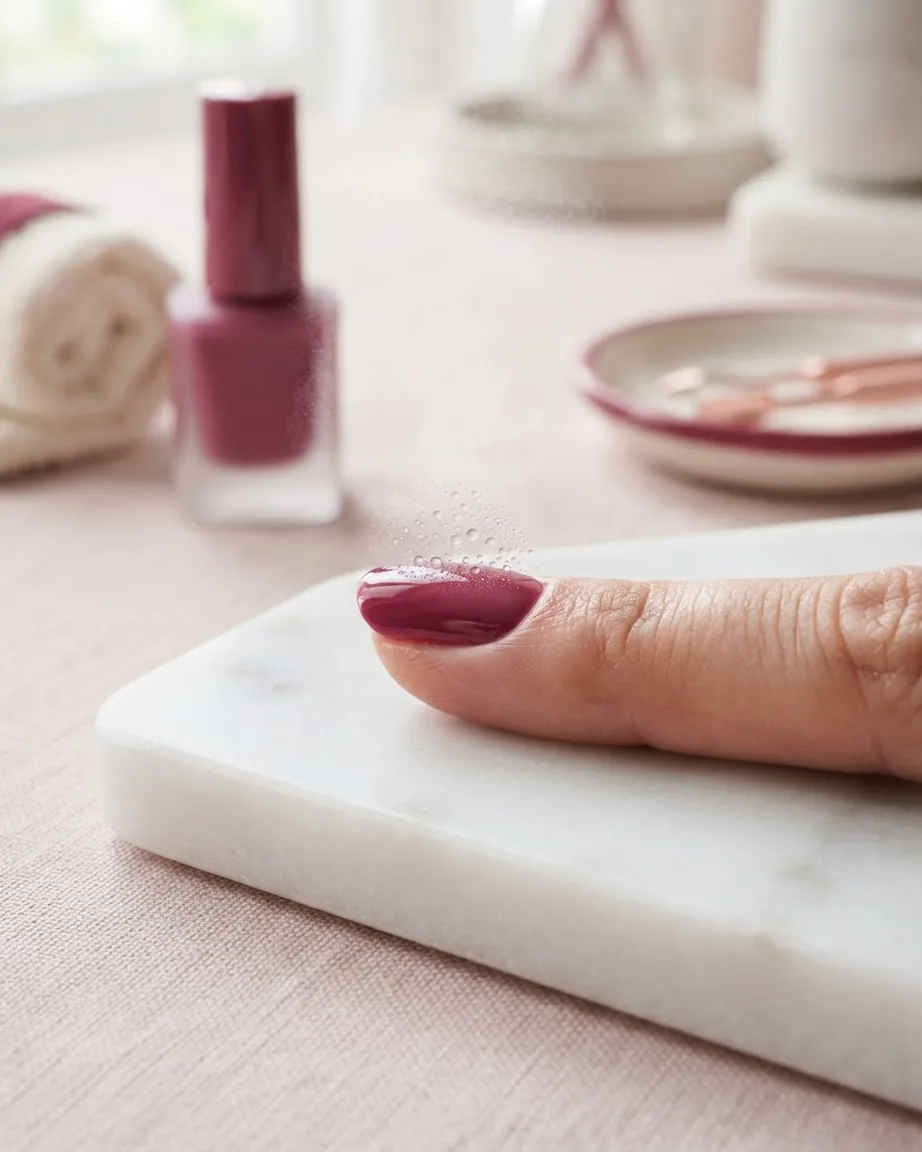
Breathable formulas were built around polymers borrowed from other industries. Inglot’s O2M line, covered by Beaut.ie, comes in 46 shades and uses a polymer first developed for breathable contact lenses, giving the film increased oxygen and water vapor permeability. Those are the quantities the technology was designed to move: gases and vapor.
Water vapor and liquid water are not the same physical thing, and the religious criterion is written for the liquid. VirtualMosque reports the manufacturer’s own framing that water vapor reaches the nail while water in its liquid form does not. Marketing language blurs this on purpose. HalalPaint is described as permeable to water and air, with the pass-through happening at a molecular level. “Permeable to water” reads like a wudu guarantee. It usually means vapor transmission, which does nothing for the washing requirement. When a brand says water passes through, the useful follow-up question is always: liquid water, or vapor, and under what conditions?
Why one lab says water passes and another says it doesn’t

The same breathable polish has produced opposite test results, and the disagreement has not been resolved because the protocols differ. On one side, IslamQA.org, relaying a ruling from Jamiatul Ulama KZN, reports a conclusion that the polish is not water permeable and prevents water from reaching the surface of the nail. On the other, SeekersGuidance cites lab testing where water did permeate a generous coating when the nail was rubbed gently for fifteen seconds.
Both can be accurate. They measured different things. A static drop sitting on a cured film behaves one way; a film rubbed under running water behaves another. VirtualMosque adds a third data point: an update dated in 2013 noted that Inglot’s own testing may show even a droplet can permeate a single layer of O2M. The same source flags the variable that ties the three together, observing that permeability can be affected by wearing more than one layer, such as a base coat and top coat over the color.
So the honest reading is conditional. Whether liquid water reaches the nail depends on the number of coats, on friction, and on time under water. There is no universal yes or no that applies to every bottle and every hand. A reader who wants certainty from a single lab number will not find it here, because the published numbers point in different directions by design.
The dominant ruling on polish during prayer
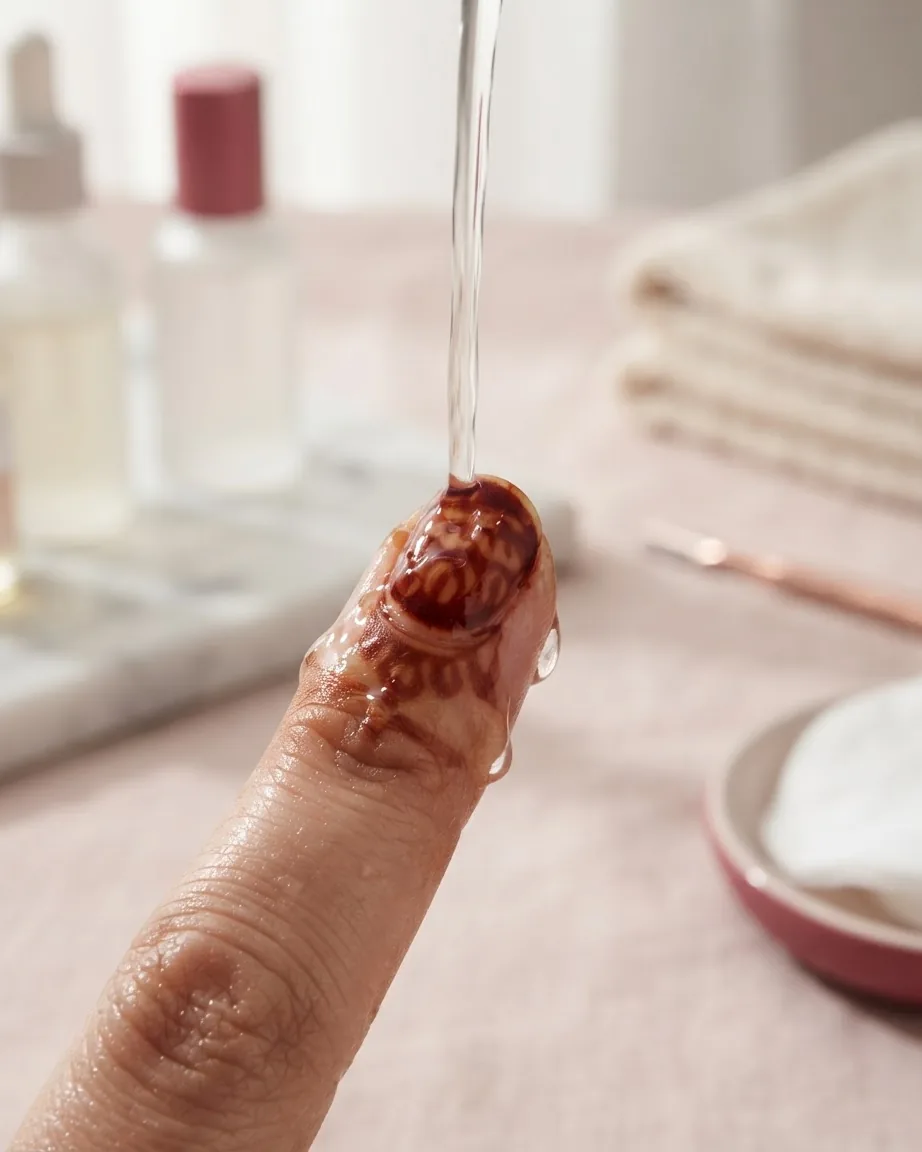
Set the chemistry aside and the majority position is steady. Cosmetics & Toiletries, drawing on work by Abou-Dahech and Baki at the University of Toledo, reports that most Muslims generally agree wearing nail polish is prohibited during prayer, and so refrain from it while praying. The same article notes that religious authorities commonly rest this on a hadith requiring that water reach the skin.
The underlying rule is plain. IslamQA.info, supervised by M. Al-Munajjid, states that if any barrier such as grease, paint, wax, or glue prevents water from reaching the skin, the purification is not valid. A sealing film is exactly that kind of barrier. This is also where the henna comparison enters: a henna stain colors the nail without forming a layer over it, so water still contacts the surface, and a true non-barrier is treated differently from a film that blocks water.
For breathable polish, where the testing is contested, SeekersGuidance lands on precaution. In the absence of experimentation that provides certainty, the ruling is to remove the polish when performing ablution. That is the practical center of gravity across the sources: abstain during prayer, remove by default, and reserve any exception for a coating that genuinely is not a water barrier.
Brands, shades and prices you’ll find
The category is small and the differences are concrete. HalalPaint offers a six-color line of 100 percent halal ingredients, available through its own site for $49, and the brand claims its molecular pass-through eliminates the need for base or top coats. Inglot O2M runs much wider at 46 shades off its contact-lens polymer. Areej takes a different route altogether: a peel-off formula that Riwaya lists as lasting up to 2 days and coming off in one easy peel without damaging the nail, which sidesteps the solvent question when it is time to pray.
Demand is the reason these exist. Cosmetics & Toiletries reports a halal cosmetics market projected to reach $52.02 billion by 2025, roughly three times its 2015 size. That growth funds the formulation work, but it also funds the marketing language that this guide keeps flagging. A $49 bottle and a 46-shade range are real facts about the product. Neither is evidence about liquid water at the sink, and the price tier tells you nothing about wudu validity.
- HalalPaint – six shades, 100 percent halal ingredients, certified per Global Sources’ reporting, $49, marketed as needing no base or top coat.
- Inglot O2M – 46 shades, polymer derived from breathable contact lenses, documented oxygen and water vapor permeability.
- Areej (Al Halal Cosmetics) – peel-off wear logged at up to 2 days, removed in a single peel, certified by a UK halal monitoring committee.
Coats, rubbing and getting it off before wudu
If you intend to keep a breathable polish on and still make wudu, the documented levers are few and none of them is a guarantee. ANBA reports a maker’s guidance to apply no more than two layers, after which washing the hands is said to let water seep through the polish to the nail and skin. SeekersGuidance’s testing adds the friction factor: water permeated the coating when the nail was rubbed for fifteen seconds under water rather than passively rinsed.
Working against you is layer stacking. VirtualMosque’s note that more than one layer affects permeability means a base coat plus color plus top coat can undo whatever pass-through a single layer offered. Orly’s breathable line markets the opposite, claiming its formula removes the need for base or top coats entirely, which, read charitably, is a way of keeping the film to one layer. So the practical steps are to limit coats to one or two, skip extra sealing layers if wudu is your goal, and rub the nail under water rather than letting it rinse passively.
These improve the odds. They do not deliver the certainty the rulings ask for, which is why the precautionary default remains removal before prayer. Peel-off options like Areej come off in one motion. Regular and breathable lacquers come off with standard remover; for the method itself, see our guide on removing nail polish, and if you are timing an application around prayer, our notes on nail polish take to dry are worth a look. Any change to the nail itself, irritation, lifting, or discoloration, is a matter for a professional, not a formula.
Questions readers still ask
Is halal nail polish the same as natural or organic polish?
No. The halal designation addresses whether ingredients are permissible and whether a recognized agency has certified the formula. It does not require plant-based sourcing, a free-from list, or any organic standard. A certified bottle can be an ordinary synthetic lacquer. Treat the logo as a statement about composition, and judge wear, finish, and water behavior separately on their own merits.
Does a top coat over breathable color break wudu?
Adding coats works against water contact. Inglot’s own update suggested a droplet might cross one layer of O2M, yet published guidance warns that wearing a base coat plus a finishing layer changes permeability. For ablution, every extra sealing layer raises the chance that liquid water never reaches the plate. If you are wearing a breathable shade with prayer in mind, keep the film to a single layer and skip the finisher.
Why is henna treated differently from polish?
Henna tints the keratin rather than coating it with a film, so nothing sits between the water and the nail surface. Scholars distinguish a genuine stain from a sealing layer precisely on that point: water still makes contact with a stained nail. A lacquer forms a barrier, and a barrier of paint, wax, or glue over the skin is what invalidates the purification in the first place.
What certifying mark should I look for?
Named certifiers in this category include the Islamic Society of the Washington Area, cited behind HalalPaint, and a UK halal monitoring committee behind Areej. A mark from such a body vouches for ingredients. It makes no claim about liquid-water permeability or wudu validity, so reading the logo and reading the wudu question are two separate acts even on the same bottle.
The numbers the price tag actually tells you
Do the arithmetic on the figures in this guide and the economics come into focus – which is exactly where they stop. At $49 for a six-shade line, HalalPaint works out to about $8.17 per color ($49 ÷ 6). Inglot O2M’s 46 shades give you roughly 7.7× the selection (46 ÷ 6) – 40 more colors to choose from. And the market behind all this is big: a $52.02 billion 2025 projection described as triple its 2015 size implies a 2015 base near $17.34 billion ($52.02B ÷ 3), a jump of about $34.68 billion in ten years.
- $8.17 / shade – HalalPaint, $49 ÷ 6 shades.
- 7.7× / +40 shades – Inglot O2M (46) vs HalalPaint (6).
- ~$17.34B → $52.02B – implied 2015 market vs 2025 projection, a ~$34.68B rise.
Every one of these numbers is real, and not one of them is evidence about liquid water at the sink. Price per shade tells you about budget, the shade ratio tells you about choice, and the market figure tells you why the category keeps growing. Wudu validity turns on a different question entirely – whether water in its liquid form reaches the nail – and no amount of cost-per-color math will answer it.