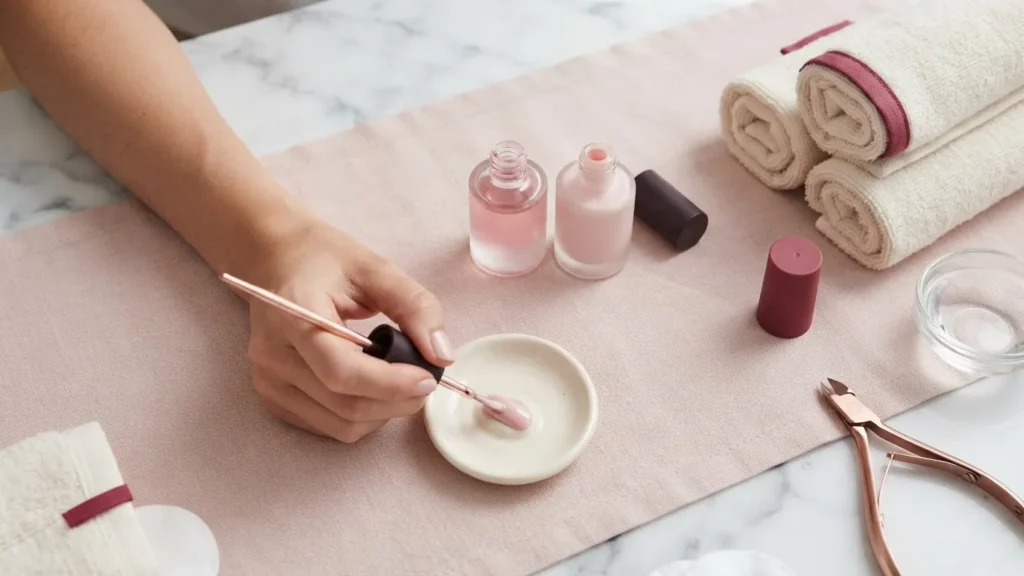
The coat count on a pale pink bottle is a coverage dial, not a fixed instruction. Cirque Colors states that its sheer pink Chiffon takes 1-3 coats for a barely-there to milk bath finish – the same polish reads as a faint tint at one coat and a soft, saturated nude at three. That range is the first thing to understand about light pink nail polish: unlike a dense crème that hits full color in two coats regardless of how you layer it, a sheer formula hands the reader control over how much of the natural nail stays visible. Two pale pinks that look identical in the bottle can land completely differently on the nail, and the reason is usually undertone.
Light pink nail polish splits into two decisions: undertone and opacity. Warm pinks lean peachy or tan; cool pinks lean blue or lilac – even within pale shades, as Cirque Colors labels Chiffon warm-toned and Odette cool-toned. Opacity is separate: a sheer formula shows the natural nail and builds with coats, while a crème covers in fewer. Coat count controls coverage on buildable pinks, roughly one to three coats for sheer versions. Streaking is managed at three stages – shaking the bottle to mix pigment, prepping a smooth surface, and applying thin coats with a controlled stroke rather than piling on layers.
Reading Undertone on Two Pinks That Look the Same
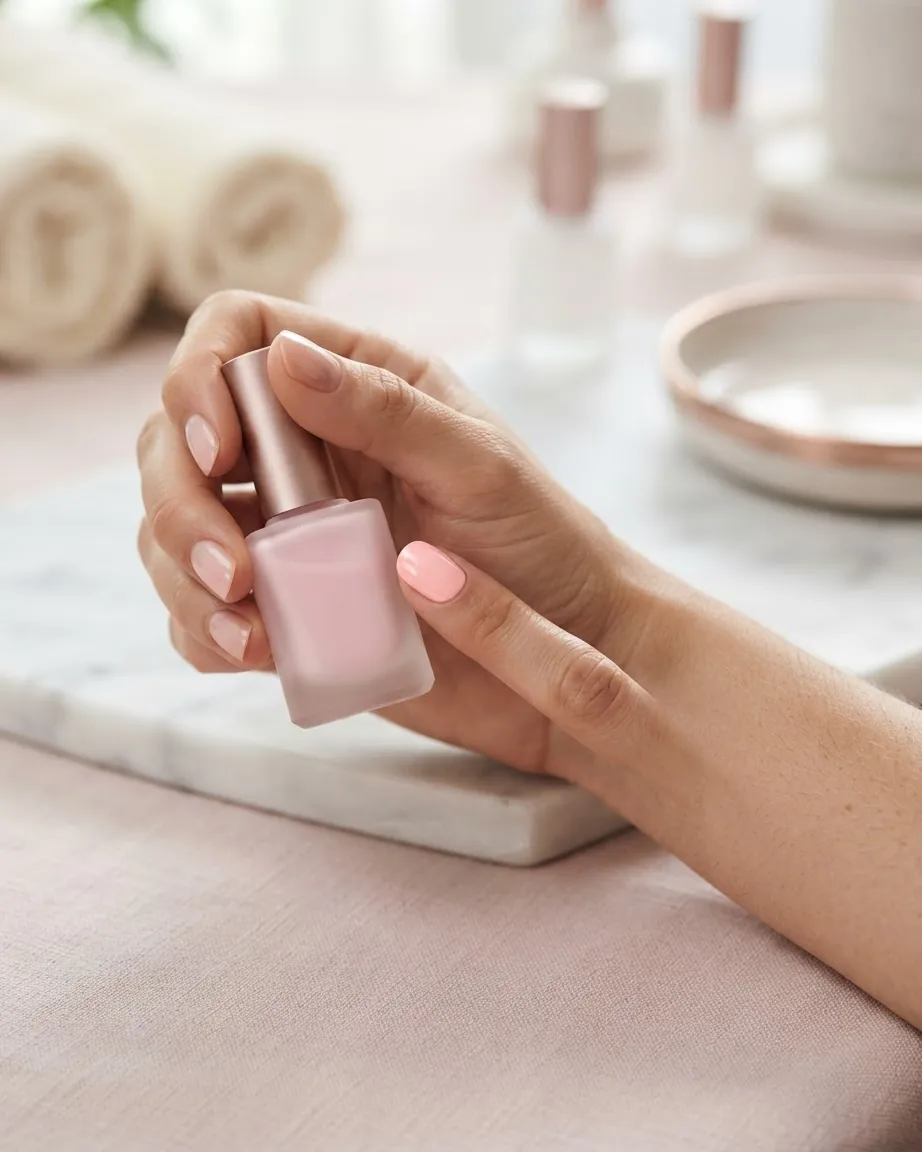
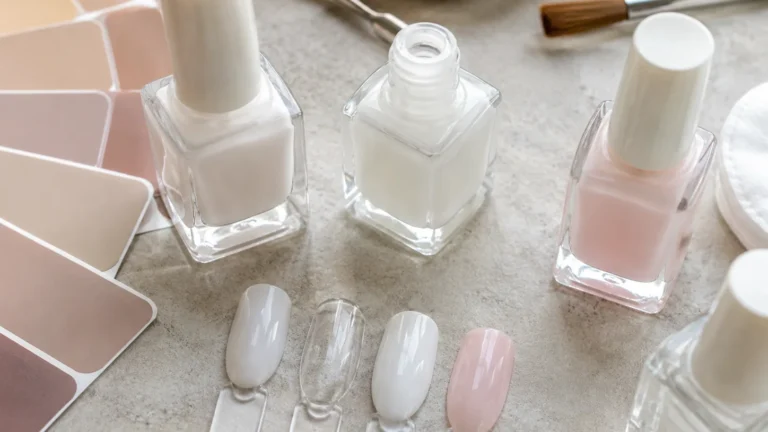
Pick up two pale pink bottles side by side and the difference is often invisible until the polish is on the nail. Undertone is what separates them. A warm light pink carries peach, coral, or a faint tan cast; a cool light pink carries blue, violet, or a touch of gray. Cirque Colors makes this concrete by labeling its own pale pinks: Chiffon is described as warm-toned, while Odette is a cool-toned sheer pink. Two sheer pinks, both pale, both buildable – and the manufacturer flags them as opposite temperatures.
That labeling matters because generic skin-tone advice is conditional, not a rule. Guidance that pairs a pink family to a warm or cool skin undertone works only when the polish’s own undertone is known. A shade recommended for cool skin fails if the bottle you grabbed happens to be warm-toned. The practical move is to read the manufacturer’s undertone label first, then match it to your preference – the bottle’s temperature is the fact you can verify, and it decides the outcome more reliably than a swatch photo under store lighting.
If you want the pink to read clearly rather than wash toward beige, a cool pink on cool-leaning skin and a warm pink on warm-leaning skin keeps the color legible. Crossing them is not wrong – it simply mutes the pink. For a pale shade whose whole appeal is softness, that muting can read as a non-color on the nail.
Sheer vs. Crème: What Coat Count Actually Controls
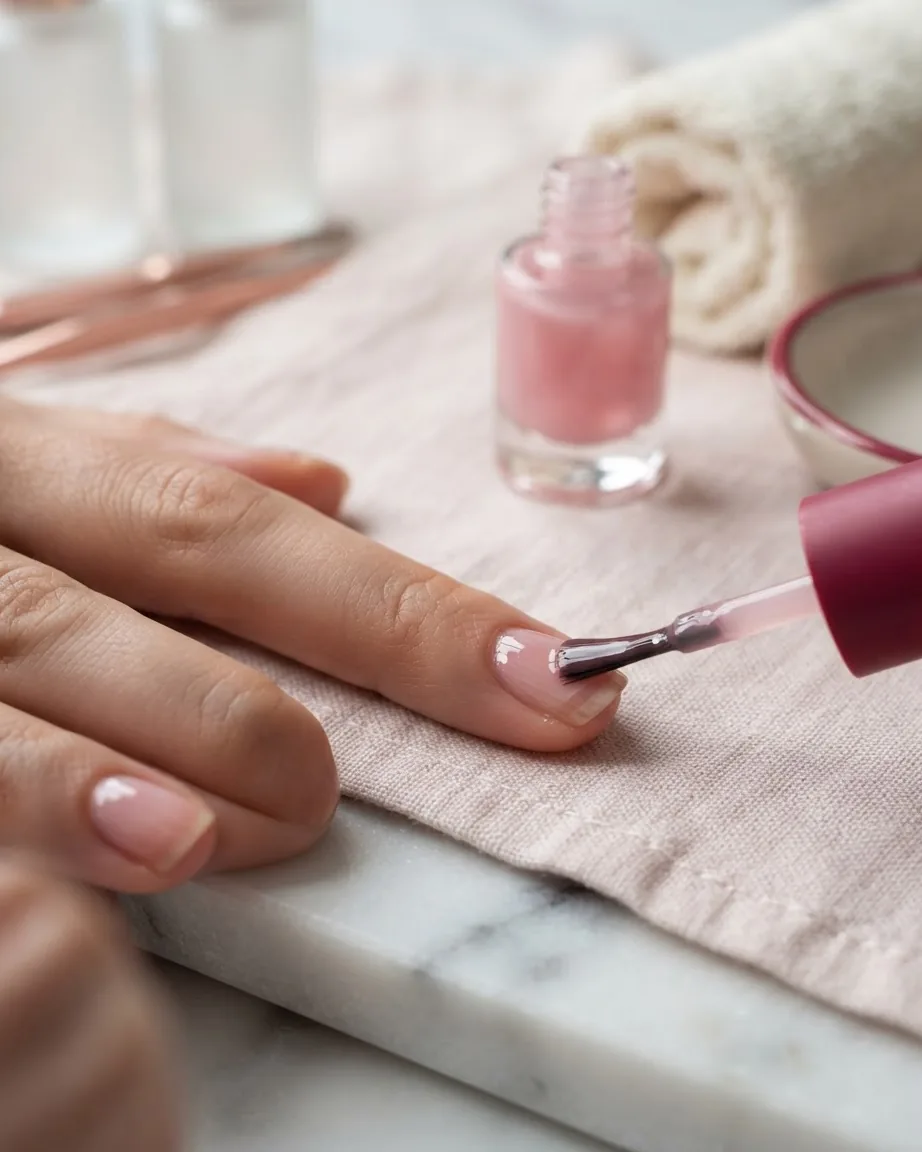
The single biggest source of disappointment with a pale pink is expecting a sheer formula to behave like a crème. A crème is opaque: it reaches its intended color in a set number of coats and ignores how many more you add. A sheer is buildable: coverage scales with coats, and the natural nail stays part of the look until you bury it.
Manufacturer guidance reflects this, and the numbers are not in conflict even though they differ. Cirque Colors gives Chiffon a 1-3 coat range because that range is the point – it lets the same bottle produce a translucent tint or a milk-bath opacity. OPI, describing the pale pink It’s a Girl!, instructs two thin coats to each nail. One is a variable range for a deliberately buildable finish; the other is a product-specific recommendation for a different polish. Neither overrides the other. Read the coat count as advice for that exact bottle, not as a universal law for all light pinks.
For the reader deciding at the shelf: if you want the natural nail to show through – a bare, barely-there look – a sheer pink at one or two coats delivers it, and that visible nail line is intentional, not a mistake. If you want solid, even color with no translucency, a crème pink or a sheer built to its top coat count gets you there. The formula type decides which outcome is even possible.
Light Pink as a French Base or a Topper
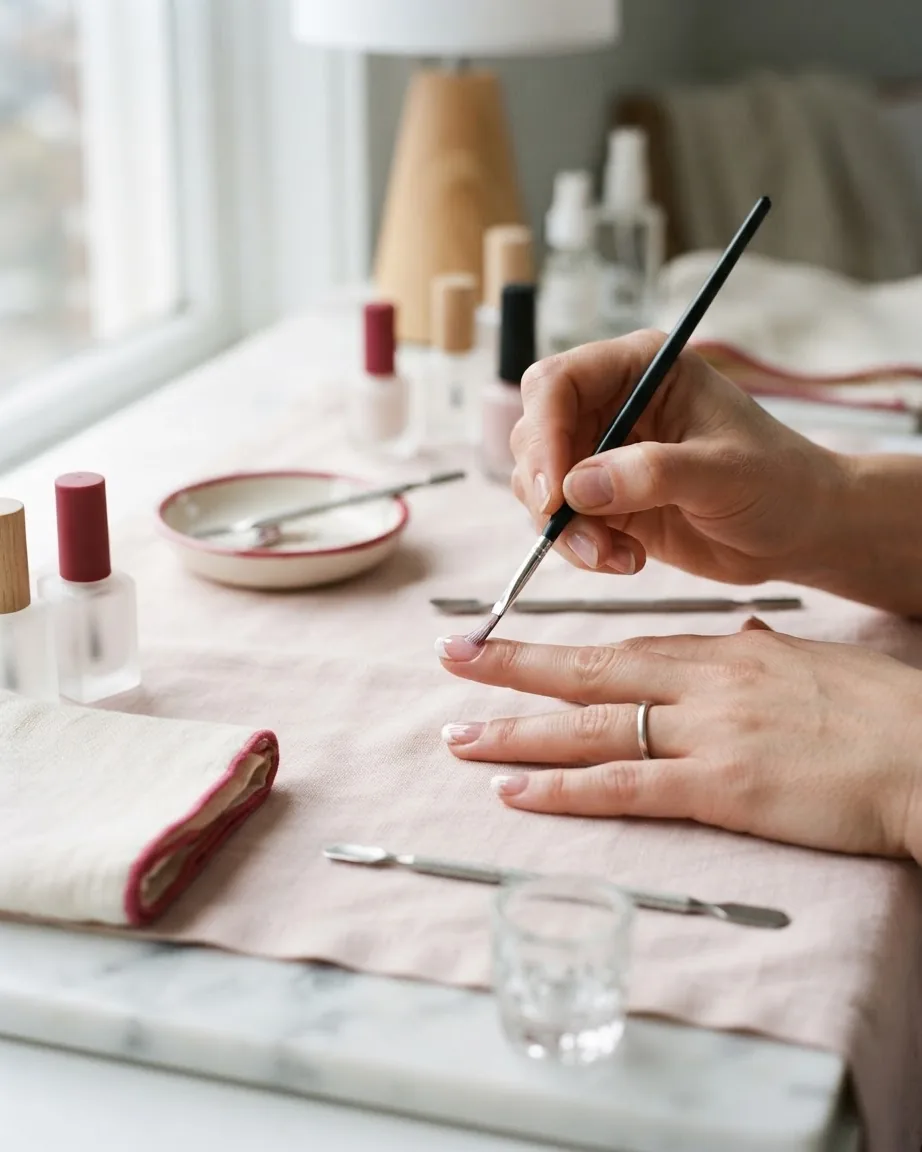
A sheer pale pink is not only a standalone color. Cirque Colors notes that Chiffon can be worn alone for a soft, nude look or used as a base color for toppers and french manicures. That dual role is worth knowing before you buy, because it changes how many bottles you actually need.
As a French base, a sheer pink gives the natural-nail wash that sits under a white tip – the pale pink evens out the nail bed’s color without adding visible opacity, so the tip reads crisp against a soft, neutral field. As a base under a topper, a sheer pink supplies the underlying hue while a shimmer or flake topper sits on top; the pink controls the color temperature of the whole stack. Because a buildable sheer lets you dial coverage, a single pale pink bottle can serve as a quiet standalone, a French base, and a topper foundation depending on coats and layering. Related guide: sheer pink nail polish.
Stopping Streaks Before the Light Pink Sets
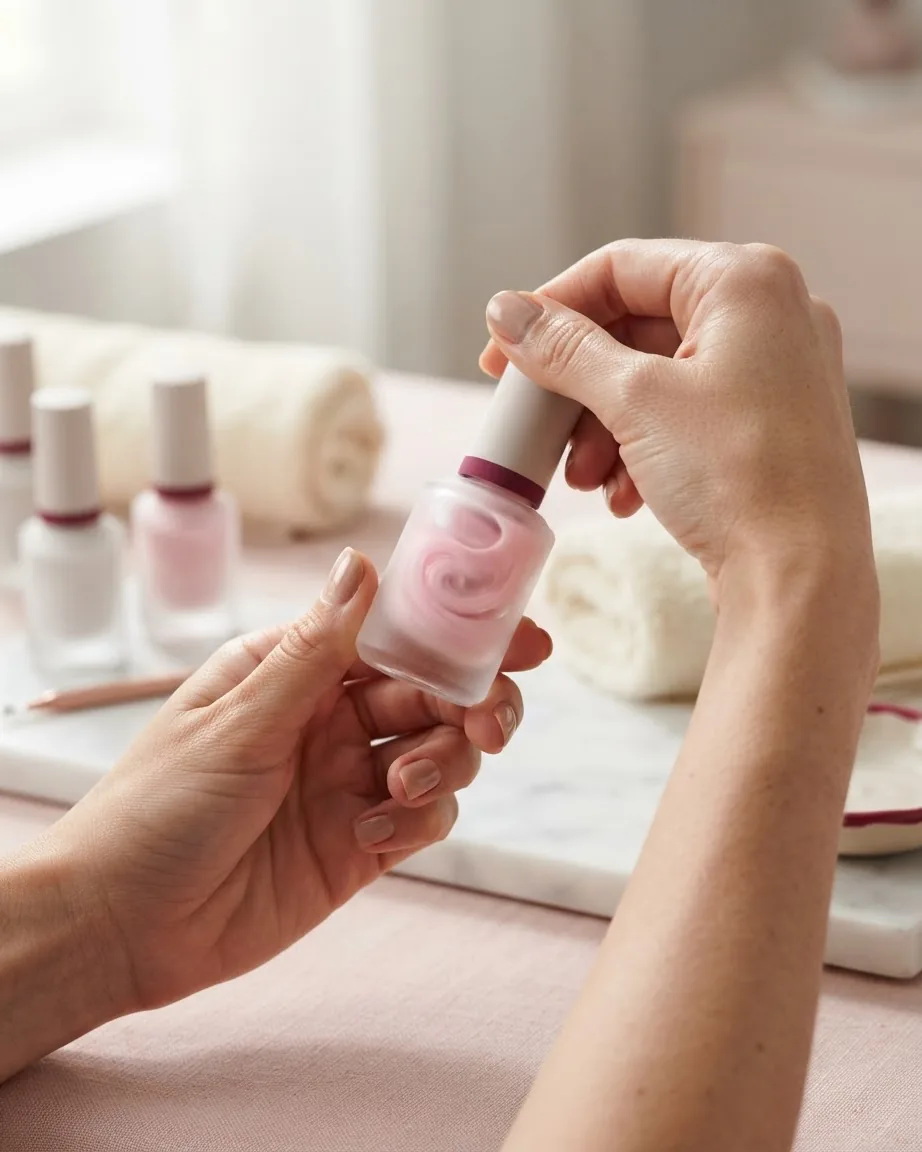
Streaking is the complaint that follows sheer pale pinks around, and the fixes happen in sequence – before the brush ever touches the nail, then during application. The first step is mechanical: pigment settles in the bottle, and uneven pigment paints on unevenly. OPI’s instruction for It’s a Girl! is explicit that you should shake the shade before application to properly mix pigment, and states directly that doing so helps avoid streakiness. Skip this on a pigment-light pink and you start from a disadvantage no technique recovers.
The second step is application discipline. Makeup.com by L’Oréal describes a three-stroke technique – center, side, side – and adds that each layer should dry completely before the next goes on. A controlled stroke count matters more on a sheer than on a crème: with a translucent formula, every drag of the brush shows, and overworking a coat while it is still tacky lifts and smears the thin pigment that is already down.
Thin coats are the third lever. Both manufacturers point the same way – OPI toward two thin coats, Makeup.com toward full drying between layers. Thin-and-dry beats thick-and-fast on any pale buildable pink, because a thick sheer coat pools, and pooled sheer dries with visible lines. A reader deciding how to fix a streaky pale pink should not reach for a thicker coat; that is the move that makes it worse.
- Before the brush: shake the bottle to remix settled pigment, which OPI ties directly to less streaking.
- During: use a center-side-side stroke and let each coat dry completely, per Makeup.com by L’Oréal.
- Layering: keep coats thin; add coverage with more thin coats, not thicker ones.
Picking the Right Light Pink at the Shelf
Put the pieces together and the buying decision gets simpler. Confirm the undertone label on the bottle – warm or cool – because that is the fact that decides how the pink reads on your hand, and manufacturers like Cirque Colors print it. Decide whether you want translucency or solid color, which is a formula question, not a coat question: a sheer gives buildable, natural-nail-visible coverage, a crème gives flat opacity. Then treat the stated coat count as the maker’s advice for that specific bottle, whether that is a 1-3 coat buildable range or a two-coat recommendation.
If a pale pink streaks on you, the order of blame is bottle-not-shaken first, coat-too-thick second, stroke-overworked third – in that order, because that is the order the pigment and solvent fail in. None of these are nail-health problems; they are application problems with application fixes. If you ever notice a change in the nail itself rather than the polish, that belongs with a licensed professional, not a technique tweak. For a color at the opposite end of the coverage spectrum, our nail polish yellow colors guide sits in the same color-by-finish family.
Strokes Per Nail: What the Two-Coat Sheer Actually Asks For
The streak advice becomes concrete once you count it out. Makeup.com by L’Oreal’s technique is three strokes per coat – center, side, side – and OPI recommends two thin coats for its pale pink. Put those two figures together and each nail should receive about six controlled brush drags in total to reach the full two-coat finish: three strokes laid down for the first coat, then three more for the second once it has dried completely.
Why this number is worth holding onto: on a sheer formula every drag of the brush shows, so six is a budget, not a floor. If you find yourself well past six strokes on a single nail – reloading, dabbing, and re-smoothing while the coat is still tacky – that is the overworking the article warns against, and it is the move that lifts and smears thin pigment. The fix is not more strokes but more thin coats, each kept to the same tight pattern.
- Per coat: 3 strokes – center, then each side (Makeup.com by L’Oreal).
- Coats: 2 thin coats for OPI’s pale pink, each fully dried before the next.
- Total per nail: 3 x 2 = 6 deliberate strokes; going far beyond that signals overworking, not better coverage.
Frequently Asked Questions
Is a visible natural-nail line under sheer pink a mistake?
No. With a buildable formula, that translucency is designed in – Cirque Colors frames the lower end of its coat range as a barely-there effect. If you want the nail bed hidden, add thin coats up to the product’s top number or switch to an opaque crème. The line only looks like an error when you expected crème coverage from a sheer bottle.
Can one light pink bottle replace several products?
Often, yes. A sheer pale pink can sit alone as a soft nude, slide under a white tip as a French base, or anchor a shimmer topper as the underlying hue. Because coverage scales with coats, the same bottle covers these roles – a buying efficiency that opaque crèmes, locked to one look, cannot match.
Why does warm versus cool matter on such a pale color?
On a pale pink, temperature decides whether the color stays legible or drifts toward beige. A warm pink carries peach or tan; a cool pink carries blue or violet. Crossing a pink’s temperature against your skin mutes it – and on a shade whose appeal is softness, that muting can flatten the pink into a near-neutral.
Does adding a thicker coat fix streaking faster?
The opposite. A thick sheer coat pools, and pooled pigment dries with lines. The reliable path adds coverage through additional thin coats, each dried fully, after remixing the bottle. Reaching for one heavy coat concentrates the exact unevenness you are trying to remove, which is why manufacturer guidance points toward thin layers.