Regular lacquer surrenders to a saturated cotton pad. Cured gel holds on until 100% acetone sits against the plate for a full 10 minutes under a wrap, a sequence the American Academy of Dermatology lays out step by step. Which coat is on the nail decides every other choice, and most of the trouble people run into when working out how to remove nail polish comes from using the lacquer method on gel, or the reverse. The two are not interchangeable, and treating them as if they were is how plates get scraped, filed, and stripped.
The short version: match the method to the coat. For regular lacquer, soak a cotton pad in remover, press it flat on the nail until the color loosens, then wipe toward the tip. For gel, soak cotton in 100% acetone, wrap each nail in plastic, and wait 10 minutes before easing the softened layer off. Acetone works fast and, measured against other polish-removing chemicals, sits lower in toxicity. Non-acetone remover is milder on skin but slower, and it struggles on dark shades. With either one, open a window and moisturize when you finish, since every remover pulls moisture out of the nail and the skin around it.
Step by step: removing regular nail polish
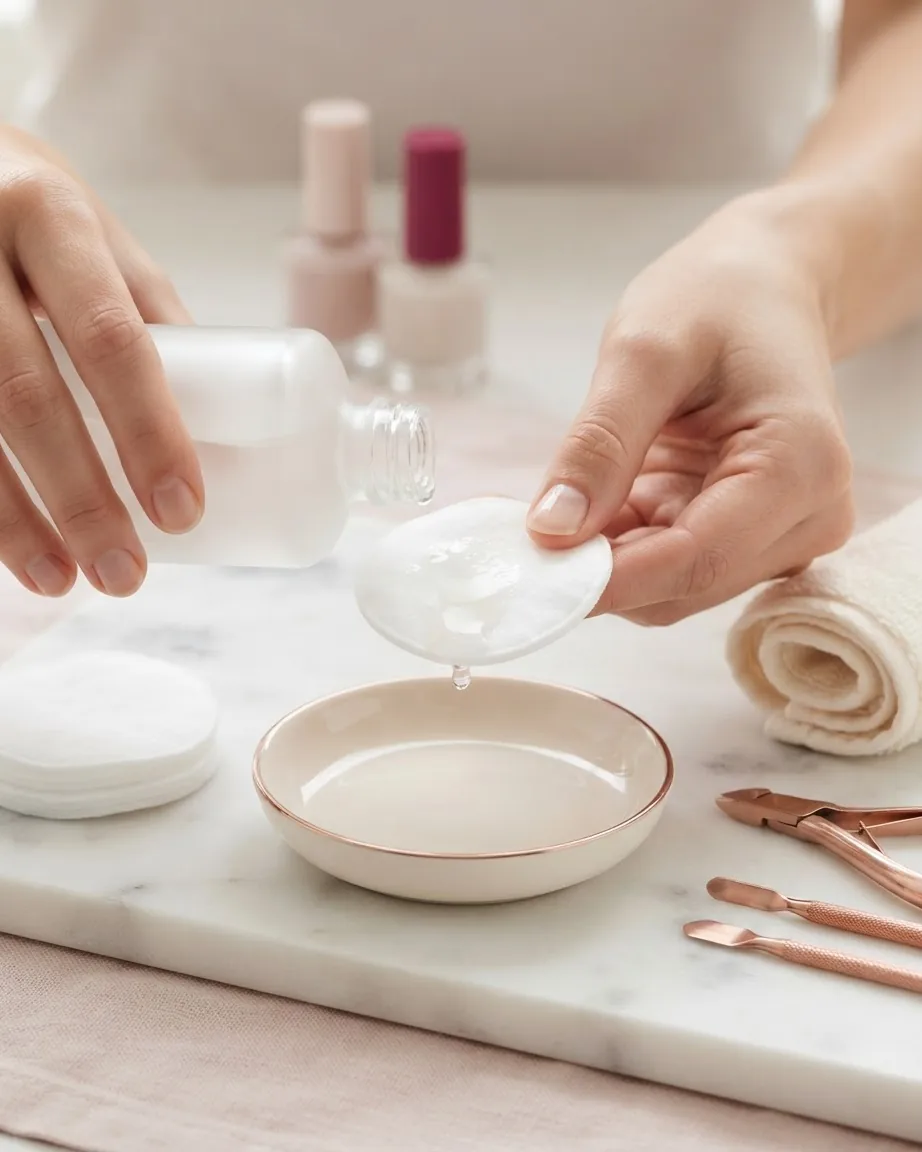
Standard lacquer dissolves on contact, so the work is mostly patience and one clean motion. Pooling color into the cuticle is the common error, and pressing before wiping prevents it.
- Soak a cotton pad in remover until it is wet through but not dripping.
- Press the pad flat against the nail and hold it there while the solvent softens the color.
- Wipe in a single stroke from the cuticle toward the free edge, not in circles.
- Re-wet the pad and go again over any color left in the sidewalls or tucked against the cuticle.
- Rinse your hands and work lotion into the nails and the skin around them.
Rubbing or sawing at a stubborn spot does more harm than a second soak. If the color smears instead of lifting, the pad is too dry; re-saturate it rather than pressing harder.
Removing gel at home: the 100% acetone soak-off

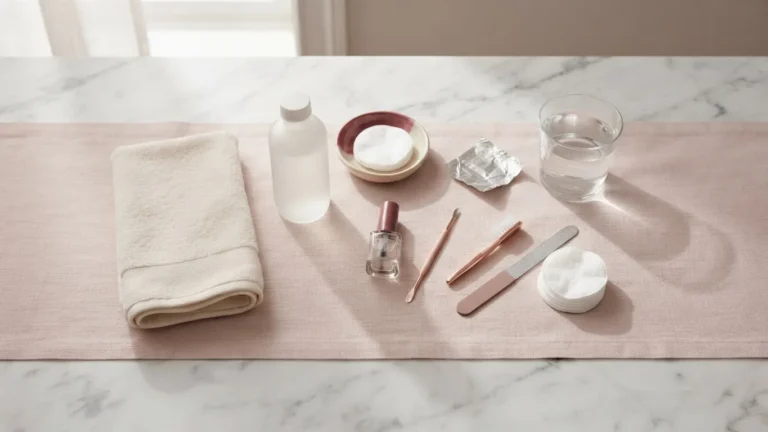
Gel bonds to the nail plate under a lamp and will not wipe away with ordinary remover. The dermatology-published home method uses a short list of supplies: 100% acetone, petroleum jelly, cotton, plastic food wrap, scissors, a washcloth, and a towel. Water’s Edge Dermatology is blunt that a multi-ingredient remover is “not adequate” for gel, and that pure acetone at 100% is what the soak needs.
- Rub petroleum jelly into the cuticle and the skin around each nail first, to shield it from the acetone.
- Cut cotton to fit the nail: roughly a quarter of a cotton ball for pinkies and little toes, about half for the rest.
- Soak each piece in 100% acetone, set it on the nail, and wrap the finger in plastic food wrap, which seals tighter than foil so the acetone is less likely to drip.
- Leave the wrapped nails alone for 10 minutes.
- Unwrap and press the softened gel off with the washcloth; it should slide, not resist.
Two failures show up here. Scraping with an orange stick to speed things along can injure the nail and leave white spots, and prying or filing gel off dry strips the top layer of the plate, which is both damaging and painful. If a patch of gel has not let go after the soak, re-wrap it for a few more minutes rather than forcing it. For a closer look at what actually breaks the bond, see our gel nail polish remover guide.
Aftercare is part of the method, not an extra. The American Academy of Dermatology recommends rubbing petroleum jelly into the cuticles and surrounding skin daily for 7 days after a gel removal to ease the drying effect of the acetone.
Acetone or non-acetone: which remover for which job

Safety warning
The toxicity comparison is where most quick advice flattens a real distinction. On the skin, acetone is harsher and more drying, which is why non-acetone formulas get sold as the gentle option. Swallowed, the ranking can flip: non-acetone remover may be more harmful than acetone if ingested. So “less toxic” has no single answer; it depends on whether you are talking about contact or ingestion.
For speed and on dark colors, acetone wins outright. Non-acetone works slower and leaves pigment behind on deep reds, navies, and blacks, so a dark manicure often needs acetone to clear cleanly. The trade-offs that stay fixed: acetone is very flammable, and prolonged exposure can bring on headaches and dizziness.
Frequency and air matter more than brand. The guidance published by Healthline Media (RVO Health) and medically reviewed by Cynthia Cobb, DNP, APRN, is to use remover in a well-ventilated room and only briefly, a few times a month. Repeated acetone use, whether at home or in a salon chair, drives nail dryness, brittleness, peeling, and cracking over time, so spacing removals out protects the plate as much as any aftercare product.
Pinch methods that mostly disappoint: alcohol, vodka, toothpaste
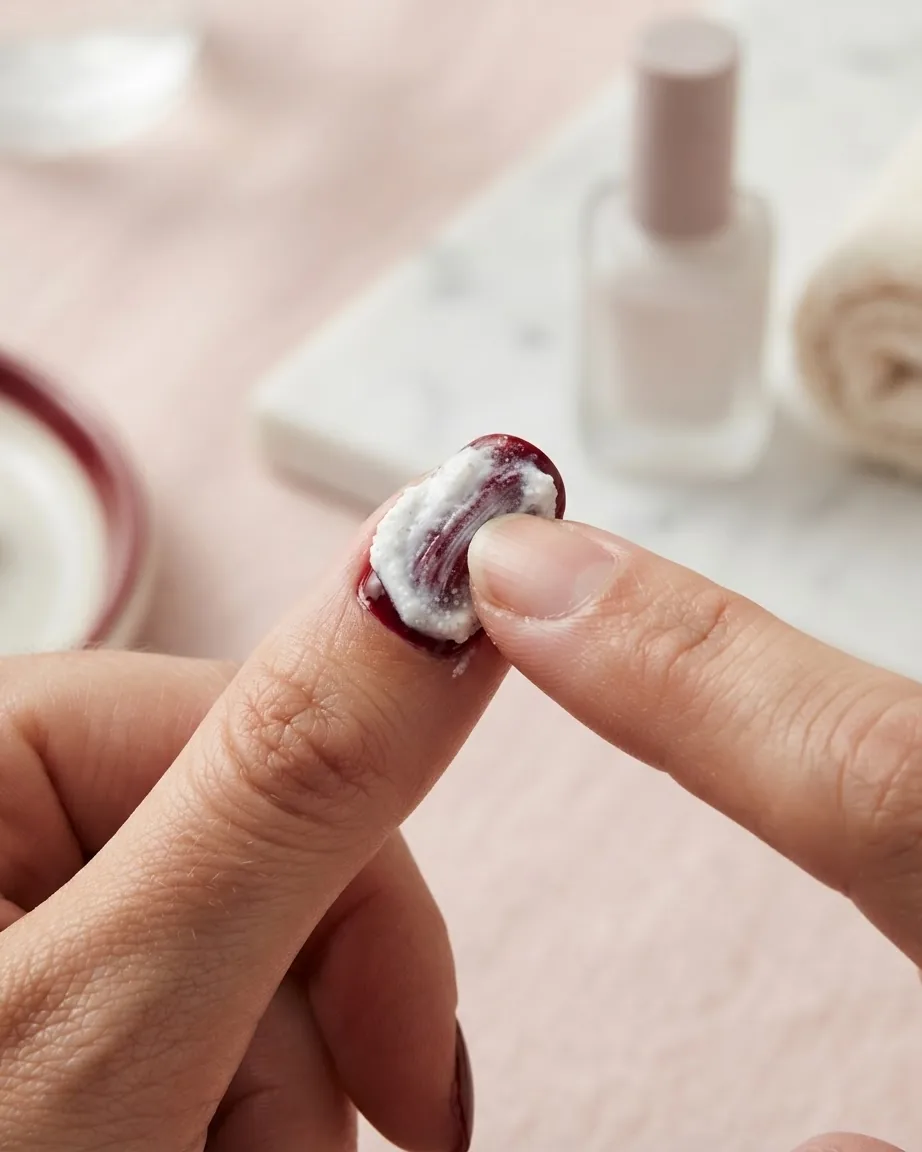
When there is no remover in the house, several household solvents can soften lacquer. None of them is research-backed, and all are worth trying only in a pinch, not as a routine.
- Rubbing alcohol is a solvent and can dissolve polish, but it works slower than a dedicated remover and usually needs several passes.
- High-proof spirits such as vodka, grappa, or gin may soften polish after a soak, with the same slow, partial results.
- Toothpaste, especially a formula with baking soda acting as a mild abrasive, can be scrubbed over the nail to work color off.
- A hydrogen-peroxide-and-hot-water soak may loosen polish enough to wipe or gently file away.
Here is the honest limit: none of these touch cured gel. Gel bonds too strongly to be wiped, scrubbed, or soaked off with anything short of acetone, so the toothpaste trick and the vodka soak are lacquer-only tactics. On dark lacquer they also underperform, leaving a faint stain that a proper remover would clear in one wipe.
Polish on skin and polish on fabric
Color that lands where it should not comes off two different ways depending on the surface. For skin, dab remover on a cotton swab and target just the stain, or try warm water or an alcohol-based solution to lift it without soaking the whole hand. For fabric, blot the mark with remover on a swab first, then launder the item with a stain-fighting detergent or a white-vinegar wash. A fuller walk-through lives in our nail polish out of clothes guide.
Removing polish during pregnancy
Removal itself stays on the table while pregnant; the sensible move is to limit chemical exposure rather than avoid it entirely. Work in a ventilated space, keep the session short, and skip gel for the duration, since the safety research on gel in pregnancy is limited. For taking existing color off, the standard lacquer method with good airflow is the low-exposure choice.
How to remove nail polish without wrecking the plate
Every removal is a small withdrawal from the nail’s condition, and the damage people complain about usually comes from the removal, not the polish. Acetone used too often dries the plate until it turns brittle and starts to peel and crack. Mechanical shortcuts are worse: picking or filing gel off significantly damages the nail, and an orange stick used to pry gel loose can gouge it and leave white spots. For gel specifically, acetone is the most effective home method, and the picking-and-filing alternative is the one to refuse. Follow any removal with lotion, since remover leaves both nail and skin short on moisture.
There is also the option of not removing gel at all. Growing it out is the safest route the American Academy of Dermatology names, though it asks for patience: fingernails take about 6 months to grow out fully, and toenails need 12 to 18 months. That timeline makes grow-out realistic for hands far sooner than feet. If a nail hurts, lifts, discolors, or shows any sign of infection during or after removal, that is a question for a dermatologist, not a home fix.
Repousse: les ongles de pied prennent 2 à 3 fois plus de temps que ceux des mains
Laisser le gel repousser est l’option la plus sûre citée par l’AAD, mais le délai dépend énormément de la zone. À partir des deux durées données – environ 6 mois pour les ongles de main, 12 à 18 mois pour ceux de pied – on calcule l’écart réel:
- Fourchette basse: 12 / 6 = 2x plus long pour un ongle de pied.
- Fourchette haute: 18 / 6 = 3x plus long.
- Dans le pire cas, ça fait 12 mois d’attente en plus (18 − 6) pour un orteil par rapport à un doigt.
Conclusion pratique: la repousse est une stratégie réaliste pour les mains (un semestre), mais sur les pieds tu parles d’un an à un an et demi. Pour les orteils, le soak-off à l’acétone reste souvent le seul choix tenable.
Frequently asked questions
Will non-acetone remover take dark polish off?
It can, but expect a fight. Non-acetone formulas lift pale and mid-tone shades reasonably well, yet they leave pigment behind on deep reds, navies, and blacks, so you end up wiping the same nail five or six times and still find a stain in the sidewalls. For anything dark, reach for acetone, finish in a single pass, and save the non-acetone bottle for lighter manicures.
Why do children need to be kept away from nail polish remover?
Remover should never be swallowed, and it belongs stored out of a child’s reach. Ingestion can cause lethargy and confusion, and two reported cases of children drinking non-acetone remover involved serious effects, including cardiorespiratory collapse. Because the non-acetone type can be more dangerous than acetone if swallowed, the gentle label on the front of the bottle does not make it safer to leave within a toddler’s grasp.
Can I reshape or peel gel off if I am out of acetone?
No. Cured gel will not yield to rubbing alcohol, toothpaste, vodka, or a peroxide soak, and peeling or filing it dry tears away the surface of the plate. If you have no 100% acetone on hand, the better choice is to leave the gel intact until you can soak it properly, rather than forcing a layer that is chemically bonded to the nail.