Type cotton candy nail polish into any shop and you get back at least three bottles that share the words on the label and little else. One is a muted peachy-pink shimmer lacquer. One is a sheer warm pink that barely reads as pink in wear. One is a translucent pink jelly that has to cure under a lamp. They differ in colour, coverage, format and price, so a name that sounds like one sweet pastel is actually pointing at products you cannot swap for each other.
Cotton candy nail polish is not one product. If you want the cheap grab-and-go option with no equipment, the lacquer is it. If you want glossy jelly depth and already own an LED or UV lamp, the gel is the one. A base coat limits staining with either choice.
Three different bottles are sold as cotton candy nail polish
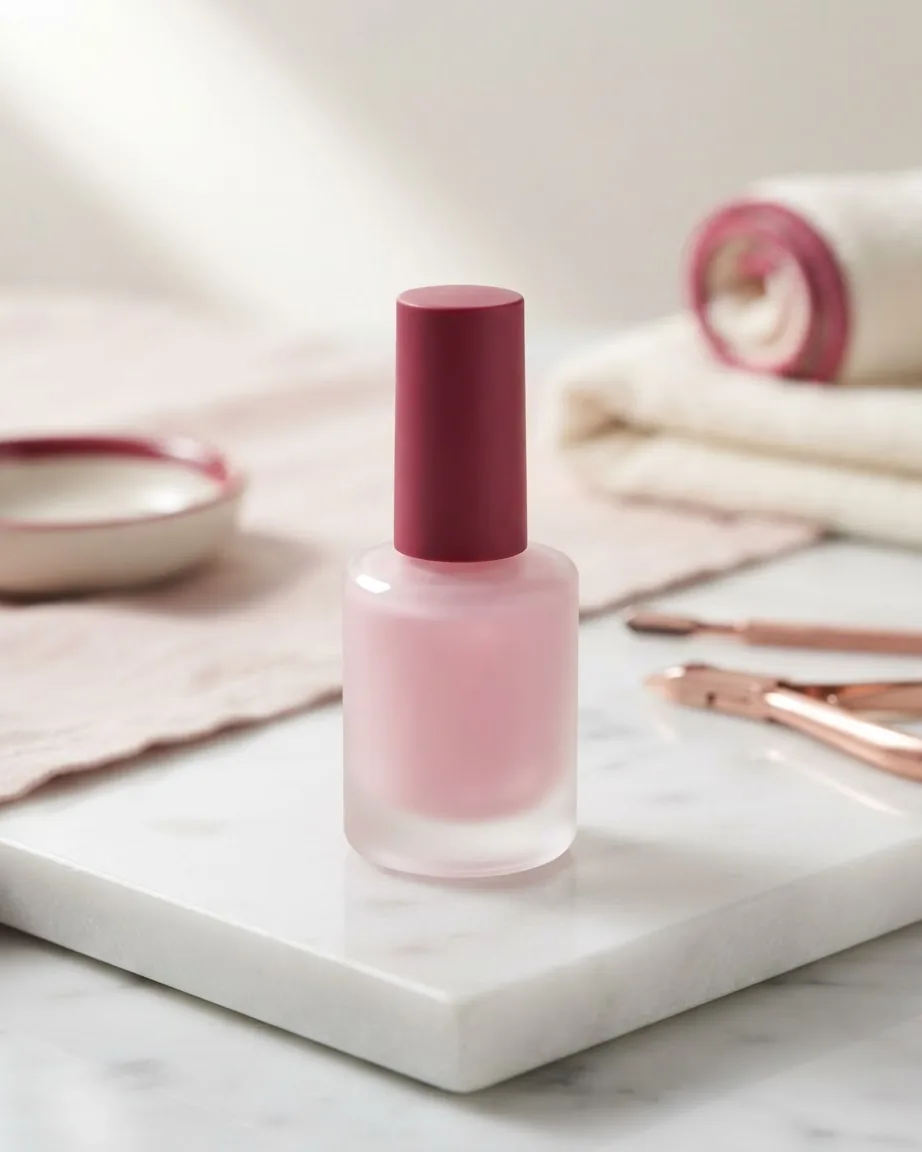
Here is what actually sits behind the name, side by side. The prices are listed where a first-party or retailer page gives one; the sheer OPI lacquer has no price inside the sources checked here.
| Product | Colour & finish | Opacity | Format | Price |
|---|---|---|---|---|
| ella+mila “Cotton Candy” | Soft muted peachy-pink with shimmer | Semi-opaque | Brush-on lacquer, air-dry | – |
| OPI “Coney Island Cotton Candy” | Warm light pink; reads neutral-peach | Sheer | Brush-on lacquer | Not listed here |
| OPI “Cotton Candied Clawz” | Juicy pink, translucent jelly | Sheer to saturated by layering | Gel, cured under LED/UV lamp, 0.5 oz each | ~$25 ($24.98 on sale) |
The gap that matters most is format. Buy on the name alone and you can end up with a gel that is useless without a lamp when you wanted a bottle you could paint on at the kitchen table.
Why the name tells you almost nothing about the colour
“Cotton candy” makes people picture bright blue-pink spun sugar. The real products skew the other way, toward muted pink and plain neutral. ella+mila describes its Cotton Candy as a soft, muted peachy pink, not a punchy pastel. OPI’s Coney Island Cotton Candy goes further toward nothing: per a descriptor of OPI’s marketing, it is a warm, light pink, and user reports back that up hard.
On MakeupAlley, one reviewer calls it a slightly tan neutral
with a hint of peach and no real pink despite the name. So the label is a poor guide to what lands on the nail. Check the swatch and the finish words (“sheer,” “warm pink,” “jelly”), not the sugary name. For the broader category of muted, whitened shades, see also our soft pastel nail polish guide.
Staining, camphor and what “17-free” actually removes
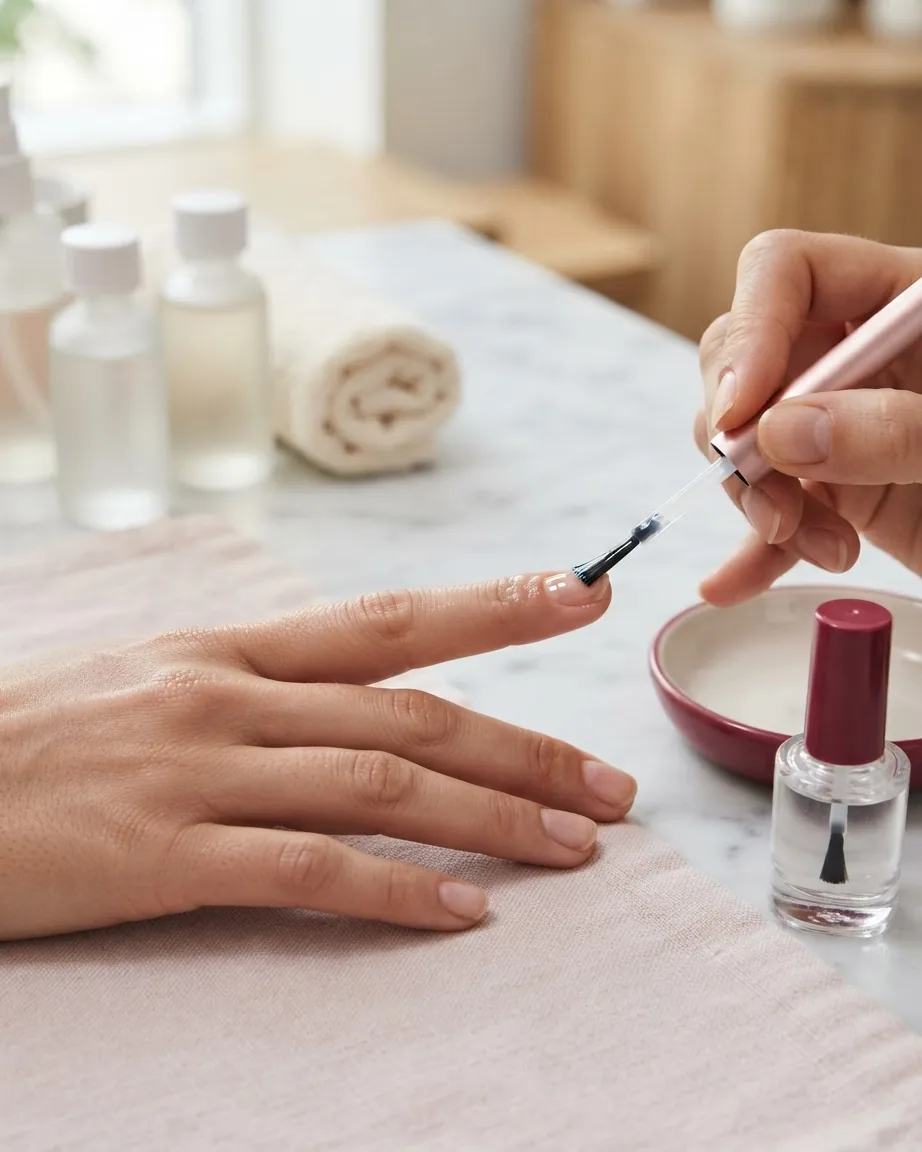
“Is it bad for my nails” usually collapses into vague reassurance. The concrete worry behind it is staining, and there is a named ingredient driving it. ella+mila’s 17-free page points at camphor: it says camphor coats the nail, deprives it, and leaves yellow staining. That is the mechanism people feel when a bare nail looks dingy after a bright polish comes off.
“17-free” is the brand’s claim that the formula is made without 17 named chemicals, among them formaldehyde, toluene and phthalates, per the same page. The excluded list also names acetone, camphor, parabens, xylene, and triphenyl phosphate (TPHP), a potential endocrine disruptor linked to hormone and reproductive concerns. So a practical buying rule falls out of this: if staining or that ingredient list bothers you, look for a camphor-free or 17-free bottle, and lay down a base coat.
The base coat is the brand’s own stated preventive. Used that way, a base coat helps prevent staining and keeps application even. Tint on the bare nail is not unique to pink shades; see also our red nail polish guide. If a nail stays discoloured, sore, or lifted after removal, that is a question for a dermatologist or licensed nail tech, not something to treat yourself.
Sheer, semi-opaque or full coverage: the surprise is real

Coverage is where these shades trip people up, and it goes wrong in both directions. ella+mila lists its Cotton Candy as semi-opaque. That already catches buyers off guard: a verified-buyer review on the product page says she filtered for transparent polishes, chose this one, and found it fully opaque
instead. If you wanted a see-through wash of colour, that is the wrong bottle.
OPI’s Coney Island Cotton Candy runs the opposite risk. It is sheer, and the MakeupAlley reports above describe it looking close to nothing on the nail. The jelly, Cotton Candied Clawz, sits in a third place entirely: the glossy jelly builds from sheer to saturated with each coat, so your coat count changes the actual colour, not just how long it lasts. Decide the look first. One thin coat of jelly is a tint; three is a candy. A sheer lacquer stays sheer no matter how you paint it.
This is the cost-and-effort call, and the two routes are not close. No lamp, no cure, no extra gear.
Beyond Polish’s instructions call for a thin gel base coat cured under an LED or UV lamp, and the Intelli-Gel formula is noted as HEMA-free and TPO-free. Pick the lacquer for speed and spend; pick the gel if you already run a lamp at home and want the jelly depth. For handling and removal particular to cured product, see also our gel nails guide.
What nobody can honestly tell you: how long it lasts

You will see “lasts 3 to 5 days” repeated across thin filler pages. That number is attached to no specific product and no recorded test, so it is not a fact about any of these three bottles. A 5-day claim for a lamp-cured gel and a 5-day claim for an air-dry lacquer cannot both be the answer, because wear depends on format, prep and daily hand use.
What is solid: the jelly is a gel and lasts and removes like a gel, while the ella+mila and Coney Island shades are lacquers that come off with ordinary remover. That lacquer carries a 4.2 out of 5 rating across 58 reviews, which tells you buyers are mostly satisfied, not how many days it holds. Treat any flat “X days” figure for cotton candy shades as marketing noise until a bottle is actually worn and timed. Match the format to your removal plan before you buy, so you are not reaching for acetone on a cured gel or a lamp on a lacquer.
What 0.5 oz “each” really means: total product in the OPI combo
The Cotton Candied Clawz listing says 0.5 oz each for a two-bottle combo, which is easy to misread as half an ounce for the set. Add the two bottles and you get 1.0 oz of product total.
- Gel: 0.5 oz
- Lacquer: 0.5 oz
- Combo total: 0.5 + 0.5 = 1.0 oz
So the combo holds twice the single-bottle volume, split across two formats that need different handling (one cures under a lamp, one air-dries) – worth knowing before you compare it to a single air-dry bottle.
FAQ
None of these are blue – is there a blue cotton candy polish?
Among the named products here, no. ella+mila’s version is peachy-pink, and both OPI shades sit in the warm-pink-to-neutral range. The blue, spun-sugar look people imagine comes from the snack, not from these bottles. If a true sky-blue is the goal, shop by the actual colour word rather than trusting “cotton candy” on a label, because the name keeps landing on pink.
Does a base coat change the final colour?
Not the hue, but it changes how clean it looks. A base coat is the stated step for limiting yellow stain from pigment or camphor and for laying a smooth bed so a semi-opaque shade like the ella+mila one goes on even. Skip it under a sheer polish and old tint or ridges show straight through the thin colour, which reads as a worse shade than the polish really is.
Can I layer the sheer OPI lacquer to make it more opaque?
Adding coats of a sheer lacquer deepens it only slightly; it was built thin and stays translucent. That differs from the OPI jelly, which is designed to climb from sheer to saturated as you stack coats. So with Coney Island Cotton Candy, extra layers mostly add thickness and dry time, not the solid candy pink you might be chasing. For real buildable colour, the jelly gel is the format that does it.