The word “without” splits into two jobs that get collapsed into one, and that collapse is where the trouble starts. Learning how to remove nail polish without remover can mean using no commercial product at all – household workarounds like rubbing alcohol, re-applied fresh polish, or a file – or it can mean reaching for a non-acetone remover, which is still a purchased remover despite the gentler label. These paths behave differently on the nail, work on different kinds of polish, and carry different risks. Treating them as interchangeable is the mistake that leaves a reader scraping at cured gel with a cotton pad and getting nowhere.
This guide separates the two, states plainly where each one fails, and corrects the assumption that skipping a chemical automatically means kinder to the nail.
Quick Answer: What Works When You Have No Remover
To remove nail polish without remover on hand, try solvent-based household products first: rubbing alcohol, high-proof spirits, or alcohol-based hand sanitizer on a saturated cotton pad. If those stall, painting a fresh coat of polish over the old color and wiping immediately while wet can lift pigment. None of these is guaranteed, and all of them apply to classic lacquer only. Gel and semi-permanent polish will not surrender to any of them – only a prolonged soak in pure acetone breaks down cured gel. Avoid filing or scraping as a shortcut: it strips the top layer of the nail plate.
The Trial Order When No Remover Is in the House

Classic lacquer dries by evaporation and stays soluble, which is why solvents can soften it long after application. Run household options in order of how reliably they dissolve pigment, not in order of what happens to be in the cabinet.
- Start with rubbing alcohol. Soak a cotton pad, press it flat on the nail for several seconds, then wipe toward the free edge. Isopropyl alcohol is the most dependable household solvent for lacquer.
- Move to high-proof spirits. Clear liquors with high alcohol content work on the same principle when rubbing alcohol is not available.
- Try alcohol-based hand sanitizer. The alcohol does the work; rub it in, let it sit, then wipe. Gel-based formulas are easier to hold on the nail.
- Re-apply fresh polish, then wipe fast. Paint a new coat over the old, and wipe it off with a cloth while still wet. The wet solvent in the new coat can carry old pigment away.
- Accept that none is guaranteed. Most of these household tricks are not research-backed, and results vary by polish formula and how many coats are on the nail.
Healthline Media’s medically reviewed guide on how to remove nail polish from nails, skin, and clothing walks through several of these household approaches for lacquer. For the standard cotton-pad method once a bottle of remover is back in reach, see our how to remove nail polish guide.
Why Household Tricks Do Nothing on Gel and Semi-Permanent
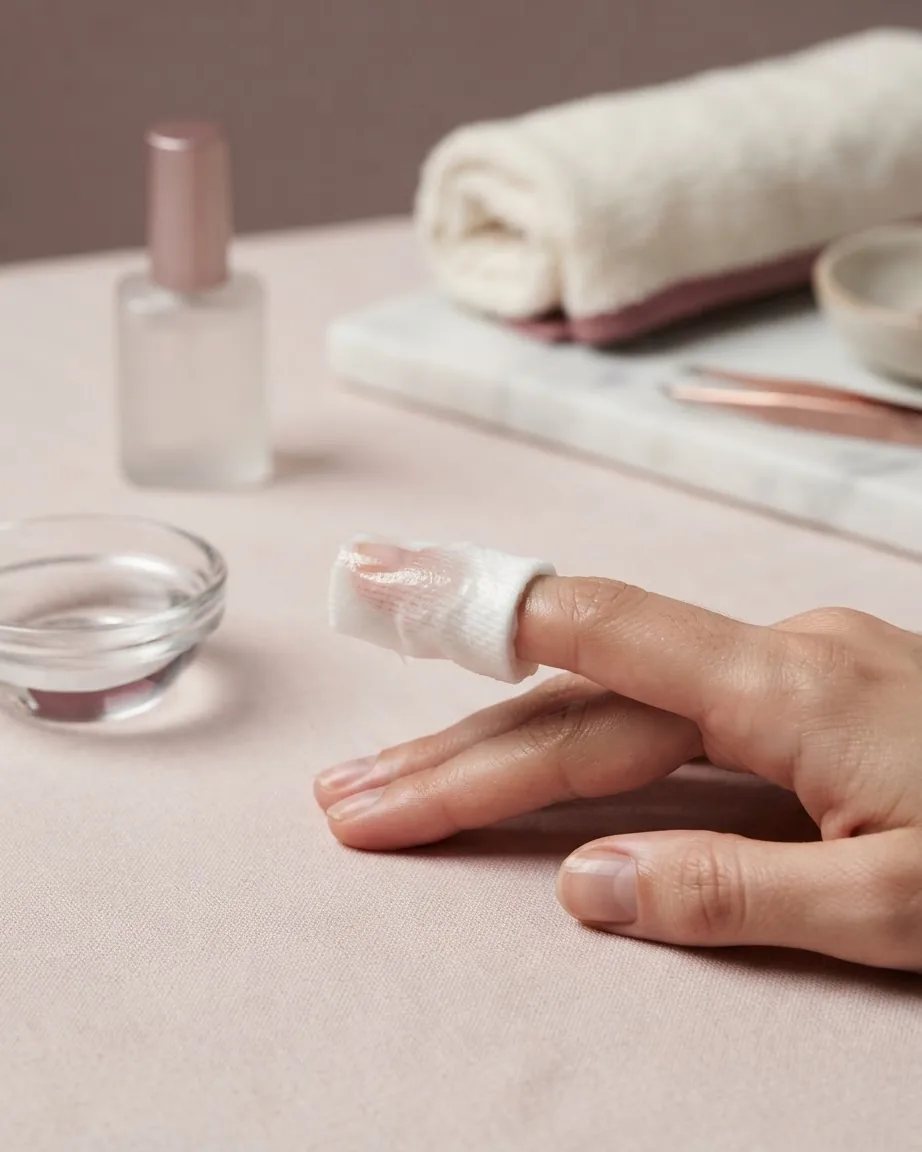
Here is the line most generic advice blurs: the methods above apply to classic lacquer, not to gel. A standard non-acetone remover will sit on cured gel and accomplish almost nothing, because gel is not a lacquer that dries by evaporation – it cures into a hardened film that household solvents cannot penetrate.
Gel and semi-permanent color only break down under a prolonged soak in pure acetone. Alcohol, spirits, sanitizer, and toothpaste will not touch it. If you have soft gel tips, the removal follows the same acetone-soak logic covered in our Gel X nail tips guide, and the solvent question specific to these products is handled in our nail varnish remover for gel breakdown. Attempting household tricks on gel wastes time and tempts the reader toward filing, which is the most damaging shortcut of all.
The “No Chemical = Gentler” Myth, Corrected
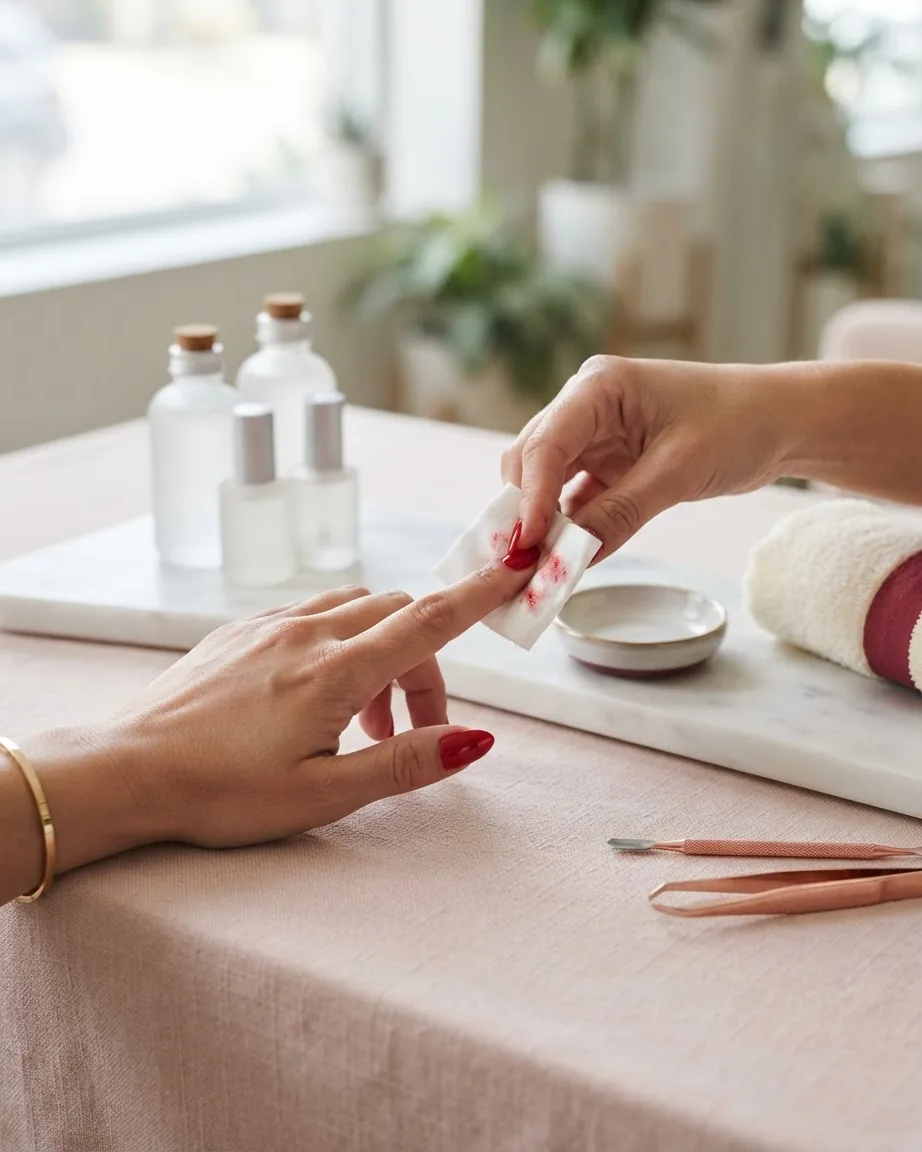
The intuition is understandable: skip the harsh solvent and the nail stays healthier. The sourced reality is more conditional. Three points undo the assumption.
- Most household methods are not research-backed. “Gentle” is often an assumption, not a measured result. A method that feels soft can still take more rubbing and more passes than acetone would.
- Filing and scraping strip the nail plate. Abrading polish off physically removes the top layer of the nail along with the color. There is no solvent involved, yet it is among the harshest things a reader can do.
- Non-acetone can be more toxic if swallowed. According to Healthline Media’s guide, non-acetone removers may be more harmful than acetone removers if taken by mouth, citing cases of children who ingested non-acetone remover and developed serious symptoms. The published guidance notes acetone itself is considered low-toxicity for removal use.
These two facts about toxicity are not in conflict. “Gentler on the nail” and “safer if swallowed” are different claims. The ingestion comparison applies to swallowing the product, not to using it on the nail surface. A remover can be kinder to the nail plate and still be the more dangerous bottle to leave within a child’s reach.
What the Data Says About Non-Acetone Gentleness vs. Speed
Non-acetone remover earns its reputation for being easier on the nail, and there is measurement behind it – with a tradeoff attached. Typology Paris, in an article written by a chemical engineer, reports data from the Li 2019 study published in the Journal of the Korean Applied Science and Technology, measuring nail roughness before and after removal.
For non-acetone remover, nail roughness read 37.44 ± 8.82 before and 37.34 ± 4.31 after – effectively unchanged. For 100% acetone, roughness dropped from 37.50 ± 5.64 before to 28.09 ± 5.50 after. The acetone group showed a measurable change in the nail surface; the non-acetone group did not. Measurements were taken with three participants at 5, 10, 15, and 20 minutes after using the remover, per Typology’s write-up of the study.
The tradeoff: non-acetone removal is slower. The gentleness is real, but it costs time and rubbing passes. As Typology frames the choice:
“Why is it better to choose an acetone-free nail polish remover?”
One caveat the reader should hold: this is a small study on gel nail remover liquid at varying acetone concentrations, with three participants mentioned for efficacy. The direction of the finding is useful; the exact figures should not be over-generalized to every nail and every formula.
Why Non-Acetone Remover Exists and Who It Is For
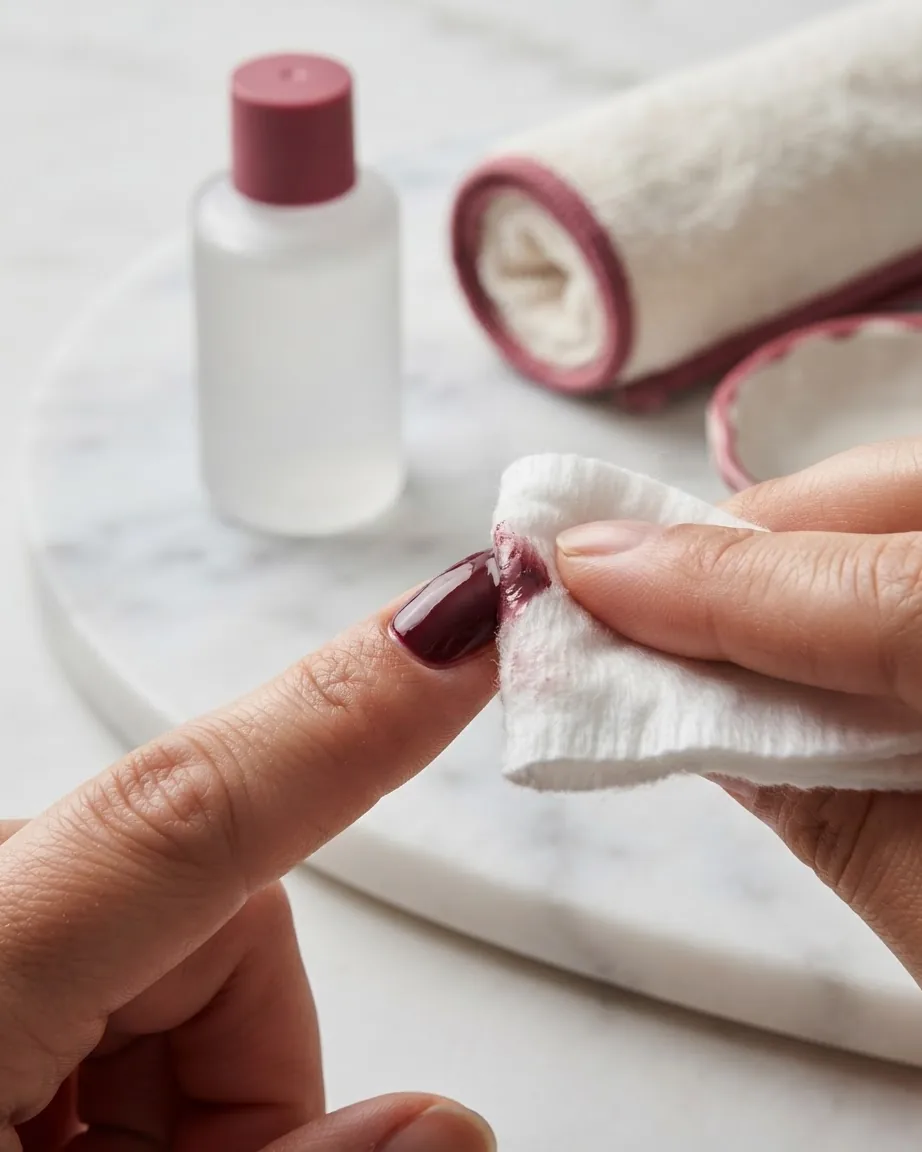
Non-acetone remover is not simply a milder version of acetone – it was developed for a specific problem. Sally Beauty Supply LLC, in its explainer on the difference between acetone and non-acetone nail polish remover, points to the role each plays with nail enhancements.
Non-acetone formulas typically use solvents such as ethyl acetate or methyl ethyl ketone. They matter most for nail extensions and artificial tips, because acetone makes extensions brittle and can lift them off the nail. A reader wearing tips or enhancements has a reason to choose non-acetone that has nothing to do with gentleness on the natural nail. There is also a practical trade note worth knowing: acetone attacks some latex gloves, so glove choice matters when acetone is in use.
Why Acetone Is Harsh on the Natural Nail
If the reader does reach for acetone – the only thing that removes gel, and the fastest option for stubborn lacquer – it helps to know what it does. Acetone dissolves the protective lipids on the nail surface and drives rapid moisture loss. That is the mechanism behind the dry, chalky nail and the whitened skin after a soak. It is why the roughness figures above moved for the acetone group and stayed flat for non-acetone.
This is a cosmetic observation about the nail surface, not a medical one. If the nail shows persistent damage, splitting, or a reaction, that belongs with a professional, not a home fix. For removing a soak-off enhancement without tearing up the plate, the acetone method is laid out in our remove dip nails at home guide.
Safety: The Risks Worth Ranking Before Convenience
For a how-to that touches both chemistry and children’s reach, the hazards are not equal. Ordered by how much harm they can do:
- Ingestion, especially by children. This outranks everything. Non-acetone remover may be more harmful than acetone if swallowed, and there are recorded cases of children ingesting it with serious symptoms. Store every remover out of reach and sight.
- Over-filing the nail. Physically abrading polish off strips the top nail layer. Avoid it as a removal method entirely – the saved minutes are not worth the thinned plate.
- Poor ventilation. Solvent fumes concentrate in a closed bathroom. Open a window or work in moving air whenever acetone or alcohol is in use.
Protective basics apply throughout: keep air moving, wash off any solvent that reaches skin, and if a reaction appears, stop and see a professional. Never put an uncured product on skin to “test” it.
Aftercare: Putting Moisture Back
Every removal method on this page pulls moisture and oils from the nail and the skin around it – acetone most aggressively, the household solvents to a lesser degree. The single step that closes the gap is replacing what came out. Rub a cuticle oil or a hand cream into the nail plate and surrounding skin once removal is done. This does not undo structural damage from over-filing, but it addresses the dryness that solvents leave behind.
Choosing the Allergen Profile of Your Remover
Allergen warning
When a reader does buy a remover, the formula’s irritant profile is a measurable point of difference. Consumer Reports, in its tested roundup citing David Johnson, MD, found that several products scored a 100, meaning they were 100 percent top-allergen-free. That score is a concrete thing to look for on a label rather than trusting a “gentle” claim alone.
The full ranked results and testing method appear in Consumer Reports’ tested review of nail polish removers. For a reader with sensitive skin or a history of reactions, a 100 percent top-allergen-free score is a more useful filter than acetone-versus-non-acetone alone, since both categories span a range of added ingredients.
The Gentleness Gap: What the Roughness Numbers Actually Show
In the Li 2019 data reported by Typology, the two removers are quoted with before-and-after nail roughness readings, so the actual surface change each one caused can be worked out directly rather than described in words. Doing the subtraction turns the vague claim that non-acetone is “gentler” into a concrete size.
- 100% acetone moved roughness from 37.50 to 28.09 – a drop of 9.41 roughness units in the measured surface.
- Non-acetone remover moved roughness from 37.44 to 37.34 – a change of just 0.10 units, effectively flat.
- That makes the acetone group’s surface change about 94 times larger than the non-acetone group’s in this measurement.
The gentleness is real and now has a number behind it, but hold two caveats that the figures cannot override: this is a small study (three participants mentioned for efficacy) on gel remover liquid, so the exact magnitude should not be stretched to every nail or formula, and “gentler on the nail surface” is a separate claim from “safer if swallowed.” Non-acetone is slower to remove polish, and when ingested it may be more harmful than acetone – so a near-zero roughness change is not the same as an all-round safer bottle to keep around.
Frequently Asked Questions
Can toothpaste or hot water with peroxide take off polish?
These circulate as household fixes for classic lacquer, but they sit outside what research supports. They may loosen a thin, single coat with heavy rubbing, yet they fail on thick or multiple-coat applications. Solvent-based options such as isopropyl alcohol are more dependable. On gel, none of them has any effect at all.
How long does a non-acetone remover take compared with acetone?
Longer. The gentleness that keeps the nail surface unchanged comes at the cost of speed and extra rubbing passes. In the Li 2019 measurements, surface readings were recorded out to 20 minutes after application, reflecting a slower process. For a quick wipe on lacquer, acetone finishes faster; for enhancements, the slower non-acetone is still the right call.
Is skipping remover better for weak or peeling nails?
Not automatically. Filing color off, a no-chemical approach, is one of the harshest things you can do, since it shaves the nail’s top layer. A gentle purchased remover often treats a fragile nail better than scraping. Persistent peeling, ridging, or pain is a question for a professional, not a home experiment.
Why does acetone ruin my tips but not my natural nails as fast?
Extensions and artificial tips react to acetone by turning brittle and lifting away from the nail, which is the exact problem ethyl-acetate and methyl-ethyl-ketone formulas were built to avoid. Natural nails tolerate a brief acetone soak better, though repeated exposure still dries the plate. Wearers of tips have a formula-specific reason to stay with non-acetone.