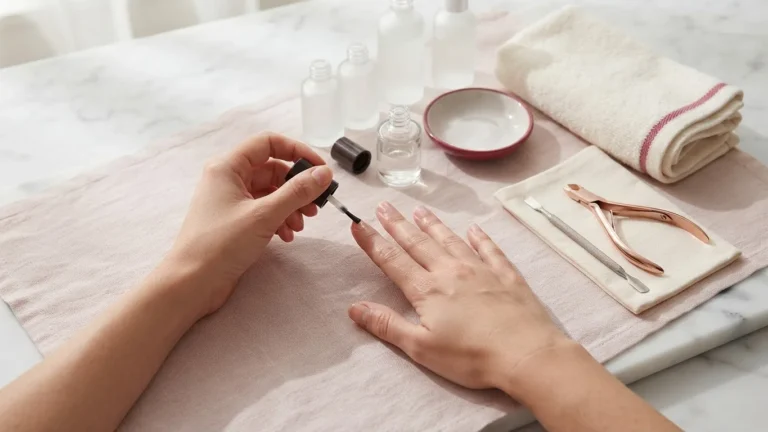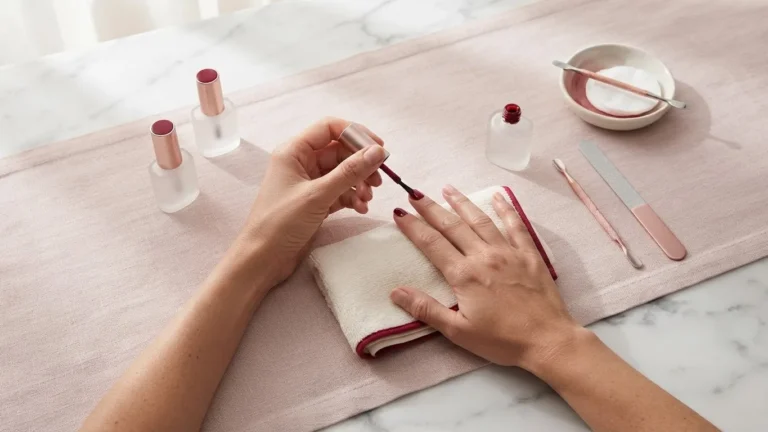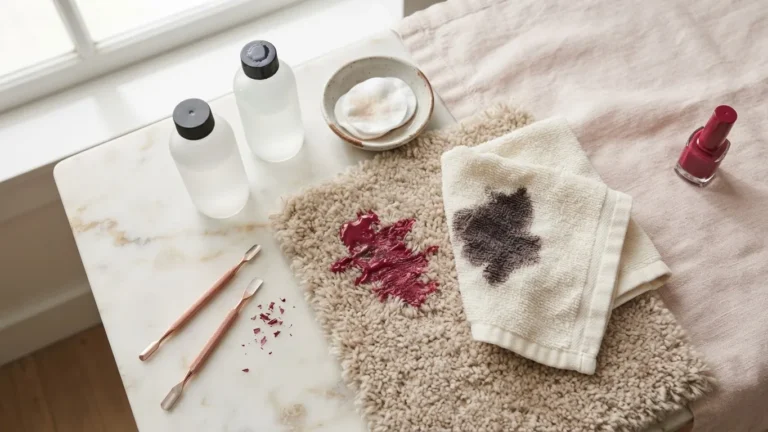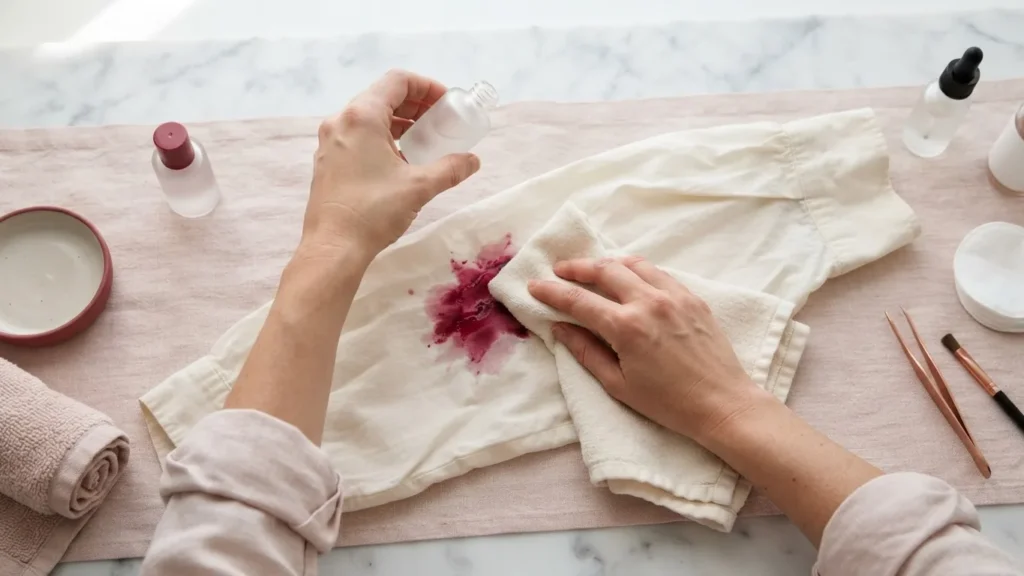
The one move that turns a fixable spill into a permanent one is heat. Dryer heat sets a nail polish stain into clothing for good, and hot water bonds polish to carpet fiber, so the first rule before any solvent touches the fabric is this: no heat until the stain is gone. Figuring out how to get nail polish out of clothes starts with identifying the fabric, because the solvent that rescues a cotton tee is the same solvent that eats a hole in acetate.
Nail polish is a lacquer suspended in solvent. Once it hits fabric, the solvent flashes off and the pigmented resin grips the fibers. That is why a plain wash cycle rarely lifts it: detergent alone does not break the dried resin, and pretreating with a solvent is the step most people skip.
The 5-minute starting routine for a fresh nail polish stain
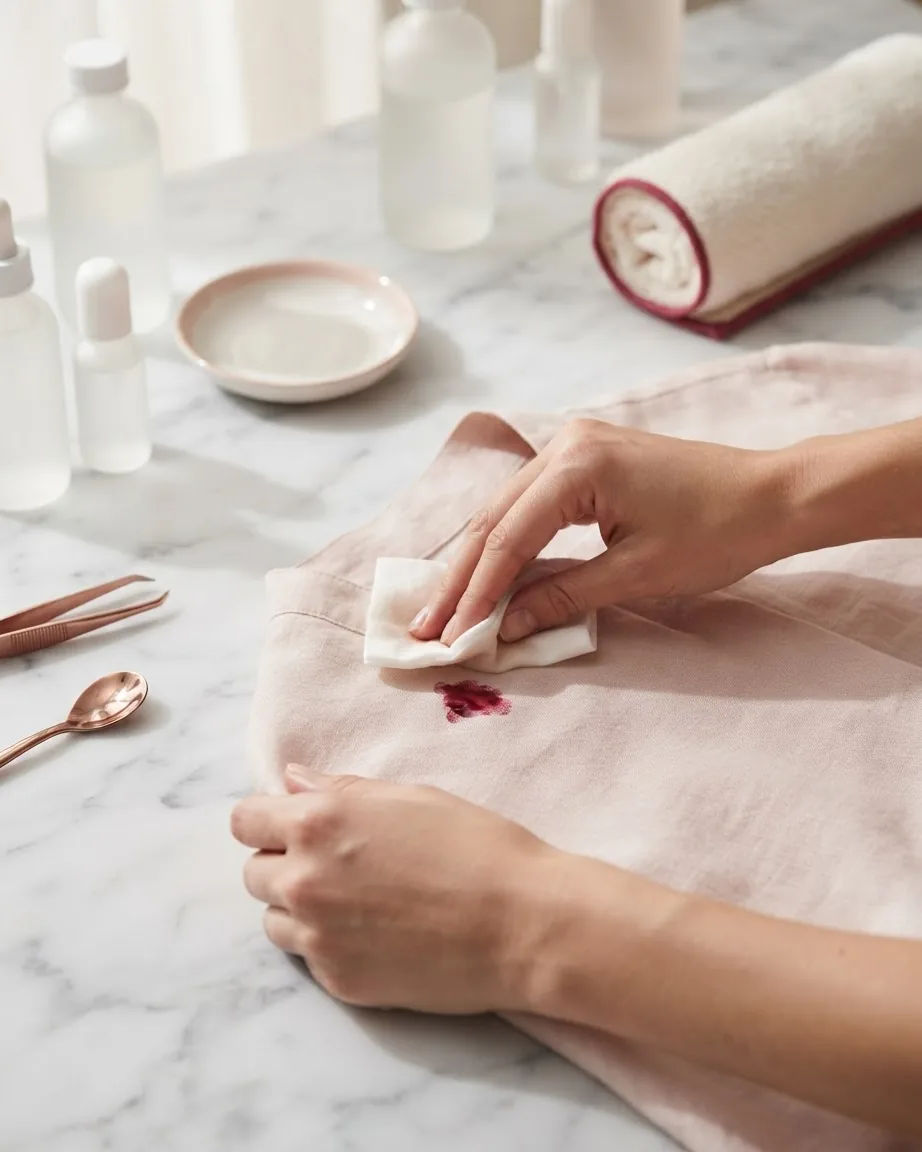
Act while the polish is wet and work from the back. Place the garment face-down on a stack of paper towels, so the stain lifts out through the back of the fabric instead of being pushed deeper. Dab a solvent from the outside edge inward with a clean cloth, blotting rather than rubbing, and swap the paper towels as color transfers. For a persistent clothing stain, Tide’s dish-soap solution is one tablespoon of soap to two cups of cool water. Keep everything cool. Do not apply heat, and do not run the garment through a dryer until the stain has fully cleared.
The fabric-safety rule: which solvent for which cloth
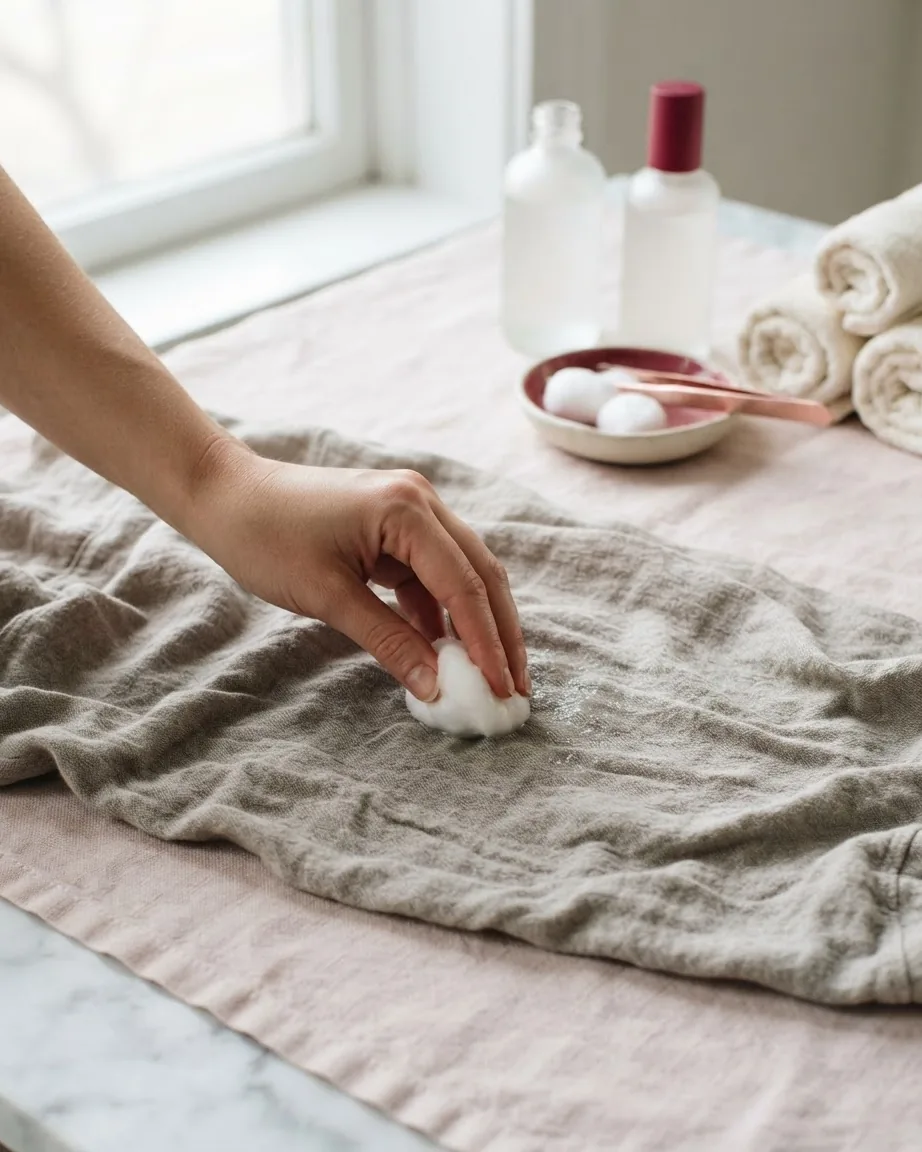
Identify the fiber first, because this single decision decides whether you reach for acetone, non-acetone, or a professional. Acetone destroys acetate, triacetate, and modacrylic. According to the consumer-cleaning guidance published by TODAY, drawing on Molly Maid and Rainbow International experts, the acetone in standard remover will deteriorate these fabrics, so you should opt for non-acetone nail polish remover on them instead.
Fine naturals like silk and wool belong with a dry cleaner, not a bottle of remover. For ordinary washable cotton and synthetics, the sources split on the default solvent, and that disagreement is the part worth knowing:
- Acetate, triacetate, modacrylic: non-acetone remover only. Acetone dissolves the fiber itself.
- Silk, wool, fine naturals: take it to a professional cleaner.
- Washable cotton and synthetics: acetone-based remover is the stronger option, but only after a colorfastness test (see the next section).
Here is the conflict in plain terms. Both The Spruce and Tide default to acetone or acetone-based remover for washable clothing, while TODAY’s guidance defaults to non-acetone remover. The practical resolution: non-acetone is the safer first attempt on any washable garment whose fiber you are unsure of; acetone is the more aggressive follow-up, reserved for confirmed cotton or sturdy synthetics that have passed a hidden-spot test. If a label says acetate or you cannot identify the fiber at all, treat it as non-acetone-or-professional and stop there.
Colorfastness testing before any solvent touches the dye
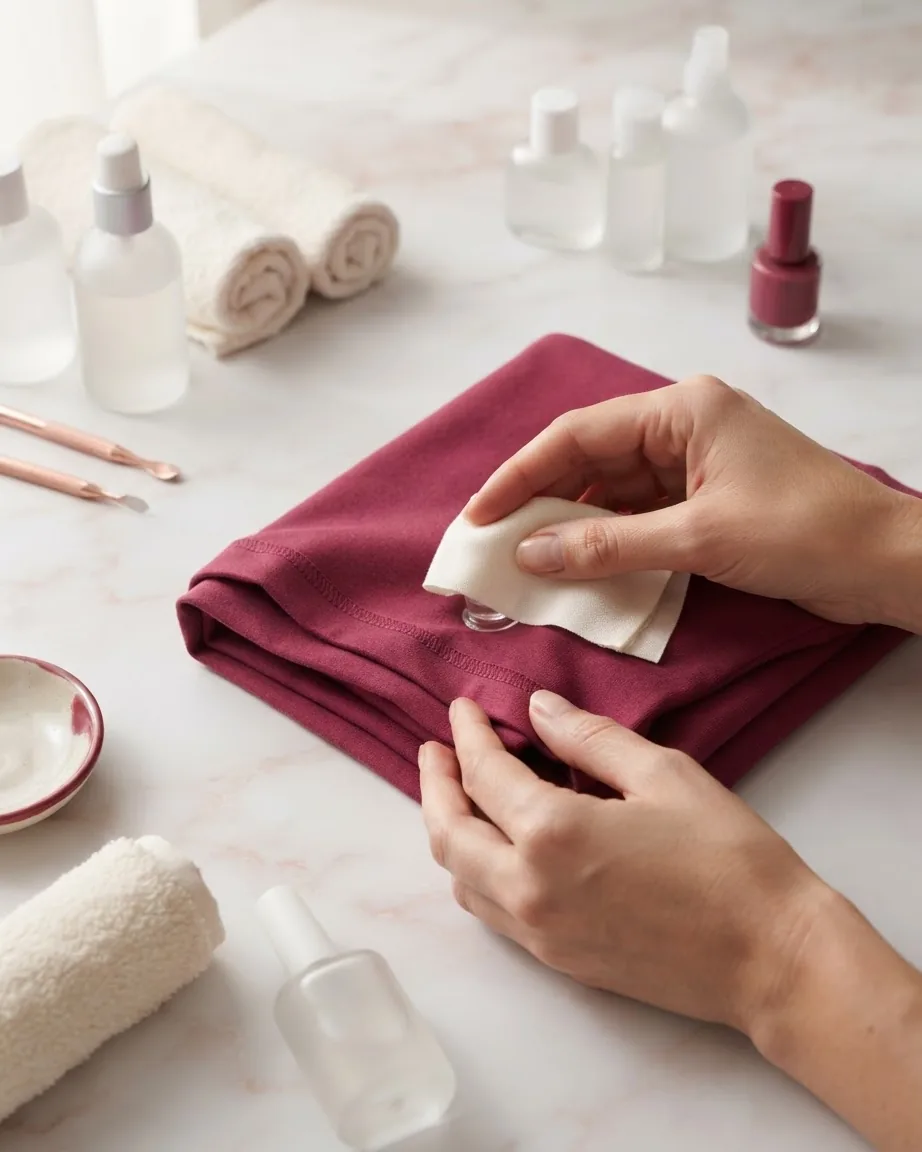
Acetone can bleach fabrics or strip garments of their dyes, which is why Tide’s guidance is explicit that whenever you use acetone-based removers on fabric, you should always test in an inconspicuous area first. Pick a hidden seam allowance, an inner hem, or a spot under a pocket. Dab a small amount of your chosen solvent on and watch for two things: color lifting onto your cloth, and any change in the fabric’s own color.
TODAY’s method puts a clock on it. Allow the solvent to sit on the hidden area for 30 minutes to an hour; if the color transfers or a color change occurs, a professional cleaner should be considered rather than home treatment. That window is long for a reason, because some dye shifts only show after the solvent has had time to work. Skip this step and you can trade a small polish stain for a bleached patch that no amount of washing brings back.
The 10-minute vinegar method and other no-remover fallbacks
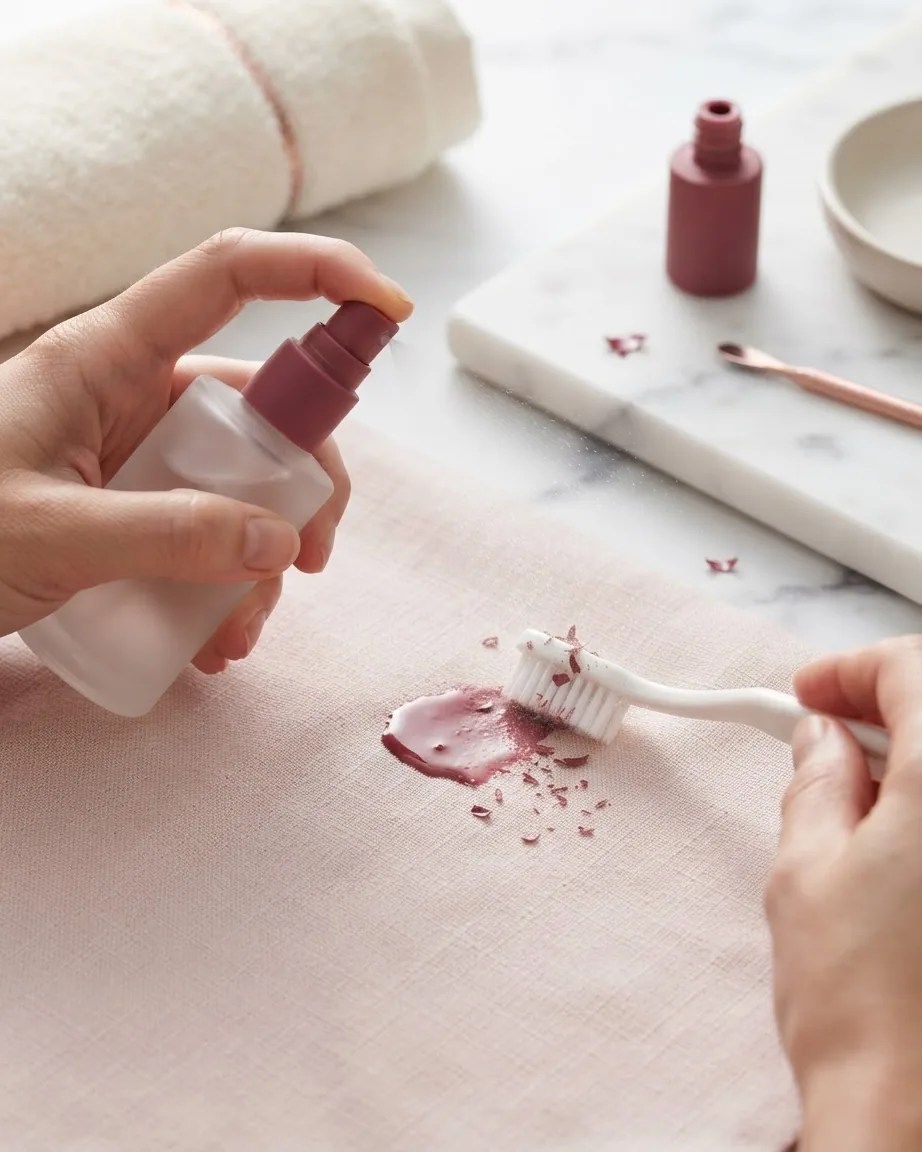
No bottle of remover in the house does not mean the stain wins. The Spruce’s fallback for washable fabric is a mixture of one part white distilled vinegar to one part heavy-duty laundry detergent: blot it onto the stain, then wipe it away after 10 minutes with a cloth moistened in cold water. The cold water matters, since the no-heat rule applies to every one of these methods.
- Hand sanitizer: a formula with a high rubbing-alcohol content can break down the polish resin when dabbed onto the stain and blotted.
- Vinegar and detergent, 1:1: white distilled vinegar mixed with heavy-duty detergent, left 10 minutes, wiped with cold water.
- Hairspray and a toothbrush: a workaround for acetate specifically, where acetone is off the table. Spray, then work the loosened polish gently with a soft toothbrush.
Rubbing alcohol in any form is gentler than acetone and worth trying first on fabrics you are unsure about. None of these is a guaranteed lift on a fully dried, set stain, but each buys you an attempt that does not risk the dye the way acetone can.
Wet versus dried polish: harden it, then work the back
A wet spill and a dried crust call for different first moves. If the polish is still liquid, do not start dabbing solvent into a smear, because you will spread it. Harden it first by pressing an ice pack against the spot until the polish firms up, then lift or scrape the hardened film off before treating what remains. This keeps a dime-sized drop from becoming a palm-sized stain.
For polish that has already dried, the face-down, treat-from-the-back approach does the heavy lifting. Lay the garment stain-side down on paper towels and apply your solvent to the back of the fabric, so the loosened color is driven out of the weave onto the towels rather than through to the other side. Gentle scraping or peeling can take off the top crust of a dried stain before you blot, but keep it gentle on anything with a pile or a loose weave.
Upholstery and carpet: the surface-specific methods that disagree
What works on a shirt is not what works on a couch cushion, and the sources split here too. For upholstery, TODAY’s solution is one tablespoon of liquid dish soap mixed with two cups of cool water, blotted in. Tide gives the numerically identical ratio, one tablespoon of soap to two cups of cool water, but frames it as the fix for a persistent polish stain on clothing. Same numbers, different target surface, so match the ratio to the job in front of you rather than assuming one page covers both.
The acetone question flips on upholstery. Tide’s guidance is to not use acetone or acetone-based products on upholstery, as these can damage it. The Spruce’s upholstery method, by contrast, does use an acetone-based remover, but only after a hidden-area test on the furniture. The two are not really comparable without that caveat: The Spruce’s path is conditional on the test passing, while Tide’s is a flat avoidance. If you cannot find a hidden patch of the upholstery to test, follow the more cautious route and keep acetone off it.
Carpet carries its own heat trap. Hot water bonds polish to carpet fiber, so every rinse and blot on a rug should be cool. On an upholstered piece, soaking is an option for washable fabric the way Tide allows a garment to soak for up to 5 minutes, weighting the item with a white towel to keep it totally submerged, but a fixed cushion gets blotted, never soaked.
Why the dryer is the real enemy, and who settles it
The mistake that makes a polish stain permanent is not choosing the wrong remover. It is heat applied too early. High dryer heat permanently sets a nail polish stain into clothing, which is why the garment must never go through a drying cycle until the stain has fully cleared. If you have treated a stain and it looks faded but present, let it air-dry and inspect it in daylight before anything hot touches it.
The weight behind the “treat it carefully, call a pro when in doubt” posture comes from people who do this at scale. On its clothing guide, Molly Maid states, “We’ve been helping homeowners keep things clean for almost 40 years,” and reports 7 million cleaning services, 90 percent of which were for repeat customers. That track record is the reason the escalation rule is worth following: when a colorfastness test shows dye transfer, or the fabric is silk, wool, or an unidentified fine natural, the home attempt ends and the garment goes to a professional.
Does a normal wash cycle remove nail polish on its own?
No. This is the misconception that ruins garments. Detergent alone may not break down dried polish resin, so running the item straight through the machine without pretreating does little except risk a heat-set stain if the load ends in the dryer. The sequence that works is: harden or scrape any excess, pretreat with the correct solvent for the fabric, blot from the back on paper towels, confirm the stain is gone in good light, and only then launder and dry.
For readers choosing a polish with an eye on how it wears and removes, the gel nails definition and the matte nail polish guide sit alongside this one in the nail care library.
What the dish-soap solution actually works out to (1:32 dilution)
Both Tide (for a persistent clothing stain) and TODAY (for upholstery) give the same mix: one tablespoon of dish soap to two cups of cool water. Knowing that lets you resize the recipe without guessing: for a smaller job, use half a tablespoon of soap per single cup of water, which keeps the exact same strength. Any mix much soapier than 1:32 just leaves residue you then have to rinse out with more cool water, and the no-heat rule still applies to every rinse.
FAQ
Can I use acetone on a polyester-cotton blend?
Only after a hidden-spot test passes, since the cotton may hold dye differently than the polyester and acetone can strip color unevenly on a blend. Dab a little on an inner seam, wait, and check for transfer. If the blend contains any acetate, skip acetone entirely and reach for non-acetone remover or hand sanitizer instead.
What if the polish has been dried on for weeks?
Older stains are harder but not always hopeless. Scrape off the raised crust first, then apply the fabric-appropriate solvent to the reverse side and give it time to re-soften the resin. Dye-transfer risk climbs with repeated solvent passes, so retest a hidden area between attempts and stop for a professional if color lifts.
Is glitter or gel polish different to remove from fabric?
Glitter leaves flecks even after the resin lifts, so you may need to pick out particles by hand once the color is out. Cured gel is tougher than regular lacquer because it has hardened into a film, meaning scraping the top layer before solvent work matters more here than with standard polish.
How long should I leave a solvent sitting on the fabric?
For the vinegar-and-detergent fallback, 10 minutes before wiping with a cold-water cloth. For a hidden colorfastness check with remover, up to 30 minutes to an hour to catch delayed dye shifts. Soaking a washable garment tops out around 5 minutes under a weighting towel. Never let heat enter at any stage.