A neon yellow often needs three full coats to read as yellow instead of a pale wash, while a creamy crème can cover in close to one. That single difference in opacity explains most of the frustration people have with nail polish yellow colors – the color is rarely the problem, the formula is. The swatch notes published by the beauty blog Floating in Dreams make the split plain: “Most of them are sheer and streaky, but this one goes on opaque. You will need a good 3 layers of it to do so,” against a separate observation that a different shade “goes on opaque in almost one layer.” Pick for coat count first, hue second.
Below is a self-contained read before the sections go deep.
Quick answer: Yellow is the shade most likely to apply streaky, so the formula matters more than the exact tone. Neon and sheer yellow polishes commonly need three coats for even coverage; a crème-finish yellow covers in close to one. Soft, pale “butter” yellows read as a warm neutral and suit the widest range of skin tones. Saturated canary yellows flatter warmer, deeper skin and can look harsh on fair-and-cool complexions. A base coat lowers but does not eliminate the chance of the dye staining the nail, and darker yellows stain more than pale ones.
Yellow shade families, from canary neon to butter
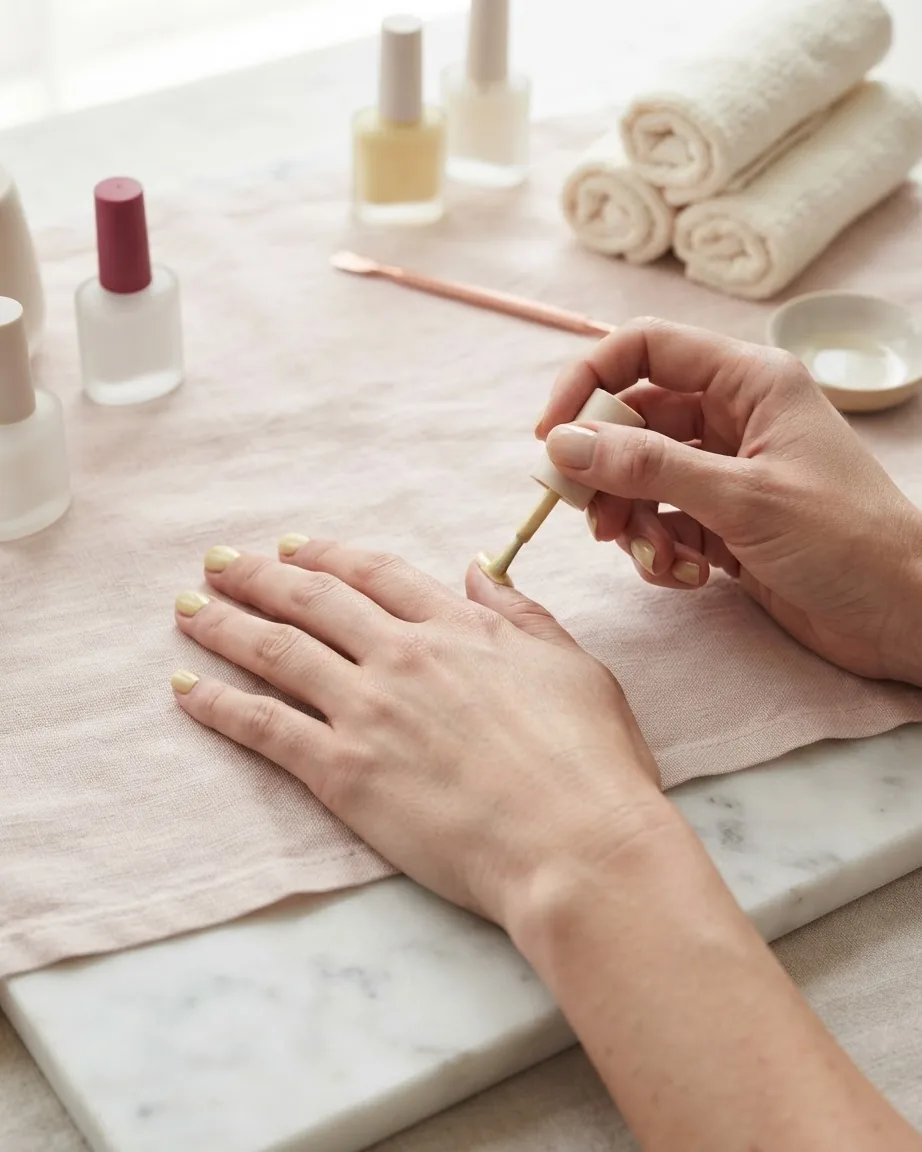
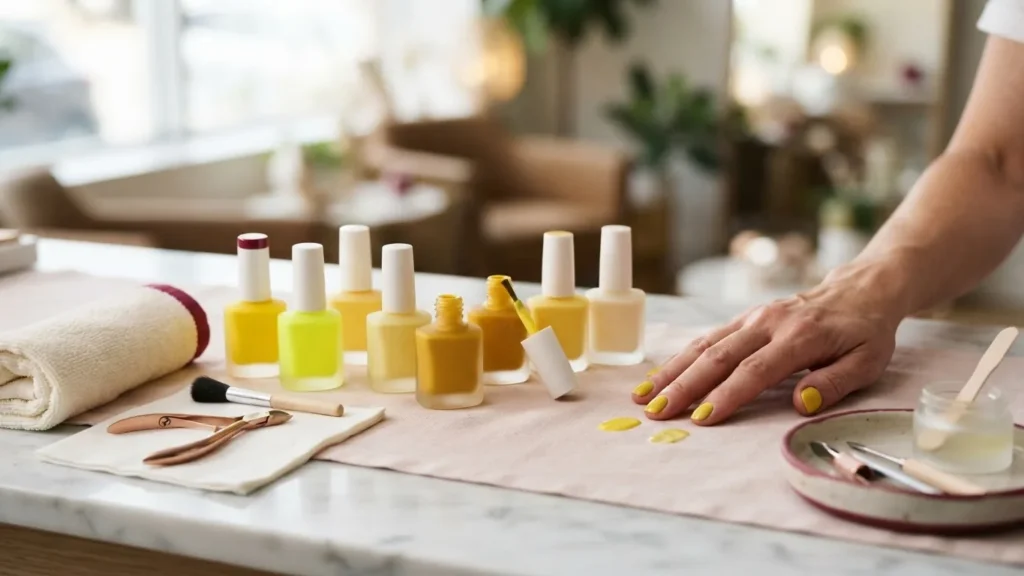
Yellow is not one color on the shelf. It splits into a few working families, and each behaves differently on the nail. Bright or neon yellows carry the most pigment load yet paradoxically the least opacity per coat – they lay down thin and need building. Pastel yellows sit lighter and softer. Crème finishes bring flat, full coverage. Then there are quick-dry, gel-like, and natural-origin formulas that change wear and removal more than they change the hue.
Butter yellow is the shade name doing the most work right now. It describes a soft, muted, pale yellow – closer to churned butter than to a highlighter – and it reads as a warm nude rather than a loud statement. The brand catalog from OPI shows how wide the yellow category runs across shade names and finish families, from saturated brights to soft neutrals, which is why “yellow” alone tells you almost nothing about how a bottle will behave.
- Neon / bright: highest visual punch, lowest coverage per coat, usually three coats.
- Pastel / butter: soft, wearable, reads as a warm neutral.
- Crème: opaque, flat, fewest coats.
- Quick-dry, gel-like, natural-origin: chosen for wear and removal, not for a different yellow.
Which yellow suits your skin undertone and depth
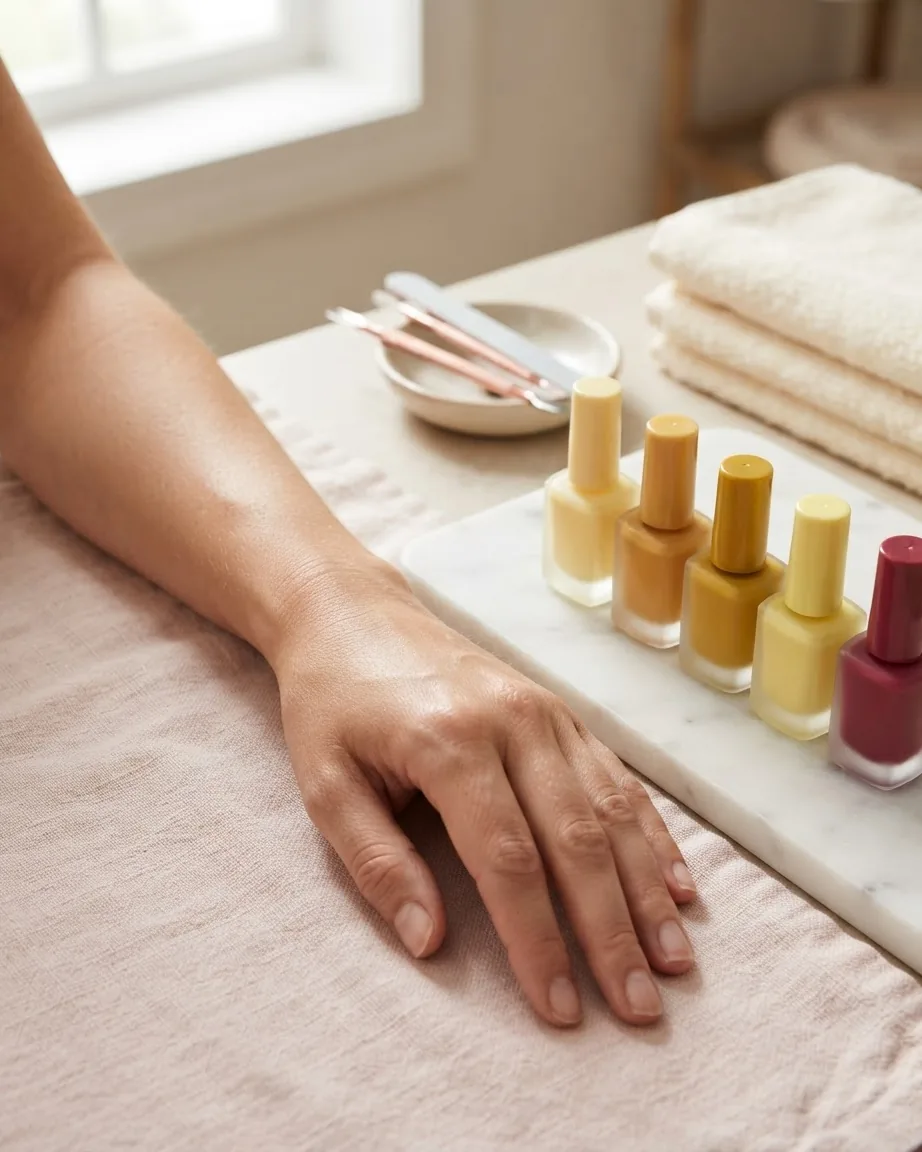
The common advice “yellow flatters warm skin” is only half an instruction, because it ignores how saturated the yellow is. The undertone-to-color mapping from LA Nail Supplies lists warm oranges, yellow-based colors, and overly bright neons under “avoid” for a specific group – fair skin with cool undertones. The brand Manucurist places “neon orange, hot pink, canary yellow” in the same bucket for fair skin, calling them “better saved for bold nail art than full-on coverage.”
That seems to contradict editorial coverage from Allure, where a nail artist notes that deeper skin suits “a slightly more saturated shade,” lighter skin suits paler polishes, and butter yellow in particular flatters across skin tones. The two camps are reconcilable, and the reconciliation is the useful part: the “avoid” guidance is scoped to saturated, canary yellow on fair-and-cool skin, while the “flatters all” claim applies to soft, pale butter yellow. Neither source resolves this directly, so read it as saturation-dependent rather than a flat yes or no.
A practical undertone self-test: look at the veins on the inside of your wrist in natural light. Bluer-looking veins point toward a cool undertone; greener toward warm. Manucurist’s guidance for fair skin leans on this kind of check before committing to a saturated shade.
- Fair + warm: soft yellow and cream read well.
- Fair + cool: skip saturated canary yellow; a pale butter is the safer pick.
- Tan to deep + warm: golden and more saturated yellows hold up.
- Any depth: pale butter yellow is the lowest-risk choice.
Why yellow nail polish goes streaky, and how to stop it
Yellow earns its reputation as the hardest color to apply because the pigment is translucent. Light passes through it, so thin or uneven spots show as streaks instead of blending in the way a dark crème forgives. Adding coats of a sheer formula does not always fix this – it can deepen the streak pattern instead of flooding it.
Two levers actually work. First, match the finish to the job: a crème yellow covers in close to one layer, where a sheer or neon needs around three. The swatch notes from Floating in Dreams capture both ends of that range in the same comparison. Second, lay a yellow-jelly or blurring base coat under the color so the under-layer already carries tone; the top coats then even out instead of fighting bare keratin. Application tips circulated in the enthusiast community r/RedditLaqueristas repeatedly point to a tinted or blurring base as the streak fix rather than more coats of the color itself.
What does not work: trying to rescue a streaky sheer by piling on a fourth and fifth coat. Past a certain thickness the surface stays uneven and drying time climbs. If the formula is the problem, switch the formula. For a related streaking case in a different family, see our sheer pink nail polish guide.
Why polish turns nails yellow – and how to limit it
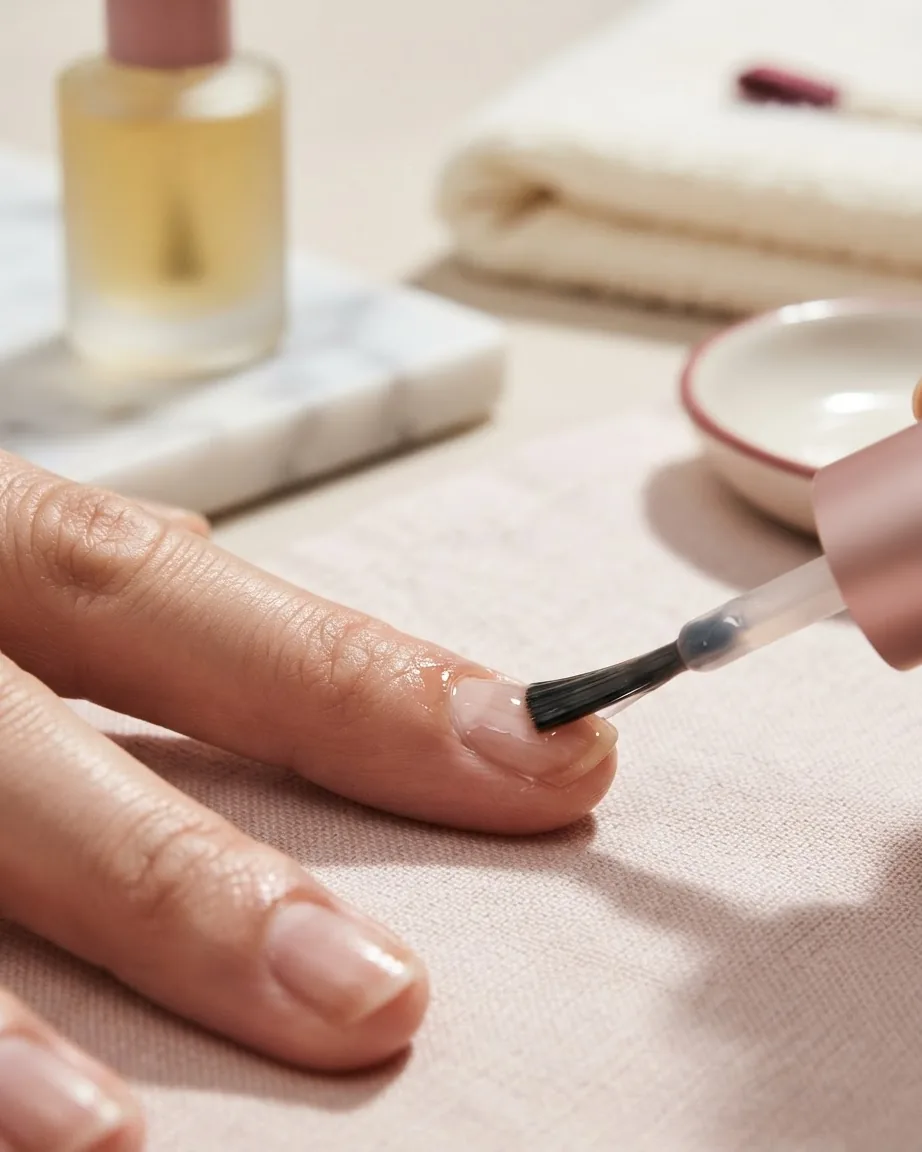
The yellow stain some people find after removing polish is a dye issue, not damage to worry over in cosmetic terms. Pigment molecules bond to keratin, the protein that makes up the nail plate, and darker or more saturated shades deposit more dye than pale ones. The stain sits on the outer nail and grows out as the nail grows.
On prevention the sources frame the same step two ways. The brand Le Mini Macaron states that “using a base coat before applying nail polish can create a barrier between your nails and the polish, preventing discoloration.” Physician-reviewed content at GoodRx Health puts it more conservatively: a base coat “can help lower the risk of dye bonding to your keratin, though it isn’t guaranteed.” Treat it as risk reduction, not a seal. A base coat is worth using every time, but it is not a promise, and a deeply saturated yellow worn back-to-back will still leave more tint than an occasional pale one.
- Always use a base coat – it lowers, not removes, staining risk.
- Prefer pale over saturated if staining bothers you; less dye to deposit.
- Take wear breaks so a stained outer nail can grow out.
Butter yellow nail polish: warm neutral, not novelty

Butter yellow has crossed from a seasonal gimmick into something worn like a nude. The appeal is that it carries warmth without the commitment of a bright – it behaves on the hand like a soft neutral rather than a color that announces itself. Allure framed the shade’s long arc with the line “celebrating the nail art that’s divided us for 50 years,” a reminder that yellow on nails is not new; its current reading as a wearable warm-neutral is what changed.
For skin-tone range, butter yellow is the safest entry in the whole category: it sidesteps the fair-and-cool clash that canary yellow runs into, and it still flatters warm and deeper skin. If you have avoided yellow because a bright one looked wrong, a pale butter is the version to try. For another soft, forgiving finish, our matte nail polish guide is a separate read.
Finish tradeoffs: neon sheerness vs. crème opacity
Beyond the hue, the finish decides your coat count and your drying time. A neon yellow trades opacity for brightness – it is engineered to glow, which means low pigment coverage per coat and the near-universal three-coat requirement. A crème trades some of that punch for flat, dense coverage in close to one layer. There is no single “best” yellow finish; there is the one that matches how much patience you have for coats.
The yellow collection copy and FAQ from retailers like Beyond Polish group yellows by finish precisely because the finish, not the shade name, predicts behavior. If you want the shortest application, read “crème.” If you want maximum brightness and accept the coats, read “neon.” Darker, more saturated finishes also carry the higher staining load noted above, so the finish choice and the staining choice are the same decision made once.
Long-wear and non-acetone removal options for yellow
If wear time and removal matter more to you than finding the exact brightest yellow, a few formula families change the math. Manucurist positions its Green Flash line as “vegan and bio-sourced formula, lasts up to 21 days, peel-off removal without acetone,” and separately points to tips for “a manicure that lasts up to 3 weeks.” The brand also offers a “15 min-free virtual consultation” for shade and formula questions. These are wear-and-removal attributes rather than color attributes – a long-lasting yellow is still a yellow, and the undertone and streaking rules above still apply to it.
Peel-off and non-acetone systems matter most to anyone who dislikes acetone removal. They do not change how a saturated yellow reads on cool skin, and they do not exempt a sheer yellow from needing its coats. Choose the wear formula for how you remove polish; choose the shade for your undertone.
When yellow nails signal something other than a stain
There is a clear line between a cosmetic stain and a nail-health question, and it is worth knowing where it sits. A polish stain lives on the older, outer part of the nail and grows out over time. By contrast, nails that are growing in yellow at the base – at the cuticle, in new growth – are not a polish artifact, and that pattern is a reason to see a clinician rather than reach for a stronger remover. This is general information, not a diagnosis.
Dermatologist-authored guidance from Harvard Health Publishing also addresses a separate hazard that applies if your yellow is a gel cured under a lamp: “apply sunscreen 20 minutes prior to the UV treatment, or wear fingerless gloves while under the lamp.” That precaution is about the lamp, not the color. For the broader gel picture, our what are gel nails guide is a separate reference. Any nail-health concern belongs with a professional, full stop.
Picking your yellow: a one-pass decision
Put the levers in order and the choice stops being guesswork. Start with undertone and depth to narrow saturated-vs-pale. Then pick a finish – crème for one-coat ease, neon for brightness and three coats. Then decide on staining tolerance, which a base coat lowers but does not erase. Only after those three does the exact shade name matter.
- Fair + cool, low effort: pale butter yellow, crème finish, base coat. Covers fast, lowest clash and stain risk.
- Warm or deep, wants impact: saturated golden or canary yellow; plan for three coats and a tinted base to kill streaks.
- Wear-driven: a long-wear or peel-off yellow (up to 21 days claimed), still chosen for undertone first.
- Worried about staining: pale over saturated, base coat every time, wear breaks to let the outer nail grow out.
The yellow that “doesn’t suit you” is usually a saturation or a finish that wasn’t matched to your hand – not a verdict on the color.
The coat-count tax: neon yellow vs. crème yellow
The article quotes a sheer/neon yellow at about three coats for even coverage and a crème at close to one. Turn those two numbers into the real cost of picking the wrong formula:
- 3 layers vs. almost one layer – a neon or sheer yellow takes a good 3 layers to go on opaque, where a crème goes on opaque in almost one layer.
This is why “pick for coat count first, hue second” isn’t just advice: choosing a sheer yellow over a crème means more layering work and more dry-wait cycles on every application – the exact thing that makes the color streak when you rush it.
FAQ
Is butter yellow the same as a pastel yellow?
They overlap but aren’t identical. Pastel describes the lightness; butter describes a specific soft, muted, cream-leaning tone that reads as a warm nude. A pastel yellow can skew cooler or greener, while butter stays warm. That warmth is why it functions as a neutral and why it carries across skin tones that a cooler pastel might not.
Can a quick-dry top coat fix a streaky neon yellow?
No. A top coat seals and speeds drying, but it sits above the color and cannot even out streaks already laid down underneath. Streaking is a pigment-and-opacity issue in the color coats themselves. The fixes are a tinted or blurring base beneath the yellow and, where needed, switching from a sheer formula to a crème.
How long does a polish stain on the nail actually last?
It lasts until it grows out, since the tint bonds to the outer nail plate and travels up with new growth. There’s no overnight reversal from a cosmetic standpoint. A base coat beforehand reduces how much dye deposits, and choosing a paler yellow over a saturated one leaves far less tint to grow out in the first place.
Do I need gloves for a yellow gel manicure?
If the yellow is a gel cured under a lamp, the lamp – not the pigment – is the exposure to manage. Harvard Health Publishing suggests sunscreen applied 20 minutes before curing, or fingerless gloves worn under the lamp. A regular air-dry yellow lacquer involves no lamp and no such step. The precaution tracks the curing method, not the shade.