A UV or LED lamp will not dry regular nail polish, because regular polish carries no photoinitiators for the light to act on, according to SUNUV. That single fact reshapes the whole question. A nail dryer for regular polish is not a lamp at all; it is an air-blower device that moves air across wet lacquer to speed evaporation. Shoppers who buy a curing lamp expecting faster air-dry polish have bought the wrong machine for the job. What follows separates the two mechanisms, puts real timing figures against each, and names the failure modes of the shortcuts people reach for instead.
A nail dryer for regular polish is an air-blower, non-UV device. Regular lacquer hardens as its solvents evaporate; UV and LED lamps harden gel by triggering a photoinitiator, a reaction regular polish cannot undergo. SUNUV reports touch-dry at roughly 15 to 30 minutes, with full dent-resistant hardening often near a full 24 hours. Air blowers, thin coats, drying drops, and cool air speed the surface; none shortcut the deep harden. Gel top coat over wet regular polish traps an uncured layer that can bubble or lift.
UV Lamp vs Air Blower: Why One Dries Regular Polish and One Does Nothing

The confusion starts with the word “dryer.” Regular nail polish dries through solvent evaporation, as ethyl and butyl acetate leave the film and the pigment and resin set behind, per SUNUV. Gel polish does something chemically different: it cures by photopolymerization, where a photoinitiator absorbs UV-A light and kicks off a hardening reaction. SUNUV lamps emit dual-band UV-A at 365 to 375 nm and 390 to 405 nm, delivering irradiance of at least 20 mW/cm² to activate those photoinitiators.
Regular polish has no such ingredient. Nail Knowledge states plainly that air-drying polish relies on solvent evaporation to harden and contains nothing that reacts to UV or LED light. A retailer guide from Nagelexperten reaches the same conclusion from the other direction: put regular polish under a UV lamp and the polish dries the same way as if you just left it to air dry. The lamp is inert on it.
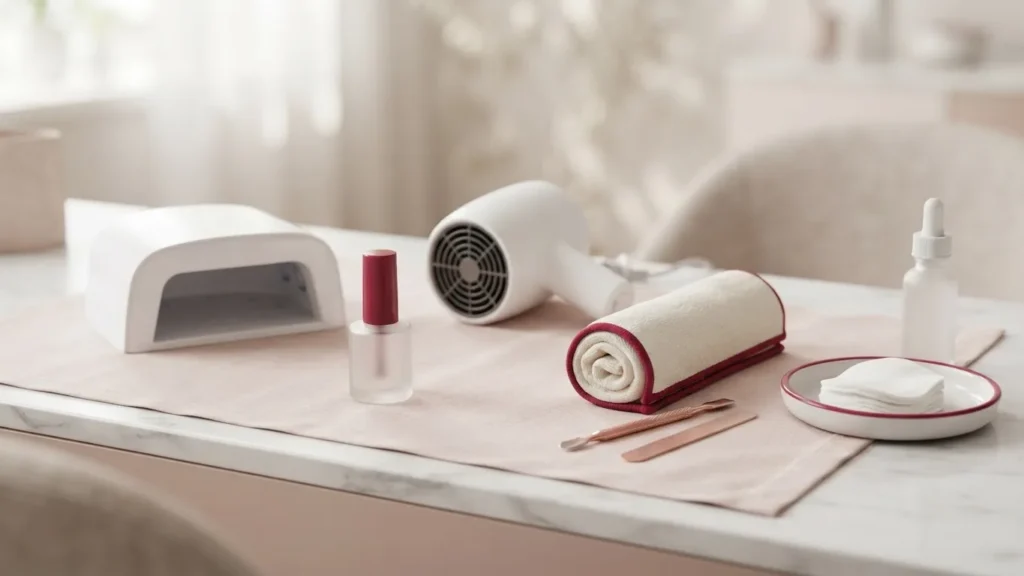
So the device category that does real work on regular polish is the air blower. SUNUV describes these as dryers that exist specifically for regular polish, moving air across wet polish to speed evaporation. That is the correct non-UV machine. A curing lamp is built for a reaction your lacquer cannot run.
Touch-Dry vs 24-Hour Hardening: The Two Numbers That Disagree
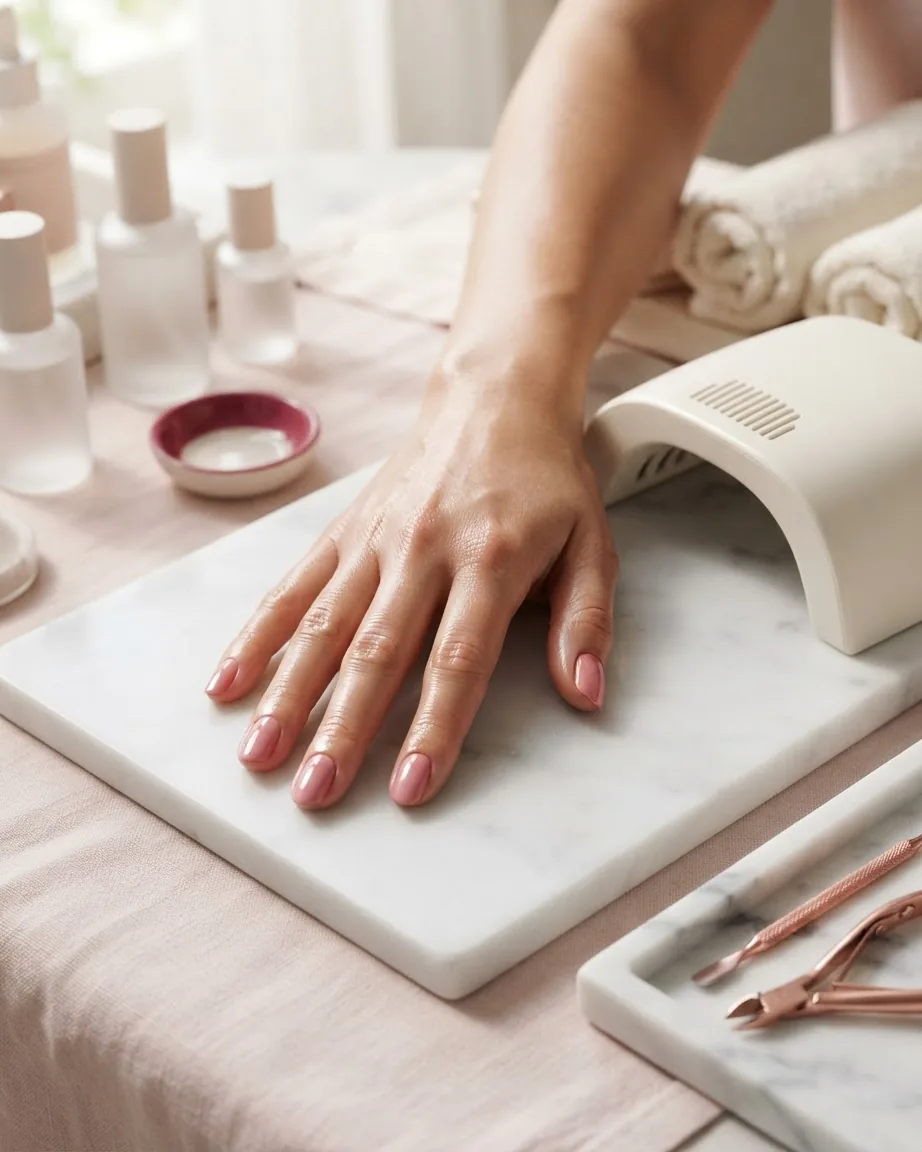
Two trustworthy sources give different lower bounds for touch-dry, and the gap is worth understanding rather than smoothing over. SUNUV puts touch-dry around 15 to 30 minutes depending on coat thickness and conditions, with full hardening, the point where polish resists dents and pressure marks, often close to a full 24 hours.
The disagreement is in the first number, not the second. Both land on roughly 24 hours for the deep harden.
What this settles for you: do not trust a surface that feels dry at the 30-minute mark. Touch-dry is not hardened. A sheet crease, a car-key dent, or a pocket smudge can appear hours after the top feels set, because the inner film is still firming up toward that 24-hour point. Plan the manicure around when you can leave your hands alone, not around when the top stops feeling tacky.
Does Cool Air Dry Polish All the Way, or Just the Top?

Here the sources part ways, and the split matters. OPI suggests a cool-setting hair dryer after about 30 seconds to speed drying, recommending the technique only for nail lacquer unless you want a matte finish. Essie agrees, calling for a blast of cool air on a lower power setting to avoid drying out the cuticles. Brand and retailer guidance treats cool moving air as a genuine accelerator.
A user on Reddit’s r/RedditLaqueristas pushes back from experience, reporting that circulating air dries the surface quicker, leaving the inside layers soggy. If that holds, a fan buys you a firm top film over a still-soft base, exactly the state that smudges when you think you are done.
These two claims are not equal in weight. OPI and Essie are brand guidance; the fan caveat is one anecdotal report. The sensible resolution is not to pick a winner but to act on both: use cool air to firm the surface faster, and still hold off on real pressure until closer to the 24-hour full harden. Treat the fan as a surface tool, not a cure. Warm or hot air is worse than useless, since it can keep the resin fluid and cause bubbling.
The Gel Sandwich: Regular Polish Under a Gel Top Coat
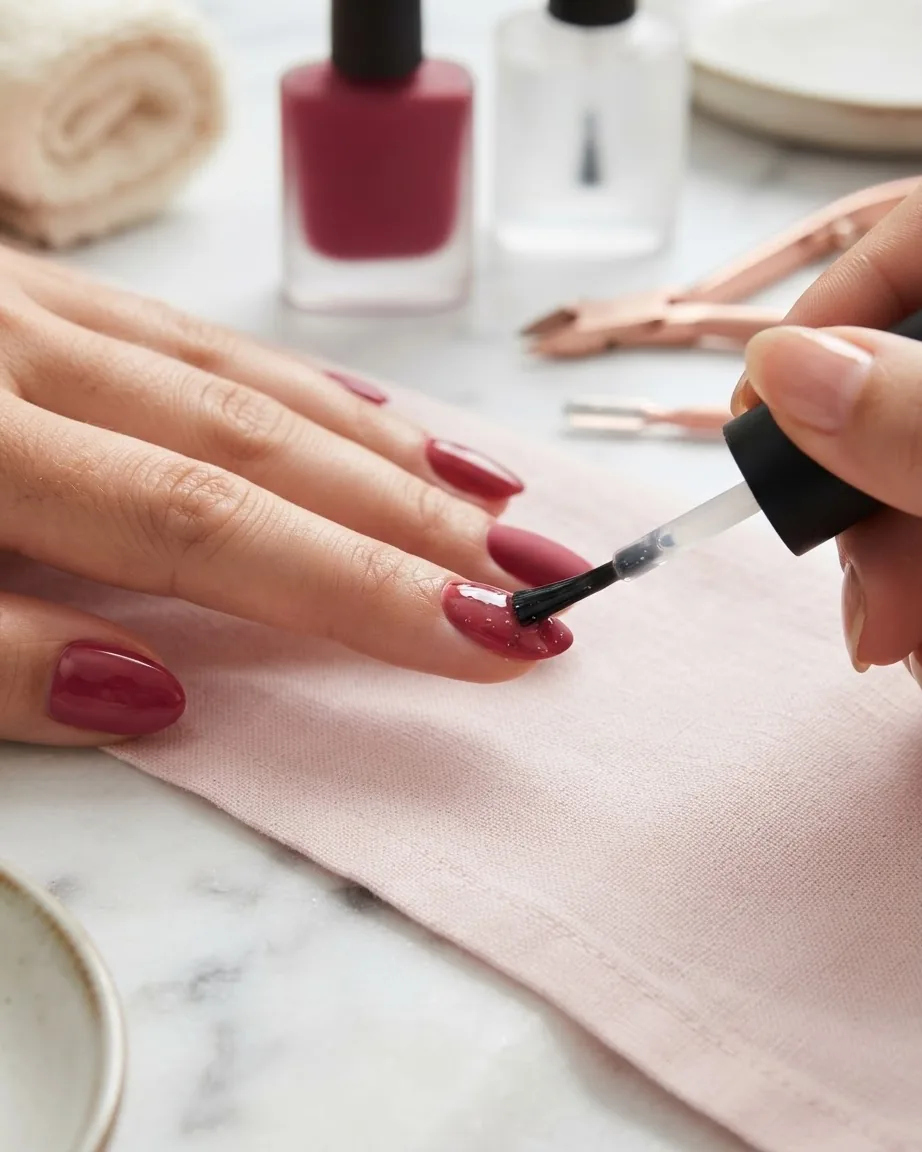
The shortcut sounds clever: paint regular color, cap it with gel top coat, cure it, and get gel-level shine with a lacquer wardrobe. It does not fully work. SUNUV explains that the regular polish underneath never actually cures, so it can stay soft enough to smudge, wrinkle, or shift under the gel top coat. The lamp hardens the gel skin; the lacquer beneath is still a solvent film.
Nail Knowledge documents the failure modes directly. Using a lamp over regular polish may create a superficial drying effect on the top layer, leaving the bottom layers wet and soft. Trap that dampness under cured gel and even light dampness can cause bubbling, peeling, or lifting, which is why it is not a fully trusted method. The method only has a chance if the regular polish is completely dry first, meaning the full-harden wait, not the touch-dry minute.
There is a second cost people miss. Nail Knowledge notes that regular polishes are not designed for UV exposure and may break down or change color under UV or LED light. So “is leaving regular polish under a lamp harmless?” has a real answer: it may discolor the shade and only skins the surface, on top of the lifting risk. For the mechanics of a top coat built to cure, see our purple nail polish guide.
Nail Dryer for Regular Polish: Per-Cycle Times From an Air-Blower Spec
If the device that actually helps is an air blower, the question becomes how long a cycle runs. SAVILAND publishes specs for a 300W air nail dryer for regular polish that operates without UV light and offers warm and cool air modes, covering regular polish, dip powder, and acrylics.
For other brands’ regular or oily polish, SAVILAND lists these cycle times:
| Item | Value |
|---|---|
| Warm air, regular/oily polish | 90 to 120 seconds. |
| Warm air, water-based polish | 150 to 180 seconds. |
| Cool air, regular/oily polish | 120 to 180 seconds. |
| Cool air, water-based polish | 210 to 240 seconds. |
Read these with care. They are manufacturer figures, not independent measurements, and SAVILAND claims faster times for its own polishes than for other brands. They also describe a per-cycle blast, not the deep harden. A 120-second warm cycle firms the surface; the inner film still marches toward the 24-hour full cure that SUNUV and OPI both report. The honest comparison: an air dryer can trade a 15-to-60-minute touch-dry wait for a roughly two-to-four-minute cycle, but it buys you surface firmness, not a shortened cure.
Drying-Speed Factors You Actually Control
Several levers genuinely change how fast the surface sets, and they cost nothing. OPI notes that shade drives timing more than people expect: glitter shades have the shortest drying time, while yellow polish is the one that tests your patience. If you need nails usable sooner, a glitter or a sheer beats a dense yellow cream on time alone.
Thin coats matter most. Several thin layers set faster and more evenly than one thick pour, because solvent at the bottom of a deep film has farther to travel out. Essie adds two more: avoid older polish, since it is likely thicker and stickier and dries slower, and wash your hands before application to remove oils that can impede adhesion. Clean, oil-free nails give the color something to grip and a cleaner film to dry.
Two product helpers round it out. OPI’s Drip Dry drying drops, one or two per nail, give smudge-free nails about five minutes later, along with softer cuticles. And a cool-air hair dryer on a low setting, kept cool to protect the cuticles, firms the top. None of these replaces the deep cure; they shorten the fragile window.
Buying the Right Machine, and the Gel Lamp Confusion
If a tool is already on the counter, know what it can and cannot do. A non-UV air nail dryer cannot cure gel polish, and gel cannot air-dry, because gel polish requires UV or LED light to cure properly, per Nagelexperten. The two machines are not interchangeable in either direction: the lamp does nothing for lacquer, and the blower does nothing for gel.
For anyone pairing this with a gel setup rather than only regular polish, SUNUV frames entry points by use: the Sun1 is a starting point for a first gel setup, and the Sun2C is the step up for more frequent use. That is a gel-curing decision, separate from drying regular lacquer, where the correct device stays the air blower. If your goal is gel wear and its removal, our nail varnish remover for gel guide stays in that lane.
How Many Air-Blower Cycles Fit Inside One Touch-Dry Wait
SUNUV’s fastest touch-dry figure is 15 minutes, which is 900 seconds. A SAVILAND warm-air cycle for regular/oily polish runs up to 120 seconds. That means about 7.5 full warm cycles would fit inside even the shortest natural touch-dry window – a plain reminder that the dryer firms the surface in bursts and does not replace the touch-dry wait, let alone the 24-hour harden both SUNUV and OPI report.
- 15-minute SUNUV touch-dry (lower bound) = 15 × 60 = 900 seconds.
- 900 seconds ÷ 120-second warm cycle = 7.5 cycles.
- Takeaway: a single 120-second blast is one slice of the drying window, not a shortcut to a dried or cured nail.
FAQ
Will a UV lamp harm my regular polish if I try it anyway?
It can. Beyond doing no real hardening on the deep film, regular lacquer is not built for UV exposure and may break down or shift color under the light. You also risk a skinned-over top above a still-wet base, which sets up smudging the moment you press on it. The lamp offers no upside here.
Is warm air or cool air better on an air dryer?
Cool air is the safer default for lacquer. SAVILAND’s own spec runs warm mode faster, 90 to 120 seconds versus 120 to 180 for cool on regular polish, but heat can keep resin fluid and risk bubbling. Cuticle health also argues for cool. Pay the extra seconds for the gentler setting.
Can I speed drying without any device at all?
Yes. Pick a faster-drying shade, keep coats thin, start with freshly washed oil-free nails, and skip bottles that have thickened with age. Drying drops add a smudge-proof surface roughly five minutes after you dot one or two on each nail. These shorten the vulnerable window but will not collapse the roughly 24-hour deep set.
How long before I can shower or sleep on fresh polish?
Longer than it feels. If you can, give it several hours of hands-off time before heavy contact, and treat bedtime polish as a next-morning gamble.