The word “Valentino” on a gel polish bottle does not point to the fashion house in Rome. Valentino nail polish is the informal name for the professional salon line originally sold as Valentino Beauty Pure, now trading as V Beauty Pure, and the two are unrelated companies. The confusion is the first thing to clear up, because it changes where you buy, what you compare against, and what the product is built to do: this is a salon-grade soak-off gel system, not a fashion-house lacquer. Everything below covers the catalog, the shade numbering, the cure specifications, and the exact conditions attached to the wear claim on the label.
Quick answer: Valentino nail polish refers to V Beauty Pure (formerly Valentino Beauty Pure), a professional gel and acrylic brand founded by the DiLorenzo family more than 10 years ago. The gel polish needs only 1-2 thin coats because the pigment is dense, and cures in 30 to 60 seconds under LED or 60 to 120 seconds under UV. The advertised 14-day wear applies only when the shade is used with the brand’s own base and top coats. Removal is an acetone soak-off, not peeling.
Why “Valentino Nail Polish” Is Not Maison Valentino
Two separate entities share a name and nothing else. Maison Valentino is the Italian luxury fashion house. The nail brand people mean when they type “Valentino nail polish” is a US-market professional supplier built by the DiLorenzo family. According to Times Square Chronicles, the company began with founder David Sr., “who breathed life into Valentino Beauty Pure over 10 years ago.”
The rebrand to V Beauty Pure is the reason you now see both names on retailer shelves and bottle backs. Older stock and third-party listings still print “Valentino Beauty Pure”; current packaging reads “V Beauty Pure” or shortens the base and top coats to “V Base” and “V Top.” Same system, same shade numbers, updated label. If you are matching an old color to a new bottle, the number is what carries over, not the front-of-bottle wording.
One honest gap: the research supporting this article does not include an ingredient breakdown, so the vegan and cruelty-free claims printed on the line cannot be substantiated here beyond the marketing statement. Anyone with a sensitivity concern should treat that as unverified and, for any reaction, see a professional rather than self-diagnose.
The Catalog: Gel Shades and Acrylic Powders
This is a large professional system, not a small color capsule. DTK Nail Supply lists the full catalog of gel polish shades and acrylic powder shades, alongside a Liquid Acrylic System, a Super Bond Primer, and themed lines including Trippy, Destination, and Noodle Yess, plus seasonal drops.
The scale matters for two reasons. First, cross-referencing: with a large gel range in play, ordering by number beats ordering by name, because the numbers are the stable identifier across sellers. Second, the acrylic side. If you are running enhancements rather than gel-over-natural, the same brand carries the powder and liquid to match, which is a different workflow with its own chemistry – see the general principles in our guide to choosing and using an acrylic kit and, for the monomer-and-primer side, the safety points in what builder gel actually is.
Signature Shades and the Seasonal Drops
Two reference points help you decode the range. The brand’s signature stark white is designated color 045; V Beauty Pure confirms “V Beauty Pure’s signature white color is gel polish 045.” A stark, opaque white is the shade most likely to streak in cheaper formulas, so a named signature white is a useful anchor when you compare pigment load.
On the seasonal side, the line releases limited sets rather than one-off colors. Nails Plus describes the “Miami Vibes” collection as a limited-release set of five summer hues. Limited drops sell through and are not restocked, so if a seasonal number is the reason you want the brand, buy the set while it is listed rather than expecting it to reappear next year.
For anyone building a wardrobe of reds specifically, the shade-number logic here pairs with the label-reading and undertone method in our red nail polish guide, which applies to any brand’s red regardless of the number on the cap.
Application: Why 1-2 Thin Coats Is the Rule, Not a Suggestion
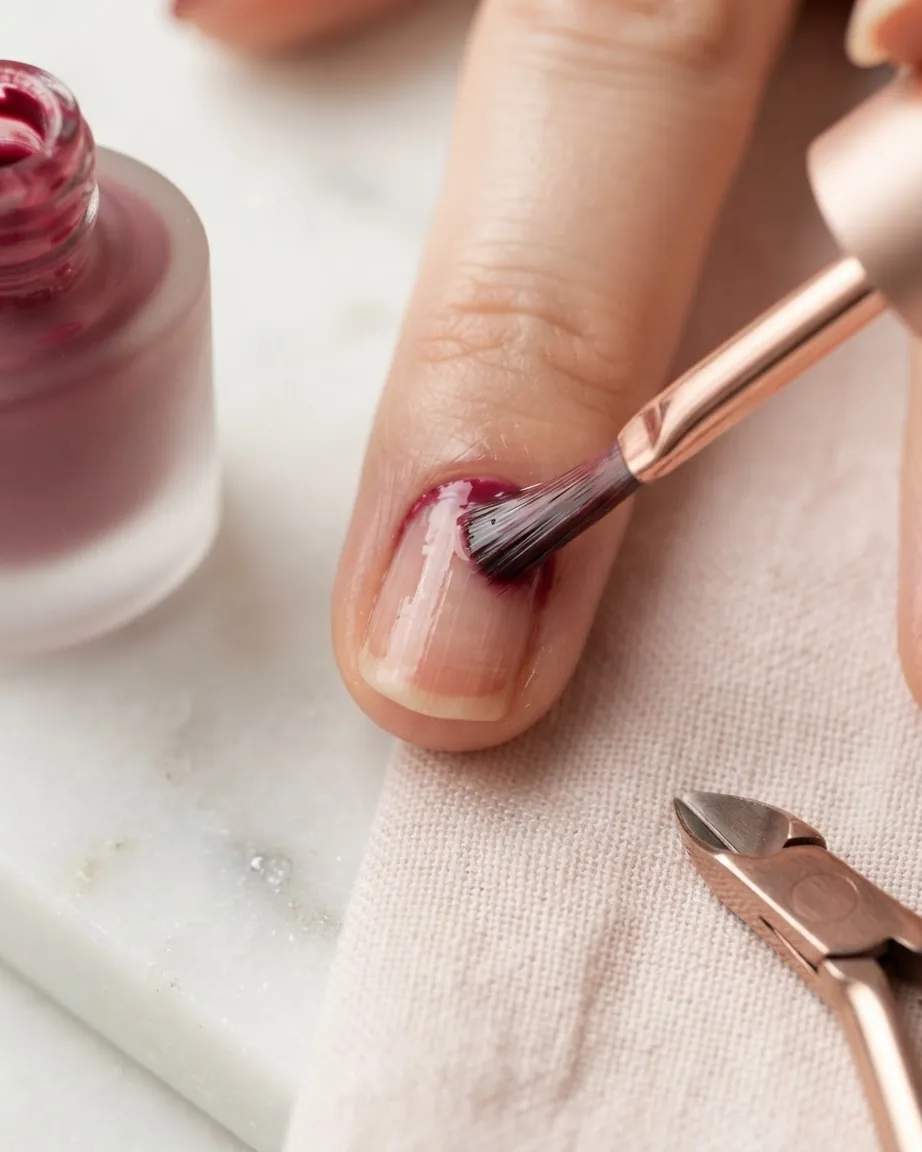
Dense pigment changes how you coat. Nail Company states the gel is “very pigmented so it only requires 1-2 thin coat of paint,” and Siena Distribution’s directions read the same: “Apply Gel Polish Colour with 1 – 2 coats to an already prepped nail with cured base coat.”
The reason to respect that ceiling is curing physics, not aesthetics. Highly pigmented gel blocks the lamp’s light from reaching the bottom of the layer. Pile on a thick third coat and the surface can flash-cure while the resin underneath stays soft, which shows up later as denting, wrinkling, or a color that lifts in a sheet. Thin coats let the light through the full depth. If your white or a deep shade looks patchy after one coat, the fix is a second thin coat, not a thick single one.
Standard sequence: prep, cured base coat, one to two thin color coats each cured, then top coat. The wear claim later in this article is written around that exact stack – swap in a third-party base or top and you are no longer inside the tested conditions.
Cure Times: LED vs UV, and Why the Numbers Differ
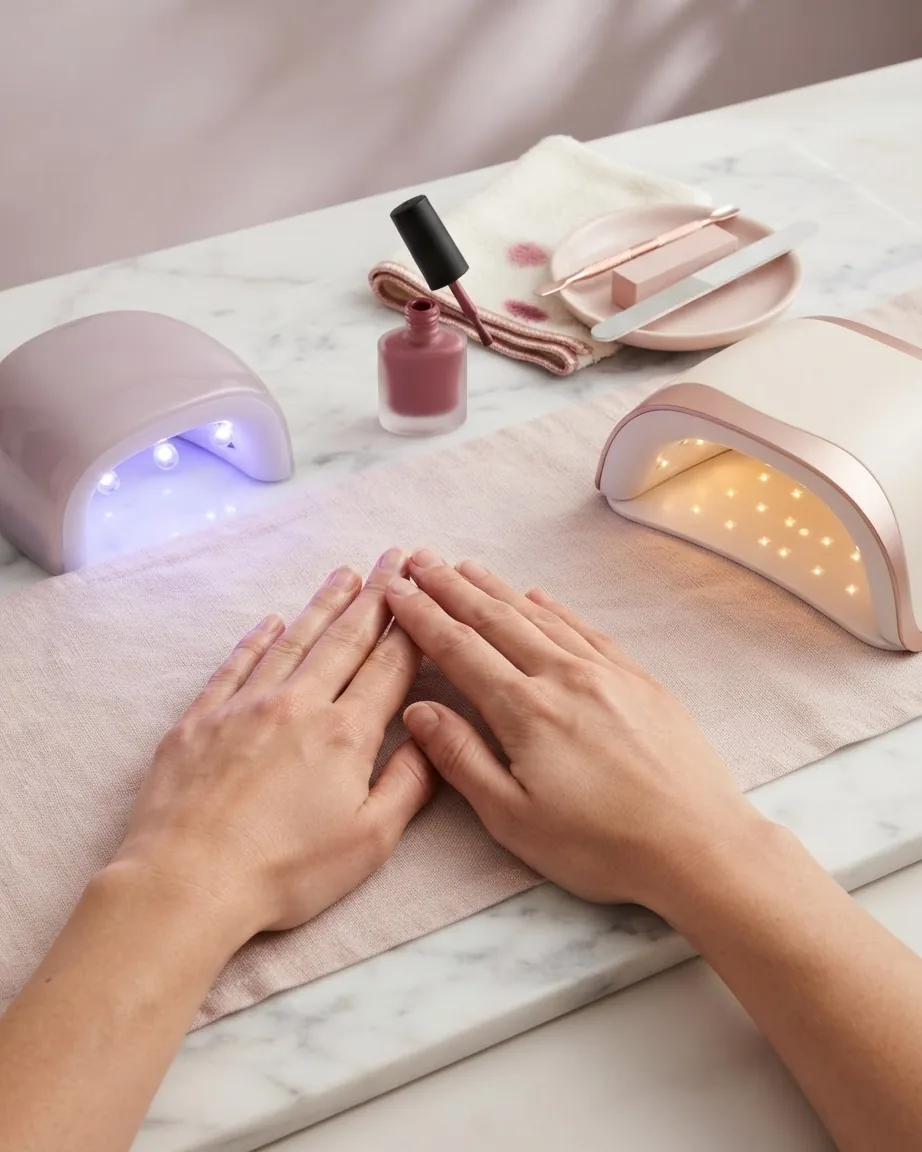
The lamp type sets the timer. Per Siena Distribution, the stated cure time is “30 – 60 Seconds (LED) / 60 – 120 Seconds (UV).” LED lamps emit a narrower, more intense band of wavelength that matches the gel’s photoinitiators, so they finish in roughly half the time of a UV lamp.
Two practical takeaways. First, do not shorten the UV number to match the LED number because it feels slow – 120 seconds under UV exists because that lamp needs it to reach full cure. Second, per coat means per coat: base gets its cure, each color coat gets its cure, and the top coat gets its own. Undercuring is the quiet cause of most early lifting, and it is invisible until the manicure fails a few days in.
Gel chemistry and curing behave the same way across product classes; the deeper explanation of how curing works, and what undercuring does to the bond, is laid out in our guide to hard gel chemistry and curing.
The 14-Day Wear Claim, and the Condition Attached to It
The headline number carries a condition that decides whether you actually get it. Siena Distribution states the gel “has a long lasting 14 day wear when properly used with Valentino Beauty Pure Base Coat and finished with Top Coat.” Nail Company corroborates the same figure: “When used properly with V Base and Top Coat, this polish can last up to 14 days.”
Both sources agree on the number and both attach the same string to it: the 14-day figure assumes the brand’s own base and top coats. It is not a promise for the color bottle used alone or paired with another brand’s base. That is the part generic write-ups tend to drop. If you buy only the color and skip the matched base and top, the 14-day expectation no longer applies, and any shortfall is a system mismatch rather than a defective bottle.
A verified quotation, side by side, makes the pattern explicit:
- Siena Distribution: “has a long lasting 14 day wear when properly used with Valentino Beauty Pure Base Coat and finished with Top Coat.”
- Nail Company: “When used properly with V Base and Top Coat, this polish can last up to 14 days.”
Two independent sellers, one number, one condition. When two sources land on the same 14-day figure with the same qualifier, that agreement is worth more than a single bolder claim would be.
Removal: Acetone Soak-Off, Not Peel-Off
This is a soak-off gel, which sets how it comes off. A cured, top-coated gel does not wipe away; it is dissolved with acetone or a specialized gel remover after the shiny surface is broken so the solvent can penetrate. Peeling or picking a gel that is still bonded takes layers of the nail plate surface with it, which is the most common self-inflicted damage from gel wear.
Because the product involves solvents, handle removal with the protective basics rather than any skin-contact shortcut: work in a ventilated space, keep acetone off skin where you can, and wash off immediately if contact happens. If the nail underneath looks damaged or a reaction is suspected, stop and see a professional – that is a nail-health question, not a cosmetic one. The full soak-off method and recovery steps, which transfer directly to gel, are covered in our safe removal and recovery guide.
Reading the Bottle: Size, Numbering, and What to Buy First
The bottle spec is consistent across the gel line, per Siena Distribution. Knowing the standard professional pour is useful when you are pricing per bottle against another brand’s fill size.
For a first order, the system logic beats grabbing a single pretty color. Because the 14-day claim depends on the matched base and top coats, the entry purchase that actually performs is base + one color + top, not three colors and no base. Beyond that, the range splits cleanly: the gel numbers for gel-over-natural or gel manicures, and the acrylic powders with the Liquid Acrylic System for enhancements. Decide which workflow you are running before you build a cart, because the two use different products and different tools – the taxonomy of what each tool is for sits in our nail instruments guide.
Total Lamp Time for One Full Valentino Manicure
The article’s cure spec (30 – 60 s LED, 60 – 120 s UV) is stated per coat, and the recommended stack is a cured base, one to two thin color coats each cured, then a top coat. At the maximum of two color coats that is four separate cures per nail. Multiplying the per-coat times by four shows the real timer you should plan around – not the single-coat number printed on the bottle.
- LED, four cures: 4 × 30 s = 120 s (2 min) at fastest, up to 4 × 60 s = 240 s (4 min) at slowest.
- UV, four cures: 4 × 60 s = 240 s (4 min) at fastest, up to 4 × 120 s = 480 s (8 min) at slowest.
- The gap that matters: a full UV stack can take 480 s versus 120 s on LED – four times longer – which is why the article warns not to shorten the UV number to “feel faster.”
If you drop to a single color coat, subtract one cure (30 – 60 s LED / 60 – 120 s UV) from each figure above. Either way, the lamp is running far longer than the per-coat spec suggests, so budget minutes, not seconds, for a complete set.
FAQ
Is Valentino nail polish made by the fashion house Valentino?
No. The nail line is V Beauty Pure, formerly Valentino Beauty Pure, a US professional brand founded by the DiLorenzo family more than 10 years ago. Maison Valentino is a separate fashion company with no connection to this gel and acrylic system. The shared name causes most of the online confusion.
Why is my V Beauty Pure gel not lasting 14 days?
The 14-day figure from both Siena Distribution and Nail Company assumes you used the brand’s own base and top coats. Skipping either, pairing with another brand’s base, applying color too thick, or undercuring will all cut wear short. Match the full system and cure each coat fully for the stated result.
How long do I cure each coat?
Per Siena Distribution, cure 30 to 60 seconds under an LED lamp, or 60 to 120 seconds under a UV lamp, for each layer – base, every color coat, and the top coat separately. UV takes longer because it is less intensity-matched to the gel than LED. Do not shorten the UV time to match LED.
Can I peel V Beauty Pure gel off instead of soaking?
No. It is a soak-off gel meant to be dissolved with acetone or a specialized gel remover after the top layer is broken. Peeling removes surface layers of the nail plate. Work with ventilation, keep acetone off skin, and see a professional if the nail looks damaged or a reaction appears.